Best Ankle Brace for Torn Tendon: Top 5 Picks for Support and Recovery
If you’re recovering from a torn tendon or dealing with ankle instability, choosing the right ankle brace is essential. This guide highlights five well-rounded braces that provide targeted support, stability, and comfort for everyday wear and athletic activity. Each option is suited to different needs—whether you want minimal bulk, precise control, or medical-grade stabilization. The following table summarizes the key choices to help you pick quickly.
| Product | Best For | Why It Stands Out |
|---|---|---|
| Med Spec ASO Ankle Stabilizer | Most reliable stabilization | Figure-8 straps for secure fit; widely recommended by clinicians. |
| Z ATHLETICS Ankle Brace | Active recovery and performance | Lace-up with side stabilizers; slim profile fits shoes well. |
| B braceUP Ankle Brace | Adjustable, lightweight support | Reinforced sides and adjustable straps for gradual compression. |
| INDEEMAX Ankle Brace | Copper-infused comfort and support | Copper-infused fabric for moisture control and comfortable compression. |
| WHCOOL Slim-Fit Ankle Brace | Light daily wear and sprain relief | Two auto-shaped pads and quick 1s hook-and-loop fastening for easy use. |
Med Spec ASO Ankle Stabilizer

The Med Spec ASO Ankle Stabilizer emphasizes rigid stabilization with a durable lace-up design and figure-8 straps to limit painful twists. It is best for individuals needing reliable support during sports or daily activities with a higher risk of re-injury. It fits inside most shoes, aiding discreet wear. Caution: It is not intended for rigid immobilization or post-surgery recovery, so consult a clinician for severe injuries.
Z ATHLETICS Ankle Brace
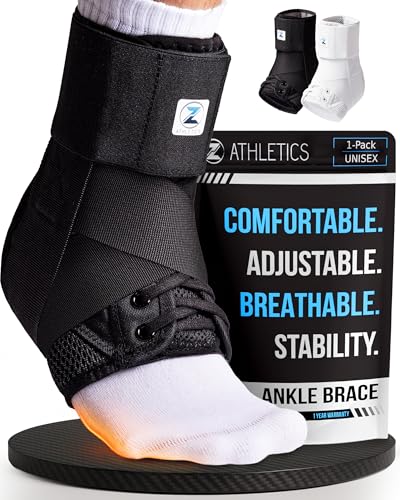
This lace-up brace with side stabilizers offers real support for sprains, Achilles tendonitis, and plantar issues. It’s best for active individuals who need precise compression through a secure lacing system that won’t loosen during play. Choose this if you want a stabilizing brace that remains low-profile in sneakers. Limitation: Larger sizes can feel bulkier and require careful tightening to avoid discomfort.
BraceUP Ankle Brace

The BraceUP design provides mild-to-moderate support with reinforced side stabilizers and easily adjustable side straps. It’s well-suited for those who want scalable compression and straightforward fitting without removing shoes. Best for gentle stabilizing during routines or rehab exercises. Caution: It may not provide enough rigidity for severe ligament tears requiring medical immobilization.
INDEEMAX Copper Ankle Brace

The INDEEMAX copper-infused brace combines breathable nylon with copper ions to help control moisture and odor while delivering medical-grade compression. It’s best for daily wear and extended activity, especially when odor control and long-wear comfort matter. Limitation: Some users may prefer non-copper fabrics if sensitivity occurs or if metal ions cause irritation.
WHCOOL Slim-Fit Ankle Brace (M)

WHCOOL’s Slim-Fit design uses two auto-shaped pads and a quick 1s hook-and-loop closure for a snug, 360° wrap. It’s best for light sprains and everyday activities, especially when you need fast, simple adjustments. The breathable air fabric helps keep the foot cool. Caution: This model is sized by circumference; ensure proper sizing for swelling to avoid tightness.
Buying Guide: Key Considerations For Ankle Braces
What level of support do you need? Light sprains benefit from low-profile, flexible braces, while ligament injuries may require rigid stabilizers with multiple straps. Consider activity level: everyday wear vs. sports use calls for different materials and closures. Do you prefer ease of use? Quick-fastening designs save time and reduce frustration during dressing. Size and fit matter: choose braces that accommodate swelling with adjustable closures or wider fits.
Material matters too. Breathable fabrics help reduce moisture and irritation during long wear, while copper-infused or moisture-wicking fabrics can aid odor control and skin comfort. For athletes, a slim profile that fits inside shoes without adding bulk can improve performance. If you are recovering from a torn tendon, consult healthcare guidance to select a brace that provides appropriate stabilization without restricting essential movement.
Usage scenarios help determine the best pick. For example, if you need reliable stability in dynamic activities, the Med Spec ASO or Z ATHLETICS options offer strong stabilization. For light, day-to-day use with easy-on, easy-off, consider BraceUP or WHCOOL’s quick-fastening designs. If odor control and prolonged wear are priorities, INDEEMAX provides copper-infused comfort.
Frequently Asked Questions
- Do ankle braces help with torn tendon recovery? They provide stabilization and support, which can reduce stress on the tendon during healing and daily activities, under clinician guidance.
- What’s the difference between a brace and a sleeve? Braces include straps and side stabilizers for controlled movement; sleeves offer compression with minimal support.
- How do I choose the right size? Measure around the ankle or consult product guidelines. Swelling or wide feet may require sizing up.
- Can I wear an ankle brace with shoes? Most braces are designed to fit inside typical athletic shoes, but bulky stabilizers may require roomier footwear.
- How long should I wear a brace daily? Follow medical advice; many users wear braces during activity and for short rests, gradually increasing used time as healing progresses.
- Are there any cautions? Use as directed and discontinue if pain increases; severe injuries require professional evaluation.