Best Back Pad for Bench Press: Top Picks for Safer, Stronger Workouts
Answering the common question “which back pad is best for bench press?” this guide highlights five reliable options designed to support the upper back, neck, and spine during bench, incline, and chest presses. These pads are suited for home gyms, small studios, and anyone seeking improved form and reduced discomfort. The selections vary in strap systems, materials, and firmness to match different benches and training styles. Whether you’re prioritizing non-slip stability, easy attachment, or a curved shape for neck support, there’s a suitable back pad here for you.
Below is a quick reference table to compare the featured pads at a glance. It helps you decide which pad aligns with your bench type, exercises, and comfort preferences.
| Product | Best For | Key Benefit | Limitations |
|---|---|---|---|
| Simgoing Bench Press Back Pad (9.3×7.1×3.2″) | Flat or incline benches | Non-slip strap, PVC leather, firm foam | Smaller footprint may feel compact on broader benches |
| CORECISE Chest Press Back Pad | Versatile workouts | Half-round shape for upper back, neck, waist support | Basic attachment features |
| Charles Glass Gob Pad 4.0 | Heavy lifts and professional layouts | Upgraded non-slip design, precision-engineered by Charles Glass | Higher price point |
| EnouTech Bench Pad | Budget-friendly builds | New foam core, leather look, firm but comfortable | May be bulkier on smaller benches |
| Simgoing Pad 13.8×7.1×3.3″ (larger version) | Deep support and versatility | Strong non-slip strap, comfortable padding | Similar to 9.3″ model in function |
Simgoing Weight Lifting Pad Bench Back Pad (9.3×7.1×3.2 Inches)

The Simgoing back pad is designed for bench press and chest press routines on free-weight benches. It uses PVC leather and high-density foam to offer comfortable, stable support, helping to align the back and reduce strain during pressing movements. The upgraded non-slip strap allows attachment to benches of varying widths, improving reliability during intense workouts. Best for home gym users who want a straightforward, durable pad that stays in place during incline or flat presses. A limitation to note is its relatively compact footprint, which may feel less expansive on broader benches.
CORECISE Chest Press Back Pad
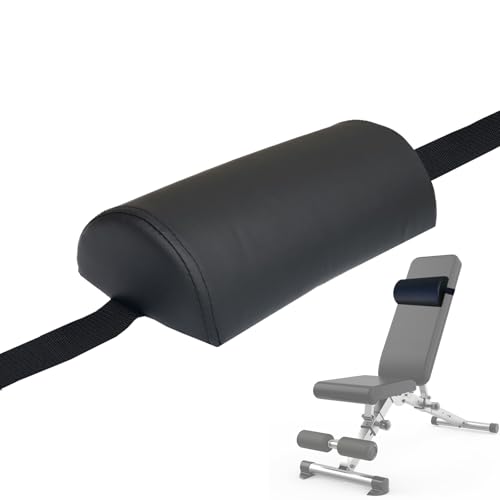
The CORECISE pad focuses on optimal upper-back support while keeping a compact, unobtrusive profile. It’s easy to attach to any bench (flat or incline) with Velcro straps, and you can adjust the angle to match your anatomy. The half-round shape provides additional neck and waist comfort, making it a versatile choice for people who use a range of exercises beyond traditional bench presses. A potential limitation is that it relies on basic attachment hardware, so ensure your bench width matches the strap range for secure placement.
Charles Glass Gob Pad 4.0

Designed under the guidance of Charles Glass, this pad emphasizes an upgraded non-slip strap system and a firm, wide profile to stabilize chest presses, deadlifts, and related bench work. It’s well-suited for users performing heavy lifts who require dependable attachment to bench accessories. Best for serious trainers or those who value a brand-backed design. A notable caution is the higher price relative to entry-level pads, which may influence budget-conscious buyers.
EnouTech Bench Pad for Back Lift and Press

The EnouTech pad emphasizes a tougher foam core and premium leather-like cover to deliver strong back support during bench, incline, and decline presses. It’s positioned as an all-around accessory for a variety of bench weights and movements, with a focus on durability. Best for buyers who want a longer-lasting pad that can withstand frequent training. A potential limitation is its slightly bulkier profile on very compact benches.
Simgoing Weight Lifting Pad (13.8×7.1×3.3 Inches)

This larger Simgoing model provides more surface area for back support across a wider range of bench widths. Its non-slip strap system remains a key feature, paired with comfortable padding to support longer sessions. Best for users needing broader back coverage or those using wider benches. A caveat is that the larger footprint may interfere with very compact bench setups or cable stations nearby.
Charles Glass Gob Pad 3.0

The 3.0 version focuses on versatility for bench press and preacher curls with a secure strap system and Charles Glass engineering. It’s ideal for athletes who want reliable performance across multiple bench exercises with clean, stable contact. Choose this if you prefer a classic design from the Godfather of Bodybuilding. A limitation is the ongoing need to adjust straps for different benches to keep the pad firmly in place during aggressive sets.
Avoirdus Premium Bench Pad

The Avoirdus pad emphasizes soft PU leather with pearl cotton filling for comfort and postural support across weight lifting, bench presses, and strength training. It’s designed to attach to most machines and benches with adjustable straps, making it versatile for flats and inclines alike. Best for those who want a plush feel without sacrificing stability. A potential downside is that some users may prefer a firmer pad for heavier lifts.
Buying Guide: Key Purchase Considerations
- Pad firmness and support: Choose a density that supports your upper back and spine without causing pressure points. Firm foams with a stable cover are typically best for heavy lifting.
- Attachment method: Look for adjustable straps or non-slip designs that fit your bench width and prevent shifting during presses.
- Shape and coverage: Half-round or curved shapes can support neck and waist alignment, while rectangular pads may offer broader back coverage.
- Material durability: Leather or leather-like surfaces resist sweat and cleaning; ensure foam remains dense after long-term use.
- Bench compatibility: Verify that the pad’s dimensions and strap range fit your bench’s width, incline, and overall geometry.
- Maintenance: Consider ease of cleaning and replacement parts if straps or covers wear over time.
Frequently Asked Questions
- What back pad is best for incline benches?
Pads with adjustable straps and curved backs provide better neck and spine support on incline benches, reducing compression during presses. - Do back pads improve lifting form?
Yes. By guiding shoulder and upper back positioning, pads help maintain a stable angle and reduce risky postures during bench work. - Are thicker pads better for heavy lifting?
Thicker pads offer more cushion, but too much thickness may push you away from the bench. A medium to firm pad with stable attachment is often ideal. - Can these pads be used for preacher curls?
Some models are designed for multiple exercises; check the product’s description for compatibility with preacher curls and related moves. - How important is non-slip functionality?
Very important. A secure attachment prevents shifting that could compromise form or cause injury during sets. - Should I buy one pad or multiple for different benches?
If you switch between bench widths or incline levels often, a pad with a versatile strap system is beneficial; otherwise, a single pad may suffice.