Best Backpack for Football Gear: Top Bags for Practice and Games
Answering the question: pick a dedicated football gear backpack that keeps equipment organized, protects it from moisture, and offers comfortable carrying. This guide highlights five top backpacks suited for youth through adults, from everyday practice to game-day needs. Each choice is explained for who it’s best for, plus practical trade-offs to help you decide.
Summary table of chosen products:
| Product | Best For | Key Benefit | Limitations |
|---|---|---|---|
| YOREPEK Football Equipment Bag (Large) | All-in-one gear with dry/wet separation | Spacious main and shoe compartments; waterproof 900D material | May be bulky for lighter use |
| Smasrob Football Bag (External Ball Holder) | Players needing quick-access ball holder | External ball holder plus insulated pocket | External pockets add overall weight |
| Smasrob Football Bag (Separate Shoe Compartment) | Commuters who want distinct shoe space | Ventilated shoe section; secure gear with buckle | Only one side storage emphasis |
| YOREPEK Extra Large Football Gear Bag | Large gear sets and jersey display | Jersey display window; isolated cleat compartment | May be oversized for small fields |
| Wilson Football Player Equipment Bag | Simple, compact option | Compact dimensions with helmet, pads, shoes | Fewer specialized pockets |
YOREPEK Football Equipment Bag, Large

The YOREPEK large football equipment bag provides a spacious main compartment plus a dedicated dry/wet separation area. It includes a ventilated shoe compartment and an insulated pocket, helping separate clean gear from damp items after practice. Dimensions are 27H x 13W x 15L in, with 900D waterproof polyester material for durability. This bag is best for players who carry full shoulder pads, helmets, and additional gear in one bag and want reliable weather resistance.
Best for: Youth and adult players who need all-in-one organization, including a dry/wet separation and a padded carrying experience. Choose this if you regularly transport bulky pads and helmets and want a single bag that keeps gear dry.
Caution: The bag’s size may feel bulky for short commutes or limited locker spaces; consider how much gear you carry before purchasing.
Smasrob Football Bag With External Ball Holder

This bag emphasizes convenience with an external ball holder and a durable 900D nylon shell. It features a padded shoulder strap and multiple exterior pockets, including an insulated area for wet or cold items, a zipper pocket for small accessories, and a mesh pouch for a water bottle. The main compartment is roomy enough for shoulder pads and a helmet (with helmet wrapped in pads). A bottom shoe compartment with ventilation keeps footwear separate and odor-prone items isolated.
Best for: Players who want quick access to a ball and well-organized exterior pockets for everyday practice essentials. Choose this if you value an external ball holder and clear dirt/humidity separation from apparel.
Caution: The external holder adds external weight and can affect overall balance when the bag is fully loaded.
Smasrob Football Bag With Separate Shoe Compartment
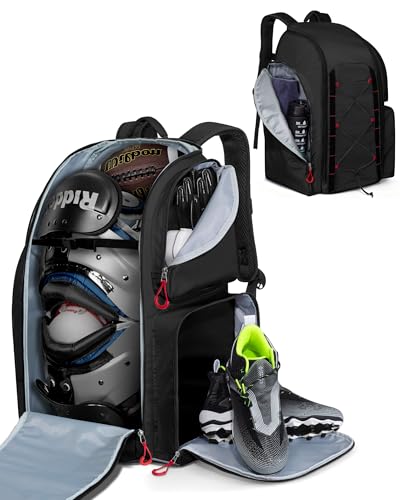
This model focuses on a dedicated shoe compartment with ventilation and a roomy main area for shoulder pads and a helmet. It includes an inner mesh pocket for training clothes and an exterior insulated pocket for drinks or wet items. A separate zipped pocket stores gloves and other small items. The bag uses 900D nylon for durability and padded straps for comfort.
Best for: Those who prioritize keeping shoes separate and ventilated while maintaining a straightforward layout for gear. Choose this if you want clear compartments without extra frills.
Caution: The emphasis on shoe and gear separation might limit oversized pockets for extra equipment beyond standard pads and a helmet.
YOREPEK Extra Large Football Gear Bag
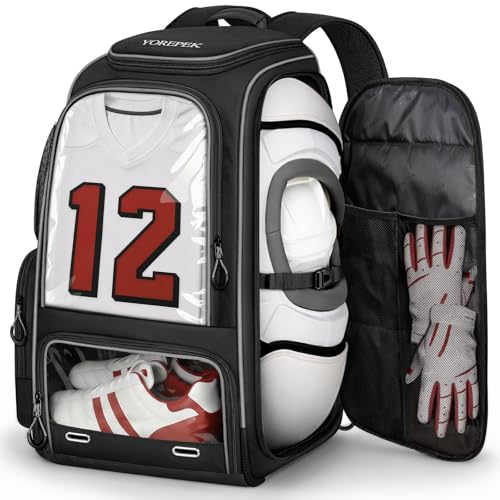
This extra-large option is designed to fit pads up to 23″W x 15″H with a helmet placed inside the pads, plus room for a cleats, jersey, and water bottle in one bag. Notably, it features a jersey display window so players can easily identify their bag in a crowded locker room or at the sideline. An isolated cleat compartment helps reduce odor transfer from footwear to uniforms.
Best for: Teams or players who need a single bag to hold full gear sets, including jerseys and display visibility. Choose this if you want quick identification and separate spaces for footwear.
Caution: Its size may be more than needed for light practice or limited storage spaces; ensure lockers or team equipment rooms can accommodate the bag dimensions.
Wilson Football Player Equipment Bag

Wilson’s bag offers a compact, straightforward option for players who want to transport essential gear like a helmet, shoes, and shoulder pads without extra compartments. The bag measures 12″L x 14″W x 24″H, making it a lighter alternative with simpler organization. It focuses on core needs with dependable durability.
Best for: Players seeking a lighter, simpler gear bag with adequate space for the basics. Choose this if you want a reliable bag without extra pockets that you may not use often.
Caution: Fewer specialized pockets may require additional accessories or separate bags for smaller items like gloves or mouthguards.
Buying Guide
What capacity do you need?
Consider the typical gear you carry. If you transport shoulder pads, helmet, cleats, and jerseys, aim for bags in the 27–30 inch range with a dedicated helmet/shoulder pad area and a separate shoe compartment.
Should you prioritize wet/dry separation?
Yes for players who practice in wet conditions or sweat heavily. Dry/wet compartments prevent damp items from dirtying jerseys or shoes, improving hygiene and bag longevity.
Is a jersey display window worth it?
Only if you frequently identify bags in busy locker rooms or need quick recognition on game day. It helps with fast gear retrieval without opening every bag.
What about ventilation and odor control?
Ventilated shoe compartments and breathable materials reduce odor buildup and moisture. This is especially important for athletes who train daily or in warm weather.
How important is portability?
Look at strap padding and weight. Wide, padded shoulder straps and back padding improve comfort during long walks from car to field. Consider a bag that balances weight with capacity.
FAQ
- What should a good football gear backpack include? A large main compartment, a separate shoes or cleats area, a helmet-friendly space, padded straps, and water-resistant fabric.
- Are external pockets useful? They can be convenient for quick access to balls, gloves, or water but may add weight and bulk.
- Is water resistance essential? For outdoor practices in varying weather, yes, to protect gear from rain and moisture.
- How do I choose for youth vs. adult players? Youth players often benefit from lighter bags with smaller dimensions, while adults may need larger, more compartmentalized bags.
- Can I use these bags for other sports? Yes. Several models support multi-sport equipment like basketballs, jerseys, and shoes, thanks to versatile compartments.
- Which bag offers the best odor control? Bags with dedicated ventilated shoe compartments and dry/wet separations tend to manage odor more effectively.