Best Backpacks for Weight Plates for Strength Training
Looking for the right backpack to carry Olympic-weight plates during pushups, squats, or rucking? This guide highlights five top options that secure plates, minimize shifting, and stay comfortable through tough sets. Each pick targets a different training style, from city-friendly rucks to tough calisthenics sessions. Best for: athletes seeking stable load during dynamic moves; best for rucking; best for plate-centric calisthenics; best overall value.
| Product | Best For | Load Capacity | Plate Compatibility |
|---|---|---|---|
| Polyfit PL8 Backpack (Olive Drab) | Stable rucking and bodyweight training | Up to 45 lbs | Olympic plates up to 17.5″ diameter, 2.5″ thick |
| Polyfit PL8 Backpack (Black Camo) | Outdoor workouts and endurance | Up to 45 lbs | Olympic plates up to 17.5″ diameter, 2.5″ thick |
| THEFITGUY Weighted Backpack | Pushups, pullups, squats with secure fit | Plates up to 17.5″ diameter, 2.5″ thick | Standard gym plates |
| PACEARTH Weighted Backpack | Calisthenics and mixed cardio | Up to 220 lbs | Most weight plates up to 17.7″ diameter, 2.4″ thick |
| GORUCK Ruck Plate Carrier 3.0 | Rucking with ergonomic design | Up to 30 lbs recommended | Ruck plates compatible |
Polyfit PL8 Backpack for Olympic Weight Plates – OD GREEN

Best for: rucking and bodyweight workouts where plate security is critical. This backpack locks plates inside with a dual-lock system to prevent bounce during push-ups, squats, and dips. It is compatible with Olympic plates up to 17.5″ in diameter and 2.5″ thick, carrying a recommended maximum load of 45 lbs. The design emphasizes a secure fit, reducing movement and maximizing form during dynamic movements.
Why selected: The dual-lock, quick-release buckles plus compression system provide predictable stability for intense sets. It suits athletes who train in tight spaces or on varied terrain where plate shift would be disruptive. Best for dedicated ruckers and strength circuits.
Limitation: Not included plates; users must source Olympic plates separately. Best used with proper weight selection to avoid shoulder strain during longer sessions.
Polyfit PL8 Backpack for Olympic Weight Plates – Black Camo

Best for: outdoor workouts and endurance-focused routines. The Black Camo version shares the same high-performance plate carrier and dual-lock system, designed to keep weight secure during rucks, runs, or hiking. It supports Olympic plates up to the same size and weight limit as the OD Green variant.
Why selected: This option adds aesthetic versatility for users who train in varied environments while preserving the same secure load mechanism. The visual difference makes it suitable for teams or individuals who want a distinct look without compromising function.
Limitation: Like the OD version, plates are not included; ensure proper plate sizing to avoid fit issues during movement.
THEFITGUY Weighted Backpack For Gym Plate

Best for: gym-based calisthenics with a dedicated plate. This backpack is purpose-built to load a full-size gym plate, enabling precise resistance during push-ups, pull-ups, squats, lunges, and calisthenics moves. It fits plates up to 17.5″ in diameter and 2.5″ thick, providing a snug training fit with reinforced stitching and a dual buckle system.
Why selected: A more trainer-focused design, emphasizing stability and controlled movement. It’s a natural choice for athletes who perform higher-repetition sets and want the weight more tightly integrated with their torso. Choose this if you need persistent plate proximity to the center of gravity.
Limitation: Heavy loading can strain shoulders if not properly fitted; use adjustable straps to minimize movement before reps.
PACEARTH Weighted Strength Training Backpack
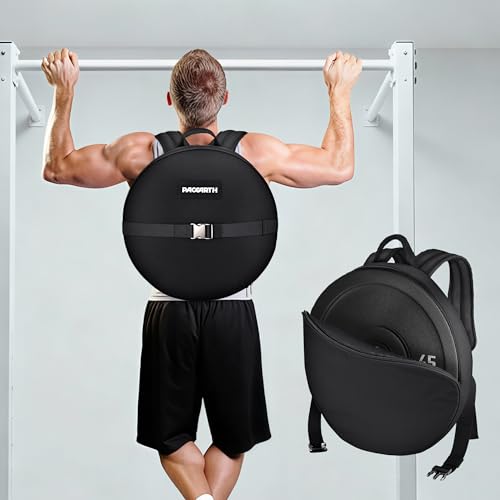
Best for: versatile strength training with adjustable resistance. This backpack supports up to 220 lbs total load and is compatible with most weight plates up to 17.7″ diameter and 2.4″ thick. It uses a metal buckle strap system and reinforced webbing to maintain weight stability during dynamic moves like squats and pull-ups.
Why selected: The higher load capacity makes it suitable for progressing weight over time, which benefits serious lifters. Its secure fit helps maintain core alignment and reduces plate shift during aggressive movements.
Limitation: The maximum load may be more than needed for beginners; start with lighter weight to build form and confidence.
GORUCK Ruck Plate Carrier 3.0

Best for: streamlined rucking with ergonomic support. The Ruck Plate Carrier is designed for carrying Ruck Plates and features wide, padded straps for comfort and stability. It supports up to 30 lbs of weight and emphasizes a high-back load to keep weight distributed over the trapezius area, reducing neck strain during longer sessions.
Why selected: It prioritizes mobility and comfort for long-duration walks or hikes with a weighted load. This carrier helps maintain posture and reduces bounce, which is important for endurance training and field workouts.
Caution: This option is optimized for rucking rather than rapid, high-impact movements; avoid using it for explosive movements where weight could shift quickly.
Buying Guide: Key Considerations For Choosing A Weight Plate Backpack
- Load capacity and plate compatibility: Confirm the maximum recommended load and that the backpack fits the standard Olympic plates (2″ center hole) up to the plate’s diameter and thickness limits.
- Locking and stability systems: Look for dual- or multi-point locking mechanisms, quick-release buckles, and internal buckles to minimize plate movement during dynamic moves.
- Fit and comfort: Check padding on the shoulders, chest, and waist, plus adjustable straps to keep weight close to the body without restricting breathing or range of motion.
- Intended use: For rucking, prioritize high back support and minimal bounce. For calisthenics, prioritize secure plate placement and compact fit. For outdoor training, consider weather-resistant materials and durability.
- Durability and materials: Seek reinforced stitching, hard-wearing fabrics, and robust buckles that withstand repeated loading and outdoor conditions.
- Maintenance and care: Ensure the design allows cleaning and inspection of straps and buckles to prevent wear from sweat and dirt.
Frequently Asked Questions
- What size plates work with these backpacks? Most are compatible with Olympic weight plates up to around 17.5″ in diameter and 2.4–2.5″ thick, with a recommended maximum load ranging from 20–45 lbs depending on the model.
- Are plates included with these backpacks? No, most options require you to supply your own Olympic plates or standard gym plates.
- Is this suitable for beginners? Beginners should start with lighter weights to learn proper form and gradually increase load to avoid shoulder or back strain.
- Can these backpacks be used for running or hiking? Yes, several models emphasize secure plate placement and a high-back load to minimize bounce during walking, rucking, or light jogging.
- Which option is best for calisthenics? Models that emphasize a snug fit and plate proximity to the torso, like THEFITGUY and Polyfit PL8 variants, are well-suited for push-ups, squats, and lunges.
- How important is weight distribution? Even weight distribution reduces spinal load and helps maintain form, especially during squats and lunges where improper balance can cause injury.