Best Balance Bike Options for 7 Year Olds: Top 5 Picks for Safe, Confident Riding
Best balance bike choices for a 7-year-old emphasize stability, growth with the child, and easy transitions to a pedal bike. The top picks below are suited for kids ready to cruise with control on sidewalks and parks. This guide helps parents choose models that fit taller riders, offer reliable brakes, and durable frames. The featured bikes are best for active kids who want a lightweight ride that supports growing confidence without pedals for the first stage, then a smooth transition to pedals later.
| Product | Why It Stands Out | Best For |
|---|---|---|
| Bicystar 16 Inch Balance Bike with Real Air Tires (Blue) | Real air tires for smoother rides and confident turns; big-kid sizing for ages 5–8. | Kids needing steady handling and a bike that grows with height. |
| GROWNEER 16″ Kids Balance Bike Blue | Lightweight high-carbon frame; easy tool-free adjustments; rear brake for controlled stops. | Parents seeking quick setup and safety features for growing riders. |
| GROWNEER 16″ Kids Balance Bike Pink | Identical build to blue version; durable finish and easy adjustability. | Kids who want a color option without compromising performance. |
| Bicystar 16 Inch Balance Bike Toddler Blue | Lightweight design with air tires; no pedals helps build balance first. | Older preschoolers approaching 7 who benefit from simple balance practice. |
| OHIIK Balance Bike 2 in 1 (14/16 Inch, Blue) | converts between balance bike and pedal bike; adjustable with quick setup. | Families wanting a single bike that grows from balance to pedals. |
Bicystar 16 Inch Balance Bike With Real Air Tires
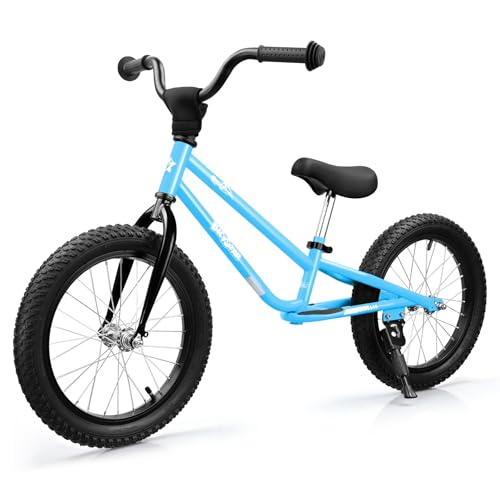
This 16-inch balance bike is built for kids aged 5–8, offering real rubber air tires for smoother handling and steadier turns. The BMX-style frame supports confident cruising on sidewalks, driveways, and park paths. The seat ranges from 15″ to 22.6″ and handlebars from 26.4″ to 29.1″, allowing growth as your child increases height and inseam. It supports up to 110 lb, making it suitable for most 7-year-olds. Best for kids who want a sturdy, lightweight bike with authentic tires for a more controlled ride. A potential limitation is that frame size is fixed to this range, so very tall riders may need alternatives.
Who it’s best for: A 7-year-old who wants a stable, air-tired ride that grows with them and stays confident on varied surfaces.
GROWNEER 16″ Kids Balance Bike Blue

This bike uses a high-carbon steel frame and lightweight rims for a total weight of about 11.2 lbs. It features a rear brake for smooth stops and a front bell for playful signaling. Tool-free quick-release clamps adjust seat height from 17″ to 24″ and handlebar height from 25″ to 28″, designed to fit riders aged 4–8. The low, balanced frame aids mounting and dismounting, making it a solid choice for a 7-year-old who needs steady balance development. Caution: ensure the child’s inseam meets the stated range for optimal reach and stability.
GROWNEER 16″ Kids Balance Bike Pink

This pink variant shares the same durable, lightweight build as the blue model, including a high-carbon steel frame and adjustable components. It provides an easy, tool-free setup with seat height 17″–24″ and handlebar height 25″–28″. The rear brake supports safe stopping, and a front bell adds fun. Best for riders who want a color option without sacrificing safety features. Limitation: color choice should be considered if availability varies by retailer, and ensure proper sizing for your child’s height.
Bicystar 16 Inch Balance Bike Toddler Blue

Designed for ages 5–8, this model features 1.8″ pneumatic rubber tires for grip and control on varied surfaces. It supports a weight up to the same standards as other 16-inch bikes and aims to help children skip training wheels with smoother balance development. Best for kids who want a durable, easy-to-handle ride that emphasizes balance first. Limitation: as with all pneumatic tires, air pressure will require periodic checks for optimal performance.
OHIIK Balance Bike 2 in 1 (14/16 Inch, Blue)

This 2-in-1 bike converts quickly from balance mode to pedal bike, supporting a seamless transition as a child grows. It offers a high-carbon steel frame for durability and a rear brake for safe stopping. The seat and handlebar are adjustable without tools, accommodating children who move from balance to pedals around ages 4–7 and beyond. Best for families seeking a single multi-stage bike. Limitation: the conversion process takes about 60 seconds and may require parental assistance during initial setup.
Buying Guide: Key Considerations For Your 7-Year-Old
- Size and growth: Look for adjustable seat and handlebar height to accommodate growing legs and torso length. For 7-year-olds, seek bikes in the 16″ size range or adjustable 12–16″ models.
- Weight and ease of handling: Lighter bikes are easier for kids to maneuver. Aim for under 12 lbs if possible, especially for younger or smaller-framed riders.
- Brakes: Rear hand brakes help children learn controlled stopping. Consider models with a front bell for added safety and fun.
- Tires: Real air tires provide better grip and shock absorption on uneven surfaces, but require maintenance to maintain pressure.
- Frames: Steel frames offer durability; check weld quality and ensure there are no sharp edges. Powder-coated finishes resist weathering.
- 1- or 2-in-1 designs: For growing riders, a 2-in-1 balance-to-pedal bike can extend usability, reducing the need for multiple purchases.
- Safety certifications: Look for models that comply with CPSIA and ASTM standards, ensuring basic safety alignment for kids’ bikes.
FAQ
- What age is best for a balance bike? Suitable ages commonly range from about 3 to 8, depending on height and cycling ability. For a 7-year-old, 16″ balance bikes or 14–16″ models with adjustable geometry work well.
- Do balance bikes replace pedals entirely? No. Balance bikes teach balance first; later, a pedal kit or transition to pedals helps complete riding skills.
- Should I choose a bike with a rear brake? Yes, a rear brake supports controlled stopping and helps older children build safe riding habits.
- Are air tires worth it? Air tires improve shock absorption and grip but require periodic inflation checks and maintenance.
- Is a 2-in-1 model better for a growing child? Often yes, as it offers a longer usage period by converting from balance to pedal mode without buying a new bike.
- What’s a good weight for a 16″ balance bike? A weight around 11–12 lbs is typically easy for a child to handle, though models vary by material and design.