Best Balance Board for Ankle Strength: Top Picks for Rehab and Better Mobility
If you’re seeking targeted ankle rehabilitation and stronger stability, a balance board can be an effective at-home tool. This guide highlights five standout options designed for ankle recovery, plantar fasciitis relief, and improved balance for daily life and sport. The top picks below are best for different needs—from guided video workouts to portable, single-leg training—with clear reasons and limitations to help you choose.
Summary table of chosen products:
| Product | Brand | Best For | Notes |
|---|---|---|---|
| Frgofl Balance Board | Frgofl | Video-guided rehab and single-leg strength | Includes 7-card exercise guide with QR videos |
| Ankle Foot Strengthener Exerciser | WANYIDA | Customizable dual-panel training | Two panels, Velcro balance bar, portable |
| 3-in-1 Slant Board & Balance Board | ODCPN | Calf stretching with full 360° balance | Six angle levels, durable wood |
| Ankle Balance Board Foot Strengthener | glitz | Foot and ankle stabilization | Birch plywood, anti-slip surface |
| Velifit Ankle Strengthener | Velifit | rehab-friendly, mobility and stability | Upgraded stability board, targeted training |
Frgofl Balance Board for Ankle Strengthening
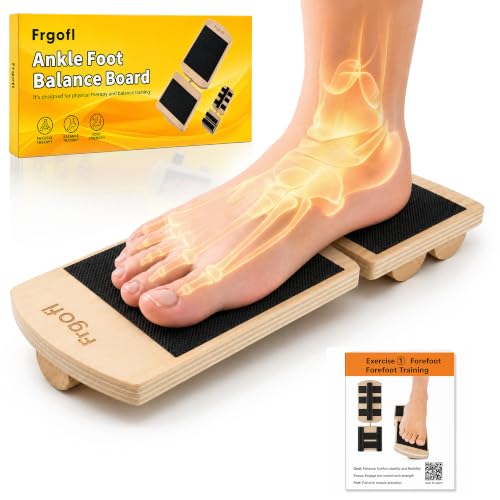
Best for guided rehab: This single-leg board focuses on ankle recovery from sprains, plantar fasciitis, and Achilles tendonitis. It strengthens muscles, improves mobility, and lowers re-injury risk, making it suitable for home therapy. It includes a 7-card exercise guide with clear visuals and QR video tutorials to ensure proper form. The kit is especially helpful for early-stage rehab and for seniors seeking stability.
Who it’s best for: individuals undergoing ankle rehab, people who prefer video-led workouts, and those needing structured routines to prevent future pain. Caution: users should follow the video instructions carefully to avoid overloading recovering tissues.
Ankle Foot Strengthener Exerciser for Sprained Ankle
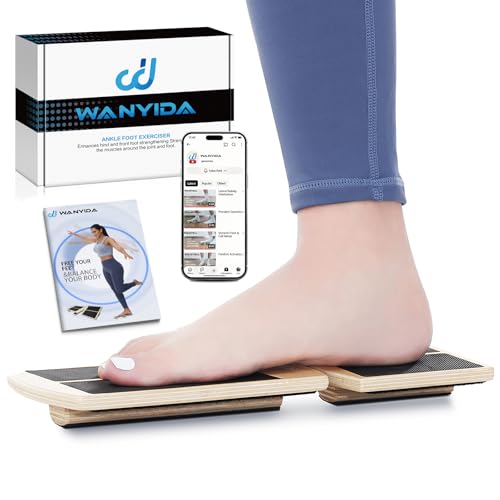
Best for customizable home workouts: This trainer features two movable panels and a Velcro balance bar to tailor the challenge. It’s designed to target ankle and foot muscles beyond traditional boards, with an upgraded guide that links to individual QR video demos. It’s compact, portable, and suited for beginners who want a guided, adjustable routine.
Who it’s best for: beginners to intermediate users seeking adjustable resistance and clear, on-device video guidance. Limitation: may require assembly and careful drawer of storage when traveling.
3-in-1 Slant Board & 180°/360° Balance Board
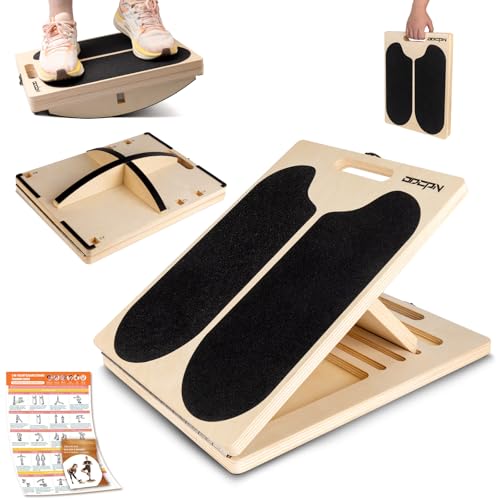
Best for comprehensive ankle and calf training: This all-in-one board combines a slant board for calf stretching with 180° balance and 360° rotation for full-range training. With six adjustable angles, it adapts from gentle stretching to intense balance work. The included training poster helps users maximize results and maintain safety during recovery.
Who it’s best for: those who want a multi-function device to address calves, ankles, and core stability. Caution: heavier setup may be less convenient for tight spaces.
Ankle Balance Board Foot Strengthener by glitz
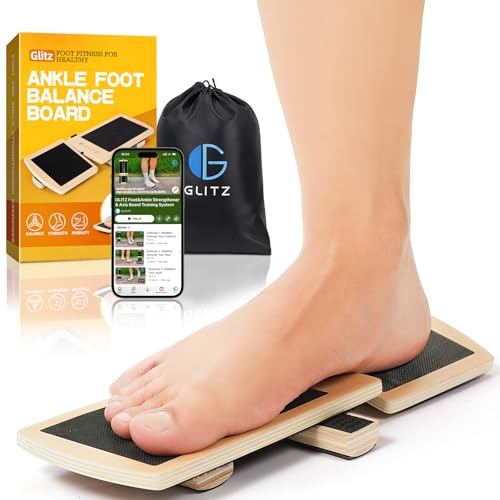
Best for stability and gait support: This board focuses on ankle stability and body control on an unstable surface, using Velcro-attached balance bars for multi-position training. Built from birch plywood with a non-slip surface, it emphasizes safety for both home workouts and on-the-go sessions. It’s well-suited for ongoing rehab and daily mobility work.
Who it’s best for: users needing a sturdy, non-slip platform with adjustable positions. Limitation: may be less intuitive for absolute beginners without guided routines.
Velifit Ankle Strengthener & Axis Board

Best for rehab-to-results training: Velifit’s single-leg ankle stability board with adjustable balance bars targets neglected muscles for improved control. It supports ankle rehab, plantar fasciitis relief, and Achilles recovery, and aims to boost mobility and circulation. The design emphasizes gradual progression and focused, targeted training for stability.
Who it’s best for: athletes and non-athletes who want a scalable program to restore ankle stability. Caution: single-leg focus means users should progress gradually to avoid overloading the ankle early on.
Just RoQH Ankle Balance Board & Strengthener

Best for targeted single-leg rehab: This single-leg board emphasizes ankle stability and foot strength with a quick-release system offering two training levels. The included scraper tool allows fast switching between resistance levels, making it suitable for progressing through rehabilitation stages. Clear separation from two-foot boards ensures targeted muscle engagement.
Who it’s best for: rehab patients who want rapid level changes during therapy sessions. Limitation: may require attention to setup to maintain consistent resistance changes during workouts.
SIDEKICK AxisBoard Rehab & Training System

Best for structured therapy programs: This AxisBoard offers a 10-day PT-guided program with a 900+ configuration options for foot and ankle work. It’s designed to target stabilizing muscles and improve balance with a dedicated app and guide. The single-board design emphasizes focused rehab and injury prevention for ongoing use.
Who it’s best for: users who want a formal program with app-supported instruction. Caution: advanced configurations may require time to master for beginners.
SIDEKICK AxisBoard Rehab & Training System (Second Listing)

Best for comprehensive rehabilitation manuals: This variant emphasizes a PT-approved 120-page guide alongside the AxisBoard, including 10-day programs for common foot and ankle injuries. It’s ideal for structured, professional-backed routines and injury prevention, with emphasis on correcting the root causes of pain.
Who it’s best for: readers seeking a formal rehabilitation plan embedded in the product ecosystem. Limitation: more suitable for users who appreciate guided programs over purely open-ended training.
Buying Guide: Key Considerations for Choosing an Ankle Balance Board
- Intended use: Choose a board that matches your rehab stage—early recovery often benefits from guided videos, while later stages may favor adjustable resistance.
- Stability and safety: Look for anti-slip surfaces, durable bases, and secure attachment for balance bars or pegs to prevent slips during training.
- Adjustability: Five to six angle settings or variable resistance levels help accommodate progress from beginners to advanced users.
- Portability: If you travel or have limited space, select a lighter, compact board with a carrying bag or easy storage.
- Guidance: Boards with QR codes, apps, or dedicated guides provide structured workouts and ensure proper form, reducing injury risk.
- Durability: Materials like birch plywood or solid wood offer long-term use; check weight capacity and surface coatings for longevity and safety.
FAQ
- Q: Is a balance board suitable for plantar fasciitis relief?
- A: Yes, many boards aim to strengthen the foot and ankle, improve stability, and reduce strain during walking and standing.
- Q: Should beginners start with video-guided boards?
- A: Video-guided boards help ensure correct technique and safer progression, making them a good choice for beginners.
- Q: How important is the single-leg focus?
- A: Single-leg training targets stabilizing muscles, which are often weaker and more injury-prone. It’s beneficial for rehab but should progress gradually.
- Q: Can I use these boards daily?
- A: Short, consistent sessions are typically recommended. Start with individual plans and adjust frequency based on comfort and recovery progress.
- Q: Do boards require assembly?
- A: Some models include components or assembly steps; others arrive ready to use. Check product details for specifics.