Best Heavy-Duty Lifting Belts for Safer, Stronger Lifts in 2026
Looking for the best belt for heavy lifting? This guide compares top heavy-lifting belts designed to support your core, protect the lower back, and improve stability during squats, deadlifts, and long shifts on the job. The recommended picks suit active laborers, serious lifters, and gym athletes who need reliable back support during demanding tasks.
Summary table of selected products:
| Product | Best For | Key Benefit | Size Range |
|---|---|---|---|
| SOLOEVER Work Back Brace | Construction, warehousing, manual labor | Adjustable, suspender-style back support | Large |
| FEATOL 4XL Lumbar Belt | Big-tits lifters, heavy routines | Four strong supports with lumbar pad | XXL–5XL |
| Genuine Leather Weightlifting Belt (Jaffick) | Regular gym workouts and powerlifting | Double-sided leather for durability | S–XXL |
| Element 26 Self-Locking Weight Lifting Belt | Everyday lifters and competitive sets | Self-locking buckle for quick, secure fit | XS–XL |
| RitFit Weight Lifting Belt | Versatile lifting and fitness | 6-inch wide, contoured support | Various (check size guide) |
SOLOEVER Work Back Brace for Heavy Lifting
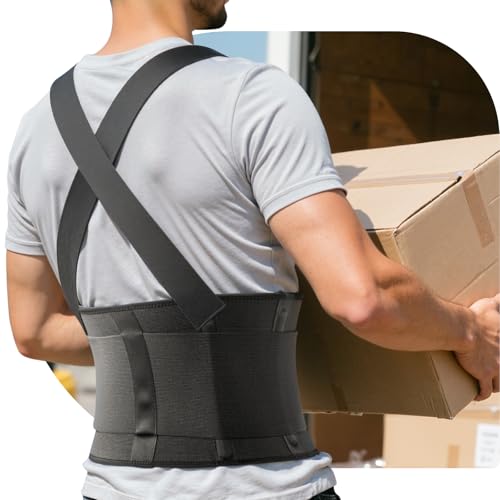
Best for active workers who need adjustable lower back support during long shifts or demanding tasks. The SOLOEVER brace provides substantial lumbar support and helps maintain proper posture, reducing back strain during heavy lifting in construction, warehousing, or similar jobs. Its adjustable fit makes it suitable for a range of body sizes, and the suspenders add stability when moving or bending. A caution: some users may find the suspenders require an initial adjustment period to sit comfortably under all-day wear.
- Lower back support tailored for heavy tasks
- Durable, breathable material for all-day wear
- Adjustable suspenders to keep the belt in place
FEATOL 4XL Lumbar Support Belt

Best for lifters needing robust, multi-point support with a flexible range of sizes. The FEATOL back brace includes multiple strong support strips and an extra lumbar pad, delivering 360-degree back stabilization. This belt’s sizing accommodates larger waists, making it suitable for powerlifters and workers dealing with chronic back discomfort from spinal issues. Choose this if you require consistent posture support during intense workouts or long lifting sessions. Limitation: the size range is extensive, but proper fit depends on accurate waist measurement at the navel level.
- Multiple supports and extra lumbar pad for stability
- Wide size range (up to 5XL)
- Great for relief from disc-related pain and sciatica
Genuine Leather Weight Lifting Belt (Jaffick)

Best for gym-goers and powerlifters seeking a durable, classic leather belt with predictable support. This double-sided leather belt provides strong back and core stabilization, helping transfer intra-abdominal pressure during lifts. The size guidance emphasizes true waist measurement, not pant size, to avoid a loose or overly tight feel. A caution: leather belts can feel stiff at first and may require a break-in period to achieve comfort for long sessions.
- Double-sided leather for durability
- Wide, stable support for back and core
- Size measured by true waist, not pant size
Element 26 Self-Locking Weight Lifting Belt

Best for athletes who want quick, secure adjustments with a low-profile fit. This belt uses a full metal buckle that auto-engages, plus a quick-release roller for rapid removal between sets. The four-inch width provides uniform pressure across the midsection, supporting intra-abdominal stability during heavy lifts. A limitation: sizing requires measurement at the navel, and users between sizes should move up for a secure fit during high-load lifts.
- Self-locking buckle for quick, secure fit
- Four-inch uniform width for consistent support
- Nylon construction offers flexibility and a low profile
RitFit Weight Lifting Belt

Best for versatile lifters needing a contoured, 6-inch belt with reliable stability. RitFit emphasizes core support across common lifts like squats, lunges, and deadlifts, aiming to reduce back strain while enabling comfortable movement. The belt uses reinforced construction to withstand repeated use. Caution: fit depends on waist measurement and should consider torso length for optimal performance during high-repetition sets.
- 6-inch wide contoured design for core stabilization
- Durable, reinforced construction
- Suitable for a range of lifts and workouts
Buying Guide: Key Considerations For Heavy Lifting Belts
What kind of lifter are you?
Consider your training goals and job demands. Gym lifters may prefer slimmer profiles with quick-release features. Workers on construction or warehouse floors might value suspender straps or extra lumbar support for all-day wear.
How do you measure for the right size?
Always measure at the level of your navel, not pant size. Use waist or core circumference to determine size, especially for belts with multiple width options and holster-like suspender designs.
What materials affect performance?
Leather belts deliver durability and peak support for powerlifting, while nylon or mesh belts offer flexibility and a cooler feel during lengthy use. Back braces with lumbar pads or multiple support strips provide multi-point stabilization for extended tasks.
How important is buckle design?
Self-locking buckles or quick-release mechanisms reduce setup time and improve safety during sets. Avoid belts with flimsy closures if you lift heavy or perform dynamic movements.
What about comfort versus protection?
A belt should protect without constricting breathing or causing discomfort under long wear. Choose breathable materials and consider suspenders or ergonomic shapes to balance protection with comfort.
How does belt width matter?
Wider belts (4–6 inches) distribute pressure more evenly and are common in powerlifting, while narrower belts fit into routine gym workouts. Your torso length and the types of lifts you perform influence the ideal width.
Frequently Asked Questions
- Q: Are back belts safe for long-term wear?
A: When properly sized and worn as intended, back belts can provide support during heavy lifting and reduce strain. Follow manufacturer guidance for wear duration and fit. - Q: Can I use a back belt for daily tasks at work?
A: Yes, many belts are designed for all-day wear in warehouses or construction. Look for breathable materials and adjustable suspenders if you need extended use. - Q: How tight should a lifting belt be?
A: It should be snug enough to feel supported without restricting breathing or causing pinching. You should be able to slide a finger between the belt and your body. - Q: Do belts improve lifting performance?
A: Belts can improve core stability and intra-abdominal pressure, which may help lift heavier loads safely when used with proper technique. - Q: Should I choose leather or nylon belts?
A: Leather belts offer strong, durable support; nylon or mesh belts provide flexibility and comfort. Your choice depends on lift type, frequency, and comfort needs.