Best Belt Squat Attachments for Cable Machines and Squat Rits You Can Buy Online
Answering a common search and purchase intent, this guide highlights belt squat attachments suitable for cable machines and racks. These options help you perform belt squats, hip thrusts, and related lower-body movements with stability and control. This selection targets: serious lifters seeking additional loading options, home gym users needing compatible accessories, and trainers aiming for safer, low-impact depth in squats. Below, find a quick comparison table and five top products with practical use cases.
| Product | Best For | Key Benefit |
|---|---|---|
| TheFITGUY Multi-Attachment Belt | Cable machines, smart home gyms | Multiple attachment points for optimal weight distribution |
| TheFITGUY Ultimate Belt | Heavy squats on racks | Low-profile, secure fit with reinforced back support |
| TAVIEW Belt for Belt Squats | Rack attachments, squats with heavy loads | Low-profile design and strong back support |
| GymPin Belt Squat Collar | Loading onto 50mm sleeves for belt squats | Robust loading collar for plates and attachments |
| REP Fitness Hip Squat Belt | Versatile rack and cable setups | Multi-point connection and solid build |
THEFITGUY Multi-Attachment Belt for Cable Machine and Smart Home Gym
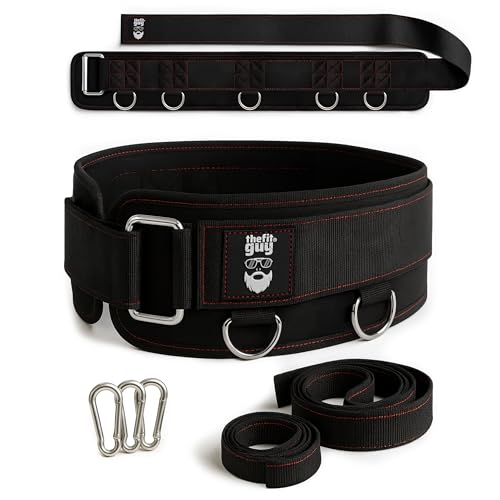
This belt supports cable squats and hip thrusts with a pulley setup. It offers five attachment points for varied connection from sides, rear, or front cables, plus two straps and three metal hooks. The 40” and 27” strap lengths enable flexible 2-to-1 connections when needed. Best for forward- or rear-cable setups in home gyms and light commercial spaces. Choose this if you want versatile connect points to tailor weight distribution during dynamic movements.
Best for: Cable squats and hip thrusts on home gyms and pulley machines.
Limitations: Assembly and setup may take more time due to multiple attachment points.
THEFITGUY Ultimate Belt for Belt Squats, Rack Attachment and Squat Machine

This belt emphasizes a low-profile, stable fit. Its 2.36″ padded side straps stay flat, preventing ride-up during deep squats. A reinforced five-panel EVA back provides lumbar stability under heavy loads. The adjustable inner strap with a solid metal buckle remains secure under tension, ensuring consistent performance with minimal slipping. Best for users who prioritize deep squat depth and steady form on racks and machines. Avoid if you need a very wide hip area for unusual biomechanics.
TAVIEW Belt For Belt Squats, Rack Attachment & Squat Machine

The TAVIEW belt stays low and moves clean with a 2.36″ low-profile design. It includes a reinforced five-panel EVA back for lumbar support and a locking inner strap with a metal buckle to prevent slipping. It’s suited for deep squats on racks and machines. Choose this if you want a pro-level belt that minimizes ride-up while maintaining solid support during heavy sets. Limitation: extra length may require setup adjustments for shorter users.
GymPin Belt Squat Collar

This heavy-duty 50mm sleeve collar is designed to accept Olympic plates for belt squats, with multi-hole attachment design for flexible connection options. It supports belt, straps, and cable-style accessories depending on training needs. Best for lifters requiring a secure loading point and compatibility with standard plates. Limitation: does not include built-in belt padding or a back support system.
REP Fitness Hip Squat Belt

The REP Hip Squat Belt focuses on quick lock-in and adjustable multi-point connections. It is designed to fit a broad range of users and setups, including machines and cable systems. Built to handle heavy loads while maintaining structural integrity, it supports versatile lower-body movements. Best for lifters who value fast setup and multiple connection points. Limitation: may be bulkier for very compact setups.
Buying Guide
What should you consider when choosing a belt squat attachment?
- Compatibility: Check whether the belt attaches to your rack, cable machine, or functional trainer with standard threads, hooks, or sleeves.
- Attachment Points: More points offer customization for weight distribution but may complicate setup.
- Low-Profile Design: A slimmer belt reduces ride-up and interference with thigh movement during deep squats.
- Back Support: A built-in back panel or reinforced padding helps maintain posture under load.
- Loading Compatibility: Ensure the belt works with standard plates or specific plate sleeves in your gym.
- Durability: Look for reinforced straps, metal buckles, and sturdy materials for long-term use.
How do you choose among cables, racks, and collars?
- For cable-based machines, favor belts with multiple attachment points and longer straps to adjust cable angle.
- For racks, a low-profile belt with secure buckles reduces bounce and keeps the hip/thigh area clear.
- Collars or loading sleeves are crucial when you want to load plates directly for belt squats or landmine work.
What safety considerations apply?
- Always verify buckle and strap integrity before heavy sets.
- Ensure the belt sits low on the hips to prevent riding up during movement.
- Use a spotter or safety bars when attempting new loads or movements.
Frequently Asked Questions
- What is a belt squat attachment best used for? It enables belt squats, hip thrusts, and similar lower-body movements with a belt or strap-based loading system.
- Can these belts be used with any cable machine? Most are compatible with common pulley systems, racks, and machines, but always verify attachment points and sleeve sizes.
- Do these belts provide back support? Many include reinforced paddings or back panels to stabilize the lumbar region during heavy sets.
- Is a low-profile belt necessary? A low-profile design helps prevent belt ride-up and keeps movement fluid through depth-heavy reps.
- Are these belts safe for beginners? Start with light loads to master form, then progress as you become comfortable with the setup.
- Do these belts fit all body sizes? Look for adjustable straps and waist ranges to accommodate a broad range of users.