Best Sit Up Bench Options for Home Gyms and Core Workouts
Answering the common buyer question: which sit up bench best fits a home gym and diverse core routines? This guide compares five top-value benches, highlighting who they’re best for, why they stand out, and practical limits to consider. Ideal for home gym enthusiasts, beginners building a compact setup, or taller users needing longer backboards.
Summary buyer table
| Product | Best For | Key Benefit | Limitations to Know |
|---|---|---|---|
| BODY RHYTHM Sit Up Bench | All-round core work | Wide curved backboard, solid 300 lbs capacity | May be taller users prefer longer backboard |
| BODYWAKER Semi-Commercial Sit-Up Bench | High-intensity routines | Up to 800 lbs capacity, adjustable heights | Heavier frame, size larger |
| FF Finer Form Adjustable Bench | Tall users and versatility | 660 lbs capacity, extended backrest | Higher price point |
| CAP Barbell Sit Up Bench | Budget-friendly basic workouts | Durable steel, multi-position decline | Basic feature set |
| NICEPEOPLE Adjustable Weight Bench | Compact spaces | 8 angles, 29.3″ backrest | Not the highest weight capacity |
BODY RHYTHM Sit Up Bench With Adjustable Heights

The BODY RHYTHM bench is designed for focused core workouts and decline training at home. It features three adjustable heights and a reverse crunch handle, expanding options for ab workouts and oblique targeting. The curved backboard (43x13x2 inches) provides a wider, longer surface for stability during sit ups and leg raises. Best for dedicated core routines and users who want a stable, compact home gym option.
- Best for stable decline sit ups and reverse crunches
- Solid 300 lbs weight capacity for home use
- Curved backboard enhances comfort and control
Who it’s best for: individuals seeking a dedicated sit-up bench with multi-height options and a robust backboard for longer workouts. Caution: taller users may notice the backboard isn’t as long as some competition models.
NICEPEOPLE Adjustable Weight Bench for Home Gym

This bench blends compact design with a versatile range of angles—eight backrest positions and flat to incline/decline options. It’s well-suited for beginners and apartment setups, offering a quick-adjust system for smoother transitions between exercises. With a backrest designed to accommodate about 90% of users, it emphasizes comfort and posture during ab work and more complex presses.
- Best for space-conscious homes and beginners
- Multiple angles help isolate chest, shoulders, and core
- Compact footprint with easy setup
Who it’s best for: buyers new to weight training or those needing a versatile bench that fits a small room. Caution: not the highest maximum weight capacity in this list, so it’s less ideal for advanced heavy lifting.
BODYWAKER Semi-Commercial Sit-Up Bench

The BODYWAKER bench leans toward high-intensity, heavy-duty use with a robust 800 pounds capacity. It offers full adjustability via its height settings and a longer backboard for taller users. This model targets users who want a durable, scalable bench for serious core work and decline bench presses at home.
- Best for high-load training and long-term durability
- Extended backboard improves comfort for tall lifters
- Heavy frame may require more floor space
Who it’s best for: power-focused home gym enthusiasts who value a substantial weight rating and stable performance across various decline exercises. Caution: heavier bench may be less suitable for very small rooms.
FF Finer Form Adjustable Sit Up Bench
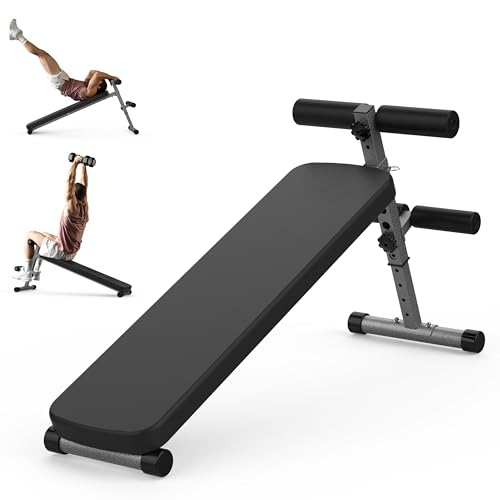
The FF Finer Form bench emphasizes a high weight capacity (660 lbs) and an extended backrest suitable for tall users. It supports a broad range of decline positions for abs and can serve as a platform for dumbbell and barbell presses. The extended backrest reduces cramping and enhances control during intense core work.
- Best for tall users needing extra back support
- Wide decline range supports varied core routines
- Higher price point relative to budget benches
Who it’s best for: users who want a single, sturdy bench for full-body workouts plus elevated comfort during sit ups. Caution: as with most premium benches, consider your space and budget beforehand.
CAP Barbell Sit Up Bench
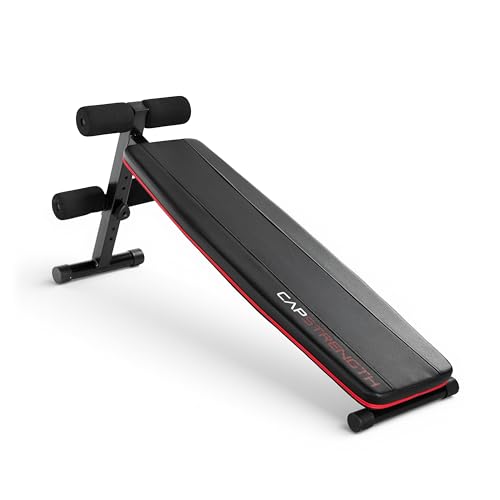
The CAP Barbell bench is a reliable, budget-friendly option with a durable steel frame and a straightforward adjustable decline. It’s a solid choice for people who want a stable stand-alone bench for sit ups, crunches, and basic decline presses.
- Best for budget-conscious buyers
- Durable steel construction supports consistent workouts
- Limited advanced features compared to higher-priced models
Who it’s best for: new or casual lifters seeking a dependable bench without extra bells and whistles. Caution: basic features may require you to upgrade later as your routine evolves.
YOLEO Adjustable Bench For Home Gym

The YOLEO bench emphasizes user-friendly setup and a high capacity with ASTM-certified credibility. It offers 84 positions of incline, decline, and flat adjustments, enabling a broad range of exercises beyond sit ups. It’s designed to be mostly pre-assembled for quick use and minimal tool setup.
- Best for quick setup and versatile training
- Wide adjustment range supports multiple training planes
- Open-box assembly claim may vary by delivery
Who it’s best for: buyers who want a feature-rich bench that’s ready to use almost immediately. Caution: ensure the space accommodates the footprint and weight capacity for your routine.
Buying Guide: Key Purchase Considerations
- Intended use: If your primary goal is core work, look for a bench with a long backboard and a secure decline range. For full-body routines, a multi-position bench may be preferable.
- Weight capacity: Higher capacity benches support heavier workouts and future progression, but ensure the bench fits your current training level and space.
- Backboard length and comfort: Taller users benefit from extended backrests and padded surfaces to reduce strain during longer sets.
- Adjustability: Multiple incline/decline settings allow targeting different muscle groups and drill variety for core and upper body training.
- Foot and leg support: A stable foot/leg roller helps maintain form during sit ups and reduces the risk of injury.
- Space and footprint: Measure your workout area. Heavier, bulkier benches require more room, especially if you plan to add other equipment.
- Ease of assembly: Some models ship nearly assembled; others require more setup. Consider your tolerance for setup time and tools.
- Budget considerations: Benches range from budget to premium. Prioritize features that align with your training goals and room constraints.
Frequently Asked Questions
- What should I look for in a sit-up bench for home use?
Answer: A stable frame, adequate backboard length, multiple decline angles, and a comfortable pad are key for safe, effective core work. - Is a higher weight capacity important if I’m just doing sit ups?
Answer: Yes, for durability and to accommodate progressive overload as you advance in strength training. - Can I use a sit-up bench for other exercises?
Answer: Yes, many benches support incline presses, dumbbell work, leg raises, and back extensions, depending on design. - Which bench is best for tall users?
Answer: Benches with extended backboards and taller overall dimensions typically provide better support for taller lifters. - Is assembly difficult for most benches?
Answer: Some are nearly ready out of the box; others require more assembly. Check product details and included tools to estimate effort. - What’s the advantage of an adjustable bench over a fixed one?
Answer: Adjustability expands exercise options and allows targeted training across different muscle groups.