Best Big Seat for Bicycle: Oversized Comfort for Every Ride
Finding the right big seat for bicycle use helps riders of all sizes enjoy longer, more comfortable workouts. This guide highlights five oversized options that emphasize support, reduced thigh friction, and stable placement. Each choice targets riders who want extra width, better weight distribution, and cushioning without sacrificing control. The selections vary in design, from noseless cushions to wide, back-supported saddles, to suit Peloton and non-Peloton bikes alike. The buyer can compare fit, load capacity, and installation ease to pick the best fit for long rides and daily commutes.
Summary at a glance: the table below compares key strengths and best-use scenarios for the five recommended big-seat products.
| Product | Best For | Key Benefit | Note |
|---|---|---|---|
| Twomaples Noseless Seat Cushion | Peloton, Exercise Bikes | Ultra-wide, low thigh friction | High-load tolerance; patent design |
| Twomaples Extra Wide Seat | Commuting, Mountain, Cruiser | Easy install, sturdy base | Includes adapter considerations |
| BLUEWIND Oversized Seat | Road and Electric Bikes | Backrest for tailbone relief | Leather-like surface |
| Xmifer Oversized Seat | Mountain, Spinning, Cruiser | Memory foam with dual springs | Breathable vent, wide footprint |
| CDYWD Noseless Oversized Seat | Peloton, Stationary Bikes | Wing-shaped ergonomic padding | Noseless design reduces inner-thigh friction |
Twomaples Noseless Bike Seat Cushion

This noseless, oversized cushion targets riders with larger hips or broader sit bones. It combines a widened base with a concave shape designed to fit round hips and relieve sit-bone pressure. It is described as suitable for Peloton bikes, electric bikes, mountain bikes, spin bikes, and various other setups. The design emphasizes reduced thigh friction and a snug, non-slip surface for steady rides. Best for: riders who want extra width without a protruding nose and who prioritize stability during long sessions. Caution: ensure your bike’s rail post can accommodate the cushion and remove the adapter if required for a proper fit.
Best for: Peloton and busy workout bikes where a secure, non-slip seat matters most. The seat is built to handle high repetition and weight up to a substantial load, according to the product notes. It suits riders who need a wide surface and reduced thigh rubbing for comfort over extended periods.
Twomaples Extra Wide Bike Seat

This extra-wide seat is designed specifically for riders with bigger buttocks, offering a supportive base and a wider contact area to distribute pressure evenly. It features a widened base with a wing-concave shape that aims to prevent shifting during rides and reduce thigh friction. It advertises a high load tolerance and easy installation, with a note to remove the seat adapter if your bike uses a rail post. Best for: cyclists who want quick replacement with a stable, comfortable cushion and a padding profile that reduces per-ride fatigue. Limitation: some bikes may require adapter adjustments for optimal fit.
Best for: riders seeking a simple swap-in upgrade that improves long-ride comfort and stability without changing bike geometry. The seat’s design emphasizes a secure fit and long-life padding capable of supporting heavier riders.
BLUEWIND Oversized Bike Seat
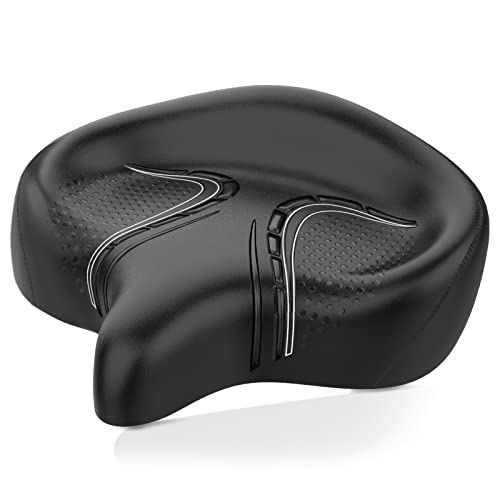
This seat offers a notably wider 13.8-inch width with a backrest, designed to reduce pressure on the back and tailbone during long rides. Its backrest design creates a larger contact area, and the cushion uses a 7 cm thick foam for additional support. A faux-leather surface provides durability and a non-slip grip, suitable for daily use in rain or shine. Best for: riders who want extra support for the lower back and tailbone, especially on longer commutes or fitness rides. Caution: backrest design may not suit every bike’s configuration; check compatibility before purchasing.
Best for: riders who value back support as a key feature, particularly on longer rides or rehabilitation-focused training sessions where tailbone relief is beneficial.
Xmifer Oversized Bike Seat
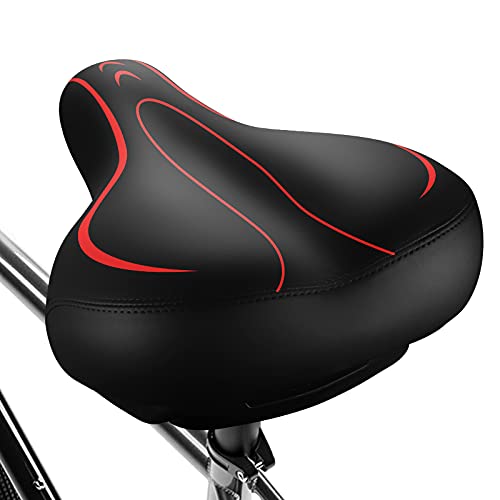
This seat pairs high-density memory foam with dual spring suspension, supporting comfort on rougher surfaces and longer rides. The footprint is wide, with a design intended to reduce pressure on the prostate and tailbone. It includes two mounting tools and an armband for visibility during night rides. Best for: riders wanting enhanced shock absorption and a larger seating area for extended workouts. Limitation: installation may require some adjustment to align height and angle with specific bike frames.
Best for: riders who want a cushioned, memory-foam feel with added stability from springs and a broad seating area for even weight distribution.
CDYWD Noseless Oversized Bike Seat

CDYWD’s noseless, wing-shaped cushion emphasizes pressure dispersion and thigh clearance. The seat is described as wide (9 x 13.5 x 5.5 inches) with a high-elastic foam wing to support broader sit bones and reduce friction. The noseless design aims to minimize thigh rubbing during long rides, which is a common point of discomfort for many cyclists. Best for: riders who want enhanced thigh clearance and sit-bone relief in a single, wide-seat package. Caution: ensure compatibility with your bike’s seat post and mounting arrangement to avoid fit issues.
Best for: cyclists prioritizing thigh clearance and long-ride relief with a broad, wing-shaped profile that distributes pressure away from sensitive areas.
Buying Guide: Big Seat For Bicycle Essentials
What to prioritize when choosing an oversized bicycle seat
- Width and surface area: Wider saddles distribute weight more evenly and reduce sit-bone pressure.
- Noseless vs. nosed designs: Noseless seats minimize friction with inner thighs but may affect comfort for some riders; test fit if possible.
- Back support and design: A backrest can relieve tailbone strain on longer rides but may not fit all frame geometries.
- Padding and materials: Memory foam and high-density padding provide different levels of comfort; consider climate and heat dissipation features.
- Mounting compatibility: Check rail post size, adapter needs, and included mounting tools or hardware to ensure a smooth installation.
- Load capacity and durability: A higher max weight rating typically indicates more robust construction; ensure your weight range is supported.
How to test fit and comfort before committing
- Measure your sit bone width and compare with seat dimensions to avoid toe-to-knee misalignment.
- Adjust height and tilt to keep knees slightly bent at the bottom of the pedal stroke for even pressure.
- Try sliding gradually into the seat and test pedaling with a short ride to feel friction or pressure points.
What to know about installation and maintenance
- Most oversized seats include mounting tools or adapters; follow the included instructions for correct alignment.
- Clean and inspect the surface after rides, especially in wet conditions to extend padding life.
- Replace worn padding if you notice persistent numbness or new pressure points during rides.
FAQ
- What makes a seat “noseless” better for some riders? – It reduces friction between the inner thighs and the seat, which can lessen pain during long rides but may feel unfamiliar to riders who prefer a traditional nose design.
- Is a wider seat always more comfortable? – Not always; comfort depends on sit-bone width, frame geometry, and riding style. A wider seat distributes pressure but must match your anatomy and bike setup.
- Do oversized seats require special installation? – Some models include adapters or mounting tools. Always verify compatibility with your bike’s seat post rail and frame before purchasing.
- Can I use these seats on any bicycle? – They’re designed for a range of bikes, including Peloton, mountain bikes, city cruisers, and road bikes. Always check size and mounting specs for your model.
- Which features are most important for long rides? – Look for a wide contact surface, pressure-dispersion padding, and thigh clearance. Back support or contoured shapes can also reduce fatigue on long sessions.
- Are these seats weather resistant? – Surface materials vary; many use wear-resistant faux-leather or micro-fiber surfaces designed to resist daily rain and wear, but care and maintenance still matter.