Best Winter Bike Glove Options for Cold-Weather Rides
When choosing bike gloves for winter, prioritize warmth, windproofing, moisture management, and touchscreen usability. This guide highlights five reliable picks that balance insulation, dexterity, and grip for American riders. Each product targets different rider needs—from daily commuting to serious winter cycling—so you can compare at a glance and pick the best match for your goals.
| Product | Best For | Key Benefit |
|---|---|---|
| SIMARI Winter Gloves | Everyday winter activities | Touchscreen compatibility and warm lining |
| rivmount Winter Gloves | Wet and windy days | Waterproof outer and windproof cuff |
| MOREOK Winter Gloves | Extreme cold cycling | 3M Thinsulate insulation and double waterproofing |
| Aerynx Winter Gloves | Layered warmth for long rides | 3-layer build with wind-blocking mid-layer |
| Souke Sports Winter Gloves | Comfortable grip on long rides | 3-piece palm construction with foam pads |
The five selections below are organized to help you compare features quickly. Each section notes who should buy and why, plus a practical caveat to consider in real-world use.
SIMARI Winter Gloves: All-Round Touchscreen Warmth
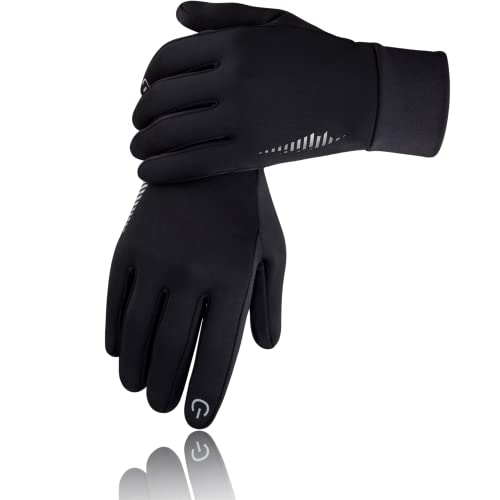
Best for riders who need reliable warmth without bulk and frequent touchscreen use. These gloves feature a 95% polyester and 5% spandex exterior with a warm flannel lining and elastic cuff to seal in heat. The silicone-grip palm plus reflective patterns boost night safety for urban cyclists. They are suitable for running, cycling, driving, typing, and light outdoor tasks in cold weather.
Selected for riders who want easy phone operation on winter rides or commutes without removing gloves. The touchscreen capability covers thumbs and forefingers for responsive control. A potential limitation is that the synthetic insulation may feel less rugged in heavy wet snow compared with specialized waterproof options.
Who it’s best for: urban riders and casual cyclists who value touch responsiveness and warmth in dry-to-mixed-winter conditions.
FanVince Cycling Gloves With Touchscreen

Best for riders who need windproof, water-resistant protection in a lightweight setup. These gloves combine a windproof, thin polyester shell with a soft thermal insulation layer. They offer touchscreen compatibility on the thumb and forefinger and feature a non-slip silica gel palm for confident grip on handlebars, bikes, or driving. They perform well in cold but not extreme downpours.
Caution: the outer layer is thin, so use with care in heavy rain or wet snow. They excel in cool-to-mild winter days and long rides where dexterity matters more than maximum bulk insulation.
Who it’s best for: cyclists who ride in windy, dry cold and want quick-dry, flexible gloves that still support phone use.
rivmount Winter Waterproof Gloves

Best for riders facing wet or snowy conditions. These gloves feature a waterproof outer fabric with a soft fleece lining and an adjustable windproof cuff to keep water and cold air out. They are lightweight and dexterous, suitable for walking, driving, cycling, and daily winter tasks. The touchscreen capability on all fingers adds practical convenience for device use on the go.
Limitation: while highly protective against rain, the cuffs are not fully waterproof, so avoid getting them soaked in heavy slush. Choose this if warmth and dryness are your priority in wet climates.
Who it’s best for: riders who frequently encounter slush, light rain, or mixed winter days and want a dependable, low-bulk option.
MOREOK Thinsulate Winter Gloves

Best for extreme-cold cycling and outdoor activities. The gloves use 3M Thinsulate insulation (200 gram) to deliver warmth in frigid conditions while maintaining breathability. They combine a water-resistant outer layer with a TPU-membrane between layers for double protection and a velvet lining for comfort. Touchscreen capability covers all the thumb and finger tips, and the nitrile palm coating improves grip in wet or icy settings.
Limitation: bulkier due to insulation, which can reduce dexterity for very fine tasks. Choose this if you expect subfreezing days and long rides in harsh weather.
Who it’s best for: serious winter riders or workers who need long-lasting warmth in very cold, damp environments.
Aerynx 3-Layer Thermal Winter Gloves
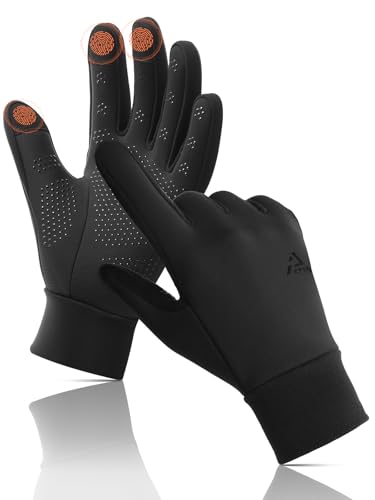
Best for layered warmth with wind protection. The three-layer design stacks a wind-blocking mid-layer with fleece for warmth and a water-repellent outer shell. The thumb, index, and middle fingertips feature conductive yarn for touchscreen use, making maps and messages accessible during rides. The setup is suited for daily commutes and longer winter rides where consistent warmth is essential.
Warning: for heavy rain or all-day wet riding, pair with a rain shell to maximize protection. This approach offers practical versatility for variable winter conditions.
Who it’s best for: riders who want a balanced, layered glove that can adapt to changing weather without compromising touchscreen control.
Souke Sports Winter Cycling Gloves

Best for riders seeking reliable grip and vibration dampening on long rides. The gloves combine a windproof outer with thermal fleece and silicone strips on the palm and fingers to enhance grip. The 3-piece palm construction reduces bunching, while 5mm foam pads help absorb road vibrations, contributing to comfort on extended cycling sessions and workouts.
Limitation: may be bulkier than non-insulated options, so consider fit if you need tight control in urban settings. Choose these for comfort and solid grip over longer distances.
Who it’s best for: long-distance cyclists and athletes who value grip, vibration absorption, and warmth in cold-weather training.
Buying Guide: Key Considerations for Winter Bike Gloves
- Warmth vs. dexterity: heavier insulation offers warmth but can reduce finger precision. Look for layered designs if you need both.
- Weather protection: waterproof or water-resistant shells protect against snow and rain. Pair with a shell for heavy precipitation.
- Grip and control: silicone palms and padded palms improve grip and reduce hand fatigue on long rides.
- Touchscreen compatibility: verify which fingertips are conductive if you frequently use phones, GPS, or smart devices.
- Cuff design: cuffs that seal around the wrist help keep cold air and moisture out; consider adjustability for a secure fit.
- Fit and bulk: ensure the size allows full range of motion without feeling tight or loose; try to test with gloves on your preferred bike grips if possible.
FAQ
- Are winter bike gloves waterproof? Some models are waterproof or water-resistant; check the outer fabric and membrane for your climate needs.
- Do gloves affect touchscreen use in winter? Many designs include conductive fingertips or three-finger touch compatibility for easy device interaction.
- How warm should winter gloves be for cycling? For most cold rides, look for insulation that maintains warmth around 0 to 32 °F with wind protection.
- Can I use regular gloves for winter cycling? Regular gloves may not provide adequate warmth or grip in freezing weather; specialized winter gloves are recommended.
- Is bulk insulation better for warmth? More insulation helps warmth but can reduce dexterity; layered or thermally efficient options offer a better balance.