Best Bike Pump for Mountain Bike: Essential Air Pumps for Trails
Answer: Choose a durable floor pump or portable inflator with Presta/Schrader compatibility, high PSI range, and a clear gauge for easy trail-side maintenance. These five pumps offer reliable performance for mountain bikes, from compact on-the-go options to floor pumps for home workstations. The best choice depends on how you ride, storage space, and how often you tune tires on the trail.
| Product | Best For | |
|---|---|---|
| BV Bike Pump Out Of Durable Steel | Carrying on rides and quick field adjustments | 160 PSI, reversible Presta/Schrader |
| AstroAI L7 Tire Inflator | All-around portability with digital gauge | Digital display, 150 PSI, multiple modes |
| Bike Floor Pump By Panaride (Advanced) | Home workshop and frequent riders | 120 PSI, dual valve compatibility |
| BV Mini Bike Pump | Compact carry-along for mountain bikes | 120 PSI, portable with smart valve |
| Topeak JoeBlow Sport III | Heavy-duty high-pressure inflation | 160 PSI, DX5 pump head, long hose |
BV Bike Pump Out Of Durable Steel

Best for riders who want a robust, field-ready option. This BV pump uses a steel barrel for durability and delivers up to 160 PSI, suitable for bikes and balls. It features an ergonomically designed handle for comfort and a reversible Presta/Schrader head. The compact 16.25-inch form makes it easy to stash in a backpack or a bottle cage mount. Caution: heavier use may feel less comfortable without a stand or floor setup.
Who it’s best for: mountain bikers who want a reliable pump on longer rides or trails with limited access to tools. Why selected: the high-pressure capability and steel build balance portability with durability. Use it for quick tire top-ups on the trail or during ride breaks.
AstroAI L7 Tire Inflator

Best for riders who value a digital readout and multi-mode presets. The AstroAI L7 offers a TrueGauge sensor with rapid pressure data collection and a digital display. It supports 4+ preset modes (car, motorcycle, bicycle, ball) and 4 units (PSI, Bar, kPa, kg/cm²). It weighs under a pound, and its compact size makes it easy to carry on MTB trips. Caution: incompatible with some heavy-duty tires; check your tire type before inflation.
Who it’s best for: trail riders who want quick, precise readings and easy preset inflation. Why selected: accurate digital measurements reduce guesswork on MTB tires and Downhill setups, making top-offs safer and faster.
Bike Floor Pump By Panaride (Advanced)
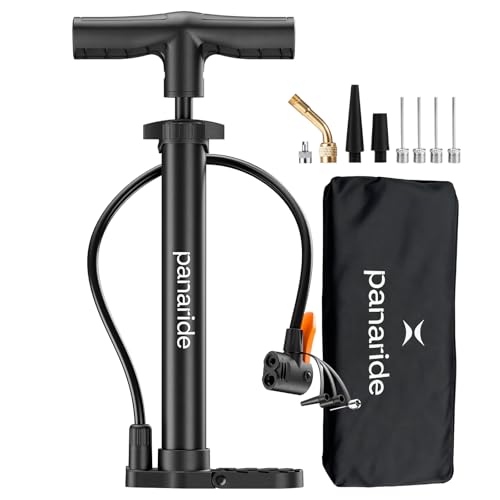
Best for home workshop setups and frequent riders who need steady, high-volume inflation. The Panaride floor pump supports both Presta and Schrader valves and delivers up to 120 PSI. Its ergonomic design includes a stable base and a comfortable handle for extended pumping sessions. Caution: 120 PSI may be limiting for some downhill MTB setups; consider a higher-PSI option for fat tires.
Who it’s best for: riders who primarily inflate at home or in a fixed location. Why selected: dual-valve compatibility and a robust floor pump design ensure long-term reliability for road and mountain bikes alike.
BV Mini Bike Pump Portable Frame Pump
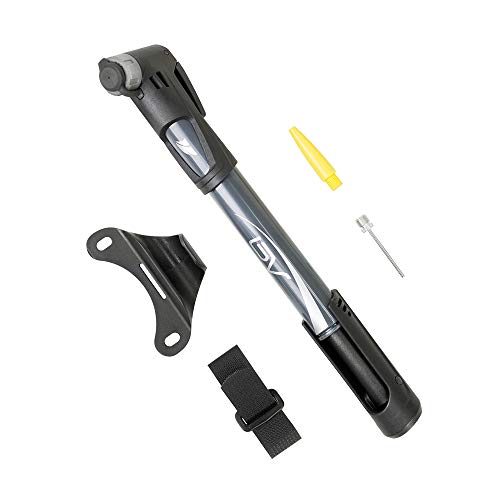
Best for riders who need a compact, on-the-go inflator. This BV mini pump offers a 120 PSI maximum with a mounting bracket included for secure on-frame storage. It uses a smart valve that fits Presta and Schrader, making it a convenient backup pump when space is tight. Caution: smaller volume means longer pumping times for high-pressure tires; not ideal for rapid high-volume inflation.
Who it’s best for: ultralight hikers, riders with limited pack space, and those who want a spare inflator on their bike. Why selected: portability and dual-valve compatibility make it a reliable backup pump for on-trail adjustments.
Panaride Bike Pump With Gauge

Best for riders who want precise pressure readouts on the floor. This Panaride model features a 2-inch dial gauge, measuring up to 160 PSI, and includes necessary adapters for needles and balls. It’s compatible with Presta and Schrader valves and includes an angle adapter for hard-to-reach spots. Caution: some users may prefer a longer hose for accessibility on larger frames.
Who it’s best for: road and mountain bikers who value accurate gauge reads and a stable floor pumping experience. Why selected: clarity of the gauge reduces over- or under-inflation, supporting safer tire pressure management.
Topeak JoeBlow Sport III

Best for serious MTB riders seeking a durable, high-volume floor pump. The JoeBlow Sport III features a steel barrel, a large 3-inch analog gauge, and a universal DX5 head that fits Presta, Schrader, and Dunlop valves. It delivers up to 160 PSI and includes a long hose for easy access. Caution: heavier and bulkier than portable models; best used at home or in a bike workshop.
Who it’s best for: dedicated mountain biking enthusiasts who inflate tires frequently and value a stable, professional-grade pump. Why selected: reliability and a broad valve compatibility make it a preferred choice for frequent, high-pressure inflations.
Buying Guide
What should you consider when choosing a bike pump for mountain biking?
- Valve compatibility: Ensure the pump supports Presta and Schrader valves, and if needed, Dunlop compatibility. This matters on mixed-wheel setups or when sharing with others.
- PSI range and accuracy: Look for models with at least 100–160 PSI capability for MTB tires and a clear gauge or digital readout for precise inflation.
- Portability vs. stability: Portable pumps are ideal for mid-ride adjustments, while floor pumps offer speed and stability at home or in a shop.
- Gauge type: Analog gauges are simple and reliable; digital gauges provide precise readings and historical data, useful for training or maintenance logs.
- Build quality and durability: Steel barrels and robust hoses are preferable for frequent use, especially on rugged trails.
- Accessories and mounting: Brackets or mounting kits help keep the pump accessible on the frame or in a bag, and included needle/ball adapters expand versatility.
- Usage environment: If you ride long distances or in remote areas, a compact pump with high PSI and a long hose can be crucial for efficient on-trail maintenance.
Frequently Asked Questions
- What is the ideal tire pressure for mountain bikes?
– It varies by rider weight, terrain, and tire width, but many riders target 20–30 PSI for downhills and higher pressures for smoother, fast sections. Always start with the manufacturer’s recommended pressure and adjust as needed. - Should I buy a portable pump or a floor pump?
– Portable pumps are best for on-trail fixes and emergency use, while floor pumps are efficient for home maintenance and quick setups before rides. - Is a digital gauge better than an analog gauge?
– Digital gauges provide precise numbers and easy readability, but an accurate analog gauge can be just as effective with clear markings and reliability. - Can I use the same pump for balls and tires?
– Yes, if the pump includes needle adapters and supports the correct valve heads; many models listed include these features. - Do all pumps fit Presta and Schrader valves?
– Most pumps on this list do, but it’s important to verify valve compatibility before purchase to avoid adapters. - What maintenance is needed for a bike pump?
– Keep the hose and valve heads clean, inspect the connection seals, and replace worn parts as needed to maintain accuracy and performance.