Best Bikes for Kids With Disabilities: Safe Rides for Every Ability
Parents seeking inclusive, accessible bikes for children with mobility or coordination challenges will find a range of adaptive and multi-use options. This guide highlights five top picks designed to support stability, confidence, and independent riding. Each product targets different needs—from three-wwheel stability and pedal-assist to grow-with-me designs and balance-to-pedal transitions. Ideal buyers include caregivers seeking beginner-friendly rides, therapists looking for transitional tools, and families prioritizing safety features and easy control.
Quick Buying Snapshot
| Product | Best For | Key Benefit |
|---|---|---|
| hauck Hurricane Go Kart | Young riders who want a hands-on pedal experience | Authentic driving feel with handbrake and sturdy build |
| NAIZEA Electric Kids Bike | Introduce kids to electric assistance with stability | Three-wheel design with selectable speeds |
| MOSHAY Adaptive 20″ Bike | Beginner riders needing ground contact | Size guidance and safety-tested brakes |
| Ridego 3-in-1 Toddler Tricycle | Toddlers growing into riding | 3-in-1 grow-with-me versatility |
| MOOHOTO 16″ Electric Tricycle | Smaller riders needing reduced effort | Low step-through frame, adjustable seat |
Hauck Hurricane 4-Wheel Go Kart

The Hauck Hurricane Go Kart offers a pedal-powered driving experience designed for ages 4–10. It emphasizes real driving control with an advanced handbrake system and durable, low-profile wheels. This option is best for kids who crave active engagement and a sense of speed without batteries. The vehicle’s bold graphics and robust construction support durable use indoors or outdoors.
Best for: Active beginners who benefit from pedal power and direct steering. The handbrake and real-kart feel help develop coordination and confidence. Limitation: Requires ongoing pedaling effort from the rider, which may be tiring for some younger children or energy-constrained users.
NAIZEA Electric Kids Bike – 16 Inch

The NAIZEA Electric Kids Bike combines three-wheel stability with a child-friendly electric drive. It’s suitable for children ages 6–12 who benefit from low-speed electric assistance and a simple LCD interface. The aluminum frame and thicker tires help absorb minor bumps, enhancing comfort during learning and steady riding in low-traffic areas.
Best for: Families seeking an assistive option to build confidence with light motorized support. Choose this if you want adjustable speed settings and a visible LCD readout. Caution: Electric components require careful supervision and routine maintenance to ensure safety and reliability.
MOSHAY 20 Inch Adaptive Training Wheel Bike

The MOSHAY 20″ adaptive bike is designed for beginners with a focus on safety, including a hand brake, a coaster brake option, and a fully protected chain guard. The bike targets riders aged roughly 6–12 who need grounded control and a slower, controlled introduction to cycling. Its size guidance and ground-contact features help children learn balance safely.
Best for: Children who need a calm, stable transition from support-assisted riding to independent pedaling. Limitation: The coaster brake option may require parental guidance during early stages of braking familiarity.
Ridego 3-in-1 Toddler Tricycle

The Ridego 3-in-1 Toddler Tricycle adapts as a child grows—from a parent-controlled push trike to a balance-trike and finally a toddler bike. Its adjustable seat and 360° spinner mode support evolving balance, motor control, and independence. This option is well-suited for families seeking a single, long-lasting ride-on toy with multiple configurations.
Best for: Toddlers or preschoolers ready to transition through stages with parental guidance. Choose this if you want one product that grows with your child. Limitation: Early use relies on parental steering in push mode, which may not suit very independent riders initially.
MOOHOTO 16″ Electric Tricycle
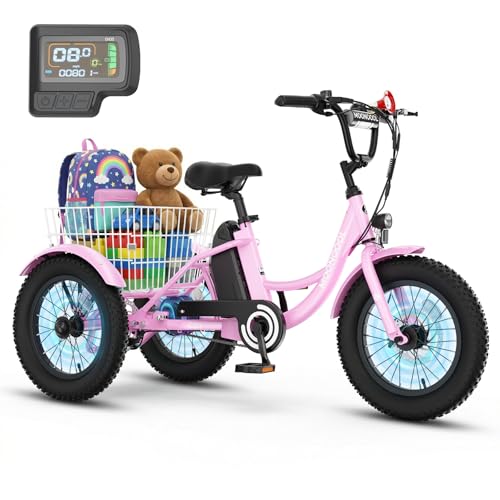
The MOOHOTO 16″ Electric Tricycle is built for smaller riders seeking a low-threshold electric ride. It features a low step-through aluminum frame, front and rear disc brakes, and fat tires for stability on varied surfaces. It offers controlled speeds, a removable battery, and a rear basket for carrying essentials during outings.
Best for: Younger or smaller riders needing assistance with pedaling while retaining the experience of riding. Better for: riders who benefit from a motorized boost to build confidence. Caution: Ensure supervision with electrical components and proper charging practices.
Buying Guide: Key Considerations for Kids With Disabilities
- Stability vs. Freedom of Movement: Three-wheel designs offer more balance but may limit the sense of independent motion. Balance-to-pedal configurations can provide a smoother transition to independent cycling.
- Assistance Type: Pedal-powered, handbrake-focused, or motor-assisted bikes each serve different confidence levels and physical capabilities. Choose based on strength, endurance, and supervision needs.
- Size and Growth: Look for adjustable seats and scalable configurations to extend the usable life of the bike as the child grows.
- Safety Features: Chain guards, dual braking systems, fenders, and reflective elements support safer riding in various environments.
- Maintenance and Durability: Durable frames, simple brake systems, and low-maintenance parts reduce ongoing effort for caregivers and families.
- Usage Context: Indoor vs. outdoor use, smooth pavements vs. rougher surfaces, and supervision levels influence the best choice for each child.
- Learning Curve: Bikes with clear indicators for progression—from balance to pedal—help structure gradual skill-building and confidence.
Frequently Asked Questions
- What type of bike is best for a child with balance challenges? A three-wheel or tricycle design provides stability and helps build balance before transitioning to a two-wheel bike.
- Can electric bikes be appropriate for younger kids? Yes, but choose models with low top speeds and strong supervision to ease learning curves and safety concerns.
- How do I know if my child has the right reach and leg room? Ensure the rider can touch the ground with the balls of their feet and that the seat can be adjusted for leg extension without forcing the knee.
- What safety gear should accompany these bikes? A certified helmet, knee and elbow pads, and visible clothing or reflective gear improve safety during practice and outings.
- Should I buy a bike that grows with my child? Yes—models with adjustable seats, removable training wheels, and scalable configurations help maximize the bike’s lifetime value.
- How important is supervision for early riding stages? Supervision is crucial, especially when motor-assisted or pedal-powered bikes are used, to ensure proper braking and safe handling.