Best Bow and Arrow for Beginners: A Clear Guide to Starter Archery Kits
Answering the common buyer question: which bow and arrow set is best for beginners? This guide highlights beginner-friendly options suited for kids, teens, and adults just starting in archery. Each product is chosen for safety, ease of use, and potential for steady progress. Ideal buyers include curious kids exploring sports, teens seeking a hobby, and adults picking up archery as a new activity. Below, you’ll find quick comparisons, practical notes, and a Buying Guide to help you decide which kit fits your needs and space.
| Product | Who It’s For | Why It Was Chosen |
|---|---|---|
| Mxessua 45″ Youth Bow Set | Young beginners to early teens | Low draw weight, safety features, dual-handed design |
| LWANO Recurve Bow (40 lbs) | Older teens to adults | AMBIDEXTROUS design, takedown for portability |
| SOPOGER Recurve Bow (30 lbs) | Adults new to archery | Solid learning weight, durable build, ambidextrous |
| CrazyMouse Bow Set | Teens and families | All-in-one beginner kit, safety-focused |
| BOWRILLA Kids Set | Young children (6+) | Built-in aim guide, lightweight and easy handling |
Mxessua 45″ Youth Bow And Arrow Set
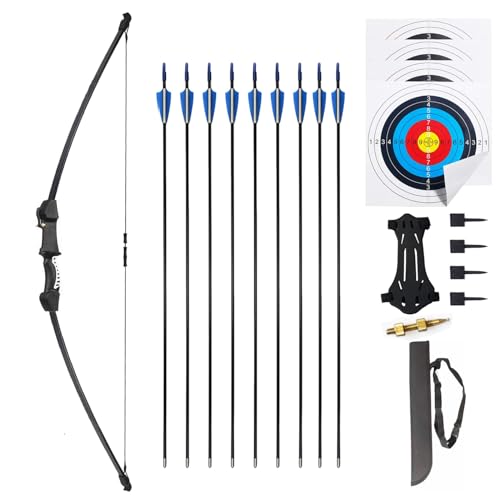
Best for young beginners who want a full starter kit. The 45-inch bow with a 15-20 lb draw weight supports growth from late childhood into teen years. Fiberglass limbs, silicone grip, and a safety-focused design help reduce fatigue and injuries. Arrows are blunt-tipped, and a finger saver plus arm guard promote safe practice. The dual-handed design makes it suitable for right- or left-handed beginners. Use this if you want a complete family-friendly option that can grow with the user.
Suitable for ages 8-16 and even adult novices, this set emphasizes ease of assembly and consistent practice. A low-risk entry point reduces early frustration and builds confidence in technique. A potential limitation is the lighter draw weight, which may encourage longer sessions at a comfortable pace but offers slower progress for those seeking heavier resistance.
LWANO Recurve Bow For Beginners (40 Lbs)

Best for adults and ambitious teens starting with a realistic target weight. The takedown design supports easy transport and storage, while the ambidextrous grip accommodates both hand preferences. A clear instruction manual helps new archers start within minutes, and dual arrow rests reduce arrow drops during practice. Choose this if you want a versatile setup that scales to more advanced targets as skill grows. Caution: ensure proper protective gear and appropriate arrows are used for safety and performance.
SOPOGER Recurve Bow Set (30 Lbs)

Best learning weight for adults beginning archery with gradual strength development. The 30-pound draw weight provides meaningful resistance without overwhelming new archers. Features include reinforced nylon fiber core, high-response fiberglass limbs, and an ambidextrous design that suits both right- and left-handed shooters. It’s a solid choice for technique-focused practice. Limitation: beginners may outgrow the 30 lb weight as they gain strength and may need a heavier option later.
CrazyMouse All-In-One Beginner Kit

Best for families seeking a complete starter experience. The set includes a 45-inch recurve bow, target arrows, a quiver, and target faces. Ambidextrous grip supports shared use, and the lightweight construction helps younger shooters handle shots confidently. Use this if you want a simple, ready-to-shoot option with safety-first design. Caution: check the included targets for age-appropriate sizing and ensure supervision for younger beginners.
BOWRILLA Kids Archery Set
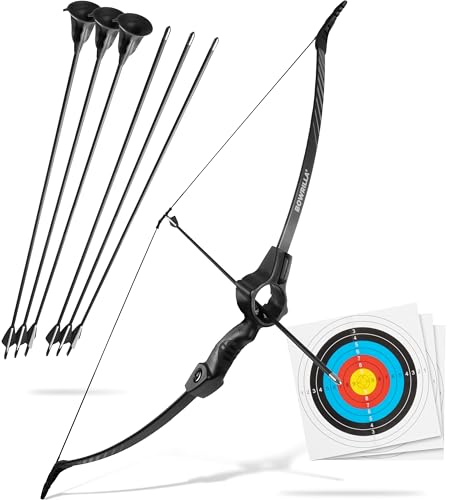
Best entry-point for younger children 6+. The kit includes an aim guide, six carbon hybrid arrows, and three targets to foster quick wins and ongoing motivation. The built-in aiming aid helps new archers align shots, supporting early success and steady technique development. Limitation: designed for younger users; adults may find the draw weight and sizing less suitable for long-term use as a primary archery kit.
Buying Guide: Key Considerations For Beginners
Safety first: Look for blunt-tipped arrows, protective gear, and clearly labeled safe usage instructions. For younger archers, choose sets with ambidextrous grips and lighter draw weights. For teens and adults, consider takedown designs for easier transport and the ability to upgrade to heavier draw weights as strength grows.
Draw weight matters: Beginners typically start with 15-40 lb ranges. Lighter weights build technique and confidence, while heavier weights accelerate strength development but may increase fatigue. Ambidextrous designs help households with multiple beginners.
Durability and maintenance: Riser and limb materials influence lifespan. Nylon and fiberglass builds are common in entry kits, offering durability under regular practice. Check included accessories like finger guards, arm guards, and arrow rests, which support long sessions and consistent form.
Space and usage: Consider indoor ranges, backyards, or school programs. Shorter, lighter sets are better for small spaces and younger archers, while teens and adults may benefit from portable takedowns and more realistic forms for real target practice.
Frequently Asked Questions
- What is a good starting draw weight for beginners? – Generally 15-30 lb for kids and light-use beginners, 30-40 lb for older teens and adults starting with steady technique.
- Should beginners use a take-down bow? – Yes, takedown designs are easier to transport and upgrade, making them ideal for growing archers and travel.
- What safety gear is essential? – An arm guard, finger protection, and a properly fitted finger tab or guard; always supervise children during practice.
- Is ambidextrous design important? – Helpful for beginners who haven’t chosen a dominant hand, and it allows shared use among multiple learners.
- How do I know if a kit is beginner-friendly? – Look for clear manuals, simple assembly, blunt-tipped arrows, and forgiving bow weight.
- Can I progress to competition with a beginner kit? – Many kits are designed for practice and progression; choose a kit labeled for training and standard target archery to transition to competition later.