Best Boxes for Box Squats: Top Plyo Boxes for Home Gyms
Answer: A sturdy plyo box is essential for safe, effective box squats at home. This guide highlights five dependable options suited for different budgets and training goals, from soft-padded foam boxes to rugged steel platforms. Best for home gym beginners are forgiving foam boxes; best for heavy lifters are steel or wooden boxes with high weight capacity; best for space-conscious setups are adjustable 3-in-1 boxes. The table below compares key details at a glance.
| Product | Height Options | Best For | Material |
|---|---|---|---|
| BalanceFrom 3-in-1 Foam Plyo Box (16″/20″/24″) | 16, 20, 24 in | General plyo, HIIT, beginners | High-density foam |
| Yes4All 3-in-1 Soft-Padded Plyo Box | Three heights | Versatile, easy to store | Foam with vinyl cover |
| Rage Fitness 12″ Steel Plyo Box | 12 in | Heavy-duty training, heavier lifters | Steel with rubber components |
| GanFindX 12 Inch Steel Plyometric Box | 12 in | High impact, robust stability | Steel with rubber feet |
| CAELUM 3-in-1 Wooden Plyo Box (16″/13″/12″) | 12, 13, 16 in | Strength & agility training | Wooden plywood |
BalanceFrom 3-in-1 Rotatable Foam Plyo Box

Best for: beginners and home gyms needing a lightweight, versatile box. The 16″/20″/24″ height options accommodate a wide range of users and exercises, including box squats, step-ups, and lateral jumps. The high-density foam provides softer landings to reduce shin scrapes and joint impact during early training phases.
Why chosen: A rotating 3-in-1 design saves space and delivers adjustable height without extra equipment. Its textured, anti-slip surface helps maintain stance during jumps and squats, enhancing safety for first-time squatters and progressive loaders alike.
Caution: While foam offers comfort, it may compress with heavy, repeated loads; consider pairing with a higher-capacity option for advanced lifters.
Yes4All 3-in-1 Soft-Padded Plyo Box

Best for: users who want multiple heights without sacrificing comfort. This box offers three height options and a cushioned surface, making it suitable for lighter-to-moderate loads and progressions in plyometrics, step-ups, and conditioning.
Why chosen: Its three-layer construction—wood core, EVA foam, and vinyl cover—emphasizes stability and durability while cushioning landings. The soft surface reduces impact on shins during repeated reps.
Caution: The padded surface, while comfortable, may wear over time with aggressive use or very heavy weights; check for padding integrity periodically.
Rage Fitness 12 Inch Steel Plyo Box

Best for: athletes seeking a compact steel platform with high load tolerance. The 12″ height is ideal for intermediate to advanced athletes focusing on explosive power, balance, and multi-joint strength.
Why chosen: A steel construction with a wide base and rubber components minimizes tipping and slipping, supporting high-intensity box jumps, push-ups, and step-ups. Its small footprint helps maintain a tighter home gym space.
Caution: Heavier steel can transfer more impact through the foot; ensure proper footwear and ankle stability when progressing to higher-volume sessions.
GanFindX Steel Plyometric Box, 12 Inch

Best for: serious home gym users who need robust stability for high-intensity jumps and conditioning. The 12″ steel platform supports up to 500 lbs, suitable for heavier athletes and rigorous training cycles.
Why chosen: Heavy-duty reinforced steel with a wide trapezoid base reduces movement during explosive reps. The textured top surface provides secure footing, and rubber base pads help protect floors.
Caution: Steel boxes can be harder on joints during repetitive reps; adjust volume and depth to maintain form and reduce impact.
CAELUM 3-in-1 Wooden Plyo Box
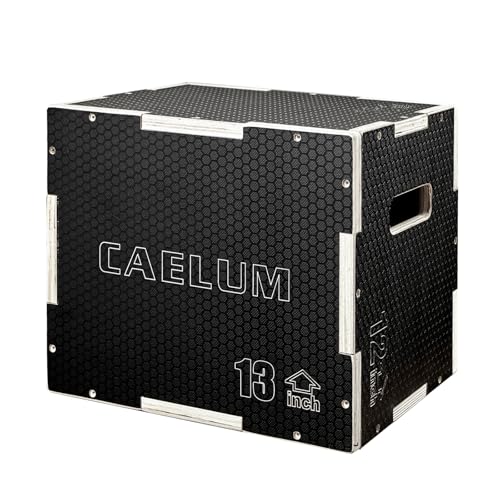
Best for: enthusiasts who want a natural-wood feel with adjustable heights. The 16″, 13″, and 12″ options cover a broad range of squat and plyometric variations, from beginners to advanced lifters.
Why chosen: Built from high-quality plywood with puzzle joints, this box supports up to 400 lbs and maintains stability without wobble. The honeycomb-textured surface offers solid grip and reduced risk of slipping.
Caution: Wooden boxes require proper surface protection to prevent wear on floors; ensure a non-slip mat is used if the floor is slick.
Buying Guide: Key Considerations For Selecting A Box For Box Squats
- Height versatility: Choose a box with adjustable heights or multiple fixed heights that match your current strength and progression plan.
- Material and durability: Foam boxes are gentler on shins but may compress under heavy loads; steel and wood boxes offer higher weight capacity and stability but can be harder on joints.
- Surface grip: Look for a non-slip top surface and a stable base to prevent slipping during jumps or squats.
- Portability and space: If space is limited, consider multi-height boxes that fold, rotate, or stack; ensure you have room for safe landings.
- Weight capacity: Match the box’s maximum weight rating to your current and anticipated training loads to avoid safety risks.
- Maintenance: Foam and vinyl coverings are easier to wipe clean; wooden boxes may require surface care and floor protection.
- Safety features: Smooth edges, rounded corners, and secure joinery reduce the chance of injuries during high-impact moves.
Frequently Asked Questions
- What height should I start with for box squats? Start with a height that allows you to reach parallel or slightly below, ensuring proper form; gradually increase height as you gain strength.
- Is a wooden or steel box better for beginners? For beginners, wood or foam can be gentler on joints and easier to control; steel is ideal for heavier loads and durable, long-term use.
- Can I use a regular step instead of a plyo box? A sturdy, purpose-built plyo box is recommended for safety and consistent height, but a solid step can work for basic training if designed for plyometric use.
- How do I protect my floors when using a box? Use a non-slip mat or thick gym flooring; consider boxes with rubber feet or base padding to prevent floor damage.
- How many days per week should I incorporate box squats? Start with 2–3 sessions per week, allowing for recovery between high-intensity sets, and adjust based on progress and fatigue.
- What is the best approach to progressing heights? Use a linear progression by increasing height in small steps (2–4 inches) as you maintain proper squat form and control.