Best Foot Fracture Brace Options for Stress Fracture Recovery
When recovering from a foot stress fracture, the right brace or walking boot can accelerate healing and protect the injury during daily activity. This guide highlights five well-suited options for different needs, from lightweight post-op shoes to rigid walking boots and ankle braces. Best for athletes easing back into activity, travelers needing reliable immobilization, or anyone seeking comfortable, supportive footwear during recovery.
Comparison Of Top Picks
- United Ortho USA14115 Short Air Cam Walker Fracture Boot — Best overall immobilization for versatile foot support.
- Brace Direct Post Op Shoe L3260 — Best for lightweight, low-profile recovery without bulk.
- Vive Post Op Shoe — Best adjustable, right/left-foot fit with comprehensive protection.
- BraceAbility Closed Toe Medical Walking Shoe — Best for swelling management with a roomy toe box.
- INDEEMAX Ankle Brace — Best for ongoing ankle support and compression during activity.
United Ortho USA14115 Short Air Cam Walker Fracture Boot

Best for: users needing strong immobilization with natural walking aid. This short air cam walker provides rocker sole and shock-absorbing insole to promote a more natural gait while protecting the injured area.
Why selected: It supports the foot with a cam walker design and is suitable for both left and right feet. The included user guide helps ensure proper fit and comfort, which is crucial for fracture healing.
Caution: Accurate sizing is essential; refer to the size chart (Medium fits Men’s 8–11 and Women’s 9–12). Improper fit may reduce stabilization.
Brace Direct Post Op Shoe & Medical Foot Brace L3260

Best for: light-duty recovery with a protective toe box. The rigid rocker sole limits toe joint movement, reducing pain and promoting healing after stress fractures or bunion surgery sites.
Why selected: A low-profile alternative to a heavy boot, with a square-toe box shielding toes while providing essential immobilization. The unisex design fits left or right foot, and the size LG covers US women 8.5–10.5.
Caution: Not intended for high-impact activities or long-distance walking; monitor fit as swelling changes limb size during recovery.
Vive Post Op Shoe
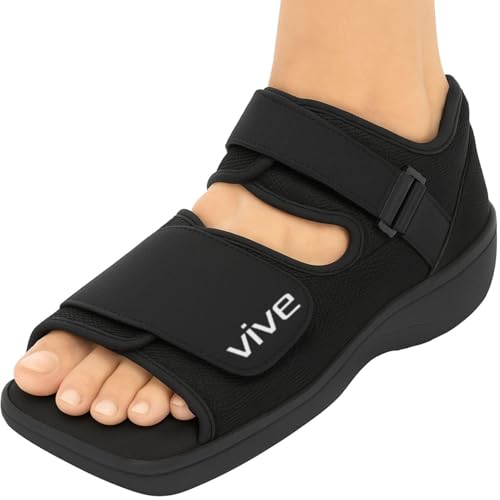
Best for: versatile post-surgery or injury recovery with adjustable fit. This walking boot is designed to keep casts or bandages dry and protected while enabling safe ambulation.
Why selected: The two adjustable straps allow easy accommodation of dressings and casts. The universal design fits both feet and supports a safe, stable gait during healing.
Caution: Confirm sizing on the chart; improper sizing can affect balance and protection, especially during longer days or uneven surfaces.
BraceAbility Closed Toe Medical Walking Shoe

Best for: swelling management and hygiene-friendly recovery with a closed-toe design. Suitable for broken-toe recovery or post-op care where protection from debris is needed.
Why selected: The closed-toe box supports safe swelling management, and the unisex sizing accommodates either foot. It’s easy to wear with socks and dressings, helping maintain cleanliness during healing.
Caution: Ensure the toe box has enough room for swelling; a too-tight fit can impede circulation and comfort.
Brace Direct Post Op Shoe – XL (Men 13–15)

Best for: larger foot users needing immobilization with a lightweight profile. The XL size covers Men’s US 13–15, offering stable support for recovery from stress fractures or toe injuries.
Why selected: The design provides a rigid rocker sole and a protective square-toe box, which helps immobilize the affected area without the bulk of a full CAM boot. This makes it a practical option for larger feet seeking steady recovery.
Caution: Ensure the XL size is appropriate for your foot width; long-term use should avoid over-tightening that could affect circulation.
Buying Guide: How To Choose The Right Foot Fracture Brace
What type of brace do I need? Identify whether you need a rigid walking boot (CAM boot) for strong immobilization, a post-op shoe for lighter protection, or an ankle compression brace for ongoing support. Your surgeon’s guidance and the fracture location drive this choice.
How important is fit and sizing? Proper sizing ensures immobilization without restricting circulation. Always consult the sizing chart and measure for a precise fit. Look for left/right foot compatibility and adjustable straps for swelling changes.
Should I consider swelling and hygiene? Closed-toe designs and wide toe boxes help accommodate swelling and keep dressings dry. If you’re prone to moisture or odor, copper-infused or breathable materials can help with comfort and hygiene.
What activities will I perform? If you need daily walking, choose a boot or post-op shoe with a rocker sole for a natural gait. For sedentary use, lighter braces or ankle supports may be enough, reducing bulk and weight.
Durability and maintenance: Look for reinforced toe boxes, sturdy soles, and washable materials. Some models offer user guides to ensure correct wear and removal—helpful for consistent protection during healing.
FAQ
- Q: What’s the main difference between a CAM boot and a post-op shoe? A: CAM boots provide rigid immobilization with a rocker sole, ideal for fractures and to protect healing tissue. Post-op shoes are lighter, limit toe movement, and are easier to wear for shorter periods.
- Q: How do I know if I need a left or right foot brace? A: Most devices are designed for left or right use; check product notes for foot orientation or choose a unisex model that fits either foot.
- Q: Can these aids be worn with a cast or bandage? A: Yes, many post-op shoes and walking boots accommodate casts and bandages via adjustable straps and roomy toe boxes.
- Q: Are copper-infused braces better for recovery? A: Copper-infused materials can help with moisture control and odor, but they do not replace the need for proper immobilization and medical guidance.
- Q: How long should I wear a recovery brace? A: Durations vary by injury. Follow your clinician’s guidance, gradually increasing activity as healing progresses and pain decreases.
- Q: Can these be used for ongoing ankle support after a fracture? A: Ankle compression braces provide support for the ankle area during activity, but they are not substitutes for medical clearance in all fracture scenarios.