Best Cadence Sensor Options for Spin Bikes and Indoor Cycling
Looking for a cadence sensor that works well with a spin bike and popular training apps? This guide highlights five top options, focusing on clarity, compatibility, and practical use. The listed products suit different riders—from casual trainers to data-driven athletes—who want real-time RPM data to improve cadence, endurance, and efficiency. The following table summarizes key details to help you compare at a glance.
| Product | Best For | Connectivity | Notes |
|---|---|---|---|
| Wahoo RPM Cycling Cadence Sensor | All-around cyclists using outdoor, spin, or smart trainers | ANT+ and Bluetooth | Strong app integration; dual-band for multiple devices |
| Magene Outdoor/Indoor Cadence Sensor | Users needing flexible mode options | Bluetooth and ANT+ | Mode limitation: one mode at a time (need two sensors for both) |
| moofit Cadence Sensor | Budget-friendly, easy install, broad app compatibility | ANT+ and Bluetooth | IP67 rated; simple mounting on crank arm |
| Bikevee Cadence & Speed Sensor | Riders using multiple apps or devices | Bluetooth and ANT+ | Dual-mode with quick mode switching |
| CYCPLUS Bike Speed & Cadence Sensor | Users who want an all-in-one speed and cadence unit | Bluetooth and ANT+ | Includes both speed and cadence in one package |
Wahoo RPM Cycling Cadence Sensor for Outdoor, Spin and Stationary Bikes
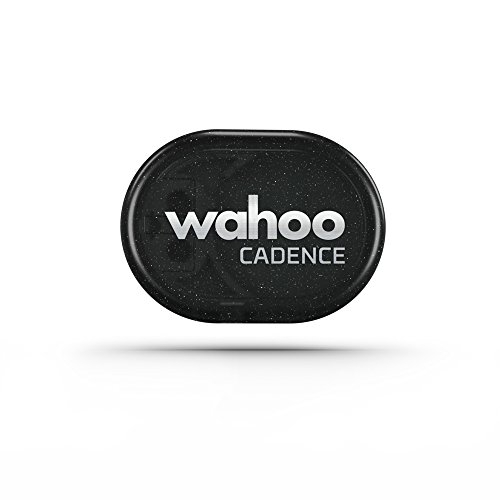
The Wahoo RPM sensor provides cadence data and speed for cycling sessions with Bluetooth and ANT+ compatibility. It’s suitable for spin classes and home bikes that use training apps like Wahoo SYSTM, Zwift, Peloton Digital, and RGT. Best for riders who want reliable dual-band data and broad app support. A limitation is that it measures cadence best when paired with a compatible device or app; standalone use may offer limited insights.
Magene Outdoor/Indoor Cadence Sensor
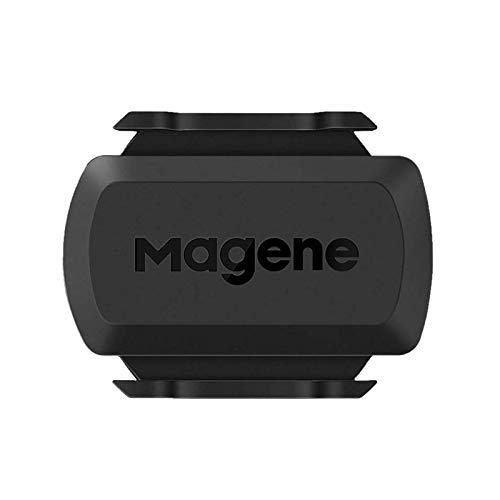
The Magene cadence sensor supports Bluetooth and ANT+ with a dual-mode approach. It’s best for riders who want flexibility across multiple apps and devices, especially when using one mode at a time. Best for budget-minded cyclists who operate across different platforms. Caution: you’ll need two sensors if you want to test both speed and cadence separately due to mode single-activation limitation.
moofit Cadence Sensor Bluetooth/ANT+ IP67

The Moofit cadence sensor offers real-time cadence tracking with ANT+ and BLE connectivity, and it’s IP67 waterproof. It’s easy to install without magnets and pairs with popular apps and bike computers. Best for riders who want a robust, simple install and wide compatibility. Limitation: some users may prefer features beyond basic cadence data, and app availability can vary by region or model.
Bikevee Cadence & Speed Sensor

The Bikevee sensor provides dual-mode functionality (speed or cadence) with seamless Bluetooth and ANT+ connectivity. It’s well-suited for riders who want easy mode switching and the ability to connect to multiple devices simultaneously. Best for multi-device setups. Caution: ensure your trainer or bike computer supports concurrent data streams if you plan to monitor multiple metrics at once.
CYCPLUS Bike Speed and Cadence Sensor

The CYCPLUS device combines speed and cadence in one sensor and supports Bluetooth and ANT+. It’s a convenient option for riders who want an all-in-one solution without carrying separate units. Best for riders who value compact design and straightforward setup. Limitation: the all-in-one design means you don’t measure cadence separately if you want dedicated speed or cadence data streams in some setups.
Buying Guide: Key Considerations For Cadence Sensors
- Compatibility: Check that the sensor supports your bike computer, smart trainer, and preferred apps (Zwift, Peloton, Rouvy, TrainerRoad, etc.).
- Connectivity: Decide between ANT+, Bluetooth, or dual-band based on your devices. Dual-band models provide broader compatibility but may draw more power.
- Mode And Data: Some sensors offer separate cadence and speed modes, while others provide both in one unit. Consider whether you need simultaneous data streams or one-at-a-time measurement.
- Installation: Look for magnets-free mounting and compatibility with crank arms or wheel hubs. IP ratings (like IP67) indicate water and dust resistance for outdoor use.
- App Support: Ensure the sensor works with your preferred cycling apps and that data is readily accessible for training analysis.
- Power and Range: Verify battery life and connection range to avoid data dropouts during long sessions.
Frequently Asked Questions
- What is cadence and why is it important for spin cycling? Cadence is the number of pedal revolutions per minute. Higher cadence can improve efficiency and endurance for sustained efforts.
- Do I need two sensors to measure speed and cadence? Not always. Some sensors measure both in one unit, while others require separate sensors for speed and cadence.
- Can I use these sensors with Zwift or Peloton? Yes, most sensors support Bluetooth or ANT+ connections to popular apps including Zwift and Peloton Digital.
- Do cadence sensors work with magnetic or magnet-free installation? Many modern sensors use magnet-free mounting on the crank arm for easy installation.
- Will one sensor connect to multiple devices at once? Some sensors support multiple connections via ANT+, but behavior varies by product and app. Check the spec for multi-device behavior.
- Are these sensors weather resistant? Some models have IP ratings (like IP67) indicating protection against dust and water, suitable for outdoor use.