Best Carabiner Clips for Climbing: Locking, Strong, and Ready for the Ascent
Answering the needs of climbers and outdoor enthusiasts, these carabiner clips prioritize locking mechanisms, strength, and reliability. This guide highlights options suited for climbing, belay systems, and rugged outdoor use. The best picks emphasize UIAA certification, major-axis strength, and easy one-handed operation. The buyer types best served by these products range from serious climbers and mountaineers to hikers and expedition gear enthusiasts who require secure attachment points. Below is a quick, at-a-glance comparison to help you choose confidently.
| Product | Best For | Key Strength | Lock Type |
|---|---|---|---|
| FresKaro 25kN Climbing Carabiners | Serious climbers | 25kN | Quick Lock |
| CAMNAL UIAA 25kN Screw Lock | Belay systems and rescue | 25kN | Screw Lock |
| FVW 25kN Heavy Duty Carabiners (3-Pack) | Hammocks, camping, hiking | 25kN | Auto Lock |
| Oupeng Sky 28kN Auto Locking Clips | One-hand use and heavy outdoor gear | 28kN | Auto Lock |
| FVW 25kN Auto Locking Rock Climbers (5-Pack) | Bulk climbing setups | 25kN | Auto Lock |
FresKaro 25kN Climbing Carabiners

Best for expert use and high-load climbing tasks. FresKaro carabiners are UIAA certified with a major axis strength of 25kN (about 5,621 lbs). The deep basket design minimizes fumbling during fast rope work or securing gear. The D-shaped profile concentrates load along the spine for maximum strength, and the one-hand quick-lock mechanism supports rapid operation on belay or rappel setups. This pick suits serious climbers, rescue teams, and outdoor professionals who need dependable performance in demanding environments. A limitation is that the design targets experienced users; beginners should practice with supervision and proper training.
CAMNAL Heavy Duty UIAA 25kN Screw Lock
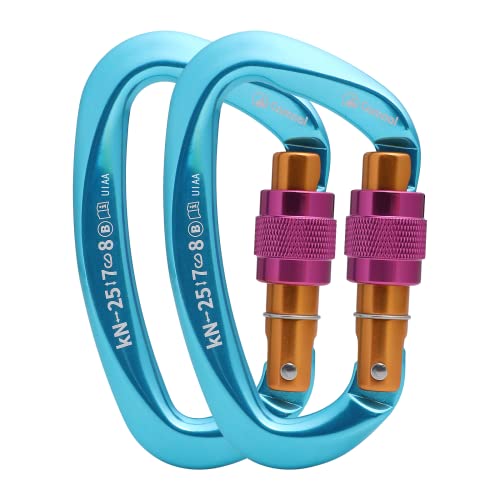
Best for belay systems, anchors, and aerial work where a secure screw-lock is preferred. CAMNAL presents a 25kN major axis rating with a 7kN cross-load, and it features a deep basket for reliable loading and a snag-resistant keylock nose. The screw-lock mechanism is accessible with one hand, offering deliberate engagement and easy verification of lock status. Choose this if you need a robust locking carabiner for serious climbing or rescue scenarios. Caution: ensure the screw thread remains clean to avoid a slow unlock in cold or muddy conditions.
FVW Three-Piece Heavy Duty Carabiners
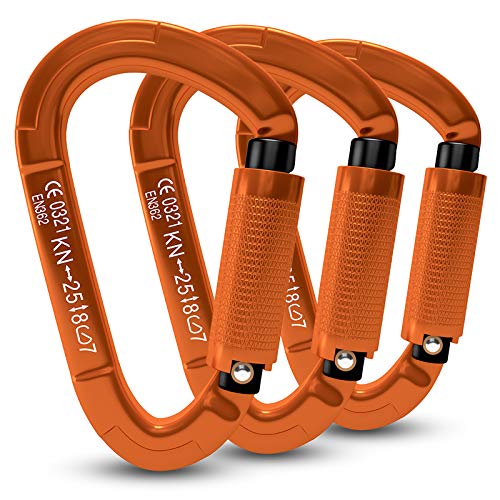
Best for versatile climbing and outdoor setups where multiple secure attachment points are needed. These 25kN UIAA-certified carabiners feature auto-locking, one-handed operation, and a large, smooth gate surface for easy clipping. The kit includes three carabiners that balance weight, strength, and cost, making them suitable for rope systems, anchor setups, and gear organization during multi-pitch climbs. Use this pack when you need dependable redundancy or color-coded gear. Limitation: bulk in packs may be heavier for ultra-light backcountry missions.
Oupeng Sky Auto Locking Clips 28kN

Best for one-handed use in rugged outdoor activities. These aviation-grade aluminum carabiners offer a longitudinal strength of 28kN (about 6,272 lbs) with an auto-locking mechanism for quick securement. The design emphasizes safety with a simple twist-then-press operation, making it suitable for climbers, hikers, and campers who frequently clip and unclip with one hand during fast-paced setups. Caution: the long-term durability of coatings varies; inspect regularly for burrs or edge wear that could snag gear.
FVW Auto Locking Rock Climbing Carabiners (5-Pack)

Best for bulk climbing setups, rescue scenarios, and gym use. This 5-pack features 25kN major-axis strength with smooth screw-lock operation and a robust D-shaped profile. The set is designed to be reliable for team climbs, anchor systems, and training environments where multiple carabiners are used simultaneously. The kit’s advantage is value and redundancy; however, ensure each unit’s lock is checked before use to prevent accidental openings in demanding conditions.
Buying Guide: Key Purchase Considerations
- Locking Mechanism: Choose between auto-lock, screw-lock, or non-locking. Auto-lock is faster for frequent clipping; screw-lock provides deliberate engagement, useful in rescue or belay systems.
- Strength Ratings: Look for major-axis strength in kN. For climbing, 25kN or higher offers ample margin for most sport, trad, and rescue contexts.
- Shape And Load Direction: D-shaped carabiners orient loads along the spine for maximum strength. Popular for anchor systems and belays.
- Certification: UIAA certification indicates adherence to standard testing and performance benchmarks; useful for serious climbing use.
- Weight And Size: Heavier units are robust and suited for gym or training settings; lighter options support long approaches. Ensure the size fits rope and harness compatibility.
- Durability: Aluminum alloys (like 7075) balance weight and strength; coatings can affect corrosion resistance in harsh environments.
- multi-pack Value: Packs can offer savings and organization benefits; verify that all units meet your required strength and locking standards.
FAQ
- What is a UIAA certification and why does it matter?
UIAA certification confirms the carabiner meets standardized load and performance criteria, which is important for climbing safety.
- When should I choose auto-lock vs screw-lock?
Auto-lock is convenient for frequent clipping; screw-lock offers controlled locking and is preferred in rescue or adverse environments.
- Are these carabiners suitable for rope climbs?
Yes, when rated for climbing loads (25kN or higher) and used with appropriate ropes and anchors.
- Can I use non-locking carabiners for climbing?
Non-locking carabiners are generally not recommended for critical climbing tasks where accidental opening could occur.
- How do I inspect carabiners for safety?
Check for cracks, deformation, sharp edges, and gate security. Replace any unit showing wear or damage.
- Is it okay to mix different brands in one climbing setup?
Yes, as long as each carabiner meets required strength standards and is configured to maintain safe loads in the system.