Best Chain Lock for Bike: Top Picks for Secure Riding and Easy Commuting
Answering your search for a dependable bike chain lock, this guide highlights five strong options suitable for different needs. Ideal for daily commuters, weekend riders, and casual bike owners, these locks balance cut resistance, weather protection, and ease of use. The top picks include options with keys, keyless designs, and varying chain thickness to match your security level. Use the quick reference table to compare core features at a glance and choose the best fit for your bike, area, and routine.
| Product | Chain Length | Security Benefit | Best For |
|---|---|---|---|
| Kryptonite Keeper 712 | 120 cm | 7mm hardened steel with protective sleeve | Moderate to strong security in urban areas |
| Kryptonite Keeper 785 | 2.8 ft | 7mm manganese steel with disc-style lock | Everyday city commuting |
| Sportneer 5-Digit | 3.2/3.6/4 ft | Keyless 5-digit combination | Keyless convenience for quick stops |
| Titanker 3.3 ft | 8mm thick | Heavy-duty chain with cloth sleeve | High security with portable design |
| Weogine 2.72 ft | 4mm chain | Heavy-duty alloy steel with 3 keys | Budget-friendly, quick-lock convenience |
Kryptonite Keeper 712 Bike Chain Lock

Kryptonite Keeper 712 uses 7mm hardened steel with four-sided links for strong resistance against cutting and leverage. It includes a protective rubber coating to reduce scratches and a weather-resistant nylon sleeve to protect the chain. The integrated chain extends up to 120 cm, offering length for securing the bike to fixed objects. It comes with two keys. Best for riders who want solid, everyday security without complex locking systems. Consider this if you ride in areas with moderate threat; avoid if you need longer coverage for two bicycles.
Kryptonite Keeper 785 Bike Chain Lock

Keeper 785 features a 7mm manganese steel chain with four-sided links and a high-security disc-style locking cylinder. The rubber coating protects the bike’s paint, while the weather-resistant sleeve helps prevent rust. This lock is well-suited for riders needing reliable security with a compact profile for urban dwellers or students. A potential limitation is its shorter length compared to some long-chain models, which may affect securing two objects or larger bicycles.
Sportneer Bike Lock: 5-Digit Keyless

Sportneer offers a keyless 5-digit combination lock, with up to 100,000 possible combinations for robust security. The lock uses 6mm manganese steel with a zinc alloy core and includes a dustproof cap and scratch-resistant cover to maintain durability. It’s best for riders who prefer hands-free access and quick stops, especially in busy areas. Limitations include that it is a chain lock rather than a pure U-lock, which can be more susceptible to leverage attacks in some scenarios.
Titanker 3.3 Ft Heavy Duty Chain Lock

Titanker’s 3.3-foot lock uses an 8mm thick chain with a protective cloth sleeve and a dust cover for weather protection. It includes two keys, with the keyhole lubrication recommended to extend service life. This lock is clearly targeted at users who want strong cut resistance in a portable size for daily commutes or quick stops. Best for urban riders; caution: store keys securely to avoid being locked out if a key is misplaced.
Topcrown Bike Chain Lock 3.2 Ft
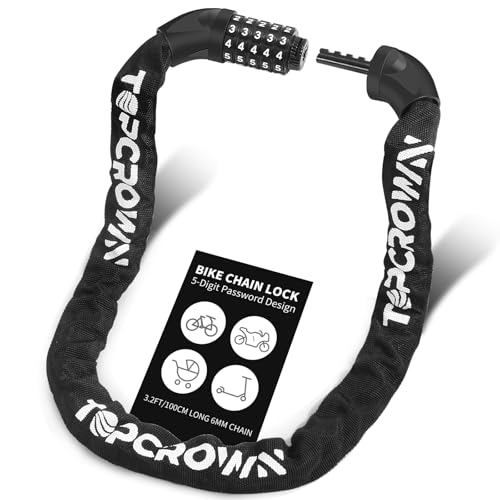
Topcrown Basic Series lock uses a 6 mm thick alloy steel chain and features a 5-digit combination for increased security with over 100,000 combinations. The nose-friendly design includes a protective coating and multiple color options. It is best for budget-conscious buyers who still want reasonable security. Choose this if you need a lightweight lock for short errands; avoid if you require long-term, high-security protection in high-risk areas.
Buying Guide
What chain thickness matters?
Thicker chains (6–8 mm) generally resist cutting better than thinner ones. They add weight but offer greater protection, especially in high-crime urban zones. Match chain thickness to your risk level and bike value.
Keyed vs keyless: which is right for you?
Keyed locks provide physical keys and straightforward operation. Keyless locks (e.g., 5-digit combos) offer quick access and no key management but rely on a secure code. Consider your memory, the frequency of locks, and where you ride when choosing.
Weather protection and wear resistance
Look for rubber or nylon sleeves and weather-resistant coatings. These features minimize rust and paint scratches, extending the life of the lock and preserving bike aesthetics.
Lock length and versatility
Longer chains offer more placement options but increase weight. Shorter locks are lighter and easier to carry but require secure anchor points. Assess typical parking spots and whether you need to secure multiple objects.
Practical security tips
- Lock your bike to a sturdy, immovable object.
- Position the lock low and away from wheel spokes to deter leverage attacks.
- Lubricate the keyhole periodically to maintain smooth operation.
- Carry a secondary locking method for extra security on long stops.
FAQ
- What is the best chain lock thickness for urban commuting? Answer: 6–7 mm is a common balance of security and portability for urban settings.
- Should I prefer a keyless lock over a key lock? Answer: Keyless offers quick access, but ensure you remember the code and avoid easy-to-guess combinations.
- Are longer chains more secure than shorter ones? Answer: They provide more securing options but are heavier; security also depends on the lock’s design and material.
- Can chain locks protect against leverage attacks? Answer: Yes, but effectiveness depends on chain thickness, locking mechanism, and how you anchor the bike.
- Is weather protection important for bike locks? Answer: Yes, coatings and sleeves reduce rust and wear, extending lock life in outdoor storage.
- How often should I lubricate the lock hole and keyhole? Answer: Periodically, especially if you ride in dusty or damp conditions; this helps maintain smooth operation.