Best Cleats for Ice and Snow: Stay Safe on Winter Trails and Walkways
When navigating ice and snow, the right cleats can prevent slips and injuries. This guide highlights five top options that cover a range of activities—from winter hiking and trail running to everyday walking. Each product is evaluated for who benefits most, with clear pros and potential limits to help you choose confidently.
| Product | Brand | Best For |
|---|---|---|
| Crampons Ice Cleats Traction Snow Grips for Boots Shoes | Cimkiz | All-around winter activities; versatile terrain |
| Yaktrax Walk Traction Cleats (1 Pair), Medium | Yaktrax | Casual winter walking on streets or sidewalks |
| AGOOL Ice Cleats Snow Traction Cleats | AGOOL | Budget-friendly, quick-fit over shoes |
| JSHANMEI Ice Cleats For Shoes | JSHANMEI | Wide fit with strong traction for diverse footwear |
| WIN.MAX Crampons For Shoes | WIN.MAX | Durable spikes for varied winter conditions |
Cimkiz Crampons Ice Cleats — 19 Stainless Spikes

Best for: hikers, anglers, and climbers who need reliable traction on varied terrain. The 19 high-quality stainless steel spikes and a robust chain system deliver solid grip on ice, snow, muddy patches, and wet grass. The thermoplastic elastomer (TPE) shell remains flexible in cold conditions and is easy to adjust with a strap for a secure fit.
Why chosen: This model combines a heavy-duty spike count with a durable, winter-friendly material. It is suitable for teens and adults, making it a versatile option for mixed winter activities. A potential limitation is the bulkier build, which may be less comfortable for lightweight footwear.
Best for readers seeking: all-terrain winter stability with a straightforward on/off design.
Yaktrax Walk Cleats — Medium

Best for: everyday walkers who need reliable ice and snow grip on urban surfaces. These slip-on traction cleats distribute underfoot traction evenly and maintain durability in cold weather thanks to recyclable thermoplastic rubber.
Why chosen: The design emphasizes 360-degree underfoot traction and practical use on a range of surfaces. The combination of a simple slip-on style and robust coils makes it a go-to for routine winter commutes. Caution: not ideal for aggressive off-trail hiking on rough terrain where higher spike count is preferred.
Best for readers seeking: dependable, user-friendly winter footwear support for daily tasks.
AGOOL Ice Cleats Snow Traction Cleats
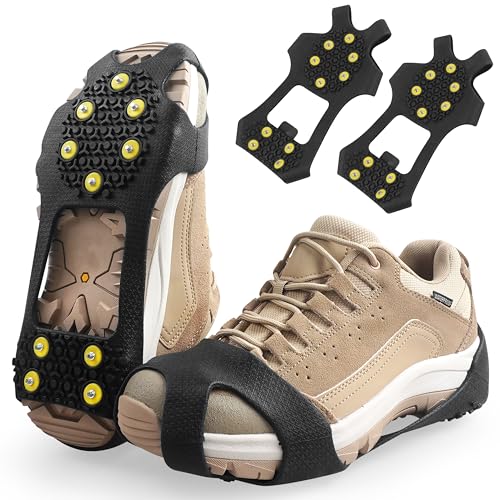
Best for: budget-conscious buyers who still want reliable traction. These overshoes use thermoplastic elastomer and 24 heat-treated stainless steel spikes for solid grip on ice and snow, plus adjustable straps for a secure fit.
Why chosen: The extra spike count and flexible material provide good performance across common winter surfaces without a high price. Limitation: the sizing options may require careful selection to ensure a snug fit on specific footwear.
Best for readers seeking: cost-effective protection without sacrificing traction. Choose this if you need extra spikes but have budget considerations.
JSHANMEI Ice Cleats With Straps

Best for: walkers who need flexible fit across different shoe types. The cleats use a stretchable thermoplastic elastomer and include fastened straps for secure attachment. With 24 stainless steel spikes, they offer strong multi-directional traction.
Why chosen: A versatile fit and strong spike array make this a reliable all-around option. Limitation: the stretch material may wear over time with heavy use, particularly on rough terrains.
Best for readers seeking: broad compatibility with various footwear and solid traction on ice and snow. Choose this for frequent, diverse winter use.
WIN.MAX Crampons For Shoes

Best for: serious winter enthusiasts who require durable spikes and a snug fit. The 19 stainless steel spikes and a sturdy 5.5 mm thick TPE shell offer strong traction on icy roads and snowy trails. The adjustable straps simplify on/off use.
Why chosen: This model emphasizes durability and stability, suitable for hikers, climbers, and those who encounter frozen or rocky surfaces. Caution: the higher spike count may feel heavier and less convenient for short, quick trips.
Best for readers seeking: high-performance protection in demanding winter environments. Choose this for rugged conditions or longer treks.
Buying Guide
What should you consider when buying cleats for ice and snow?
- Terrain and use: Choose higher spike counts and rugged materials for hiking or climbing. For city walking, lighter, easier-on/off models work well.
- Fit and sizing: Ensure the product fits your shoe size and type. Look for adjustable straps or stretch features for a secure fit.
- Material durability: Thermoplastic elastomer (TPE) shells stay flexible in cold weather; stainless steel spikes resist rust and wear.
- Ease of use: Quick on/off designs save time in changing conditions. Consider models with return-to-store compatibility if you regularly switch footwear.
- Portability: Foldable or compact designs are better for travel or packing in a backpack.
- Care and maintenance: Rinse off dirt and dry thoroughly to extend life. Replace worn spikes or damaged straps promptly.
FAQ
- Q: Are cleats suitable for everyday urban use in winter?
- A: Yes, but choose lighter models designed for walking on streets and sidewalks to maximize comfort and ease of use.
- Q: Can I wear ice cleats with running shoes?
- A: Many models are designed to fit multiple shoe types, but verify size guidance and strap compatibility for safe use while running or jogging.
- Q: Do cleats work on wet or slushy surfaces?
- A: They provide traction on ice and packed snow; slush can reduce performance, so use in combination with careful footing.
- Q: How long do cleats typically last?
- A: Durability depends on material quality and usage. Regular inspection of straps and spikes helps prevent sudden failure.
- Q: Are there safety considerations when using cleats on stairs or indoor floors?
- A: Walk cautiously to avoid slippage and check for floor damage in indoor spaces where metal spikes might scratch.