Best Crossbow Broadheads for Deer: Top Picks for Precision, Penetration, and Quick Ethical Hunts
Best crossbow broadheads for deer: a concise guide to select models that maximize accuracy, penetration, and reliable performance on deer hunts. This overview targets hunters seeking dependable fixed and mechanical options across popular grain weights. The top picks below are chosen for their field-ready construction, flight stability, and effective wound channels. This buyer-friendly guide highlights who each product is best for and why.
| Product | Grain | Type | |
|---|---|---|---|
| KEAUP 6 Pack Broadhead | 100 | Fixed Blade | Beginner to mid-range crossbow setups; easy resharpening |
| Muzzy Trocar HBX Hybrid | 100 | Hybrid (Fixed + Mechanical) | Versatile shots; good for mixed terrain and bone impact |
| Ramcat Hydroshock-X Pivoting | 100 | Pivoting Fixed blades | Deep penetration; best for deer with bone contact |
| Zorviron 5 Pack Mechanical Expandable | 100 | Mechanical Expandable | Long-range deer hunting; expanded wound channel |
| Rage Crossbow X 3-Pack | 100 | Two-blade Mechanical | Fast setups; easy to field use with reliable expansion |
Note: Each product section below references the listed features and describes who benefits most, including any practical limitations. The goal is to help you compare options quickly and make a confident purchase decision for deer hunting.
KEAUP 6 Pack Fixed Blade Broadhead

Features show a 420 stainless steel fixed-blade design with three sharp blades and a One-Piece Metal Injection Molding (MIM) construction. The windage is reduced by a vented blade design, and the broadhead weighs 100 grains with a 1-1/8 inch cut. The standard 8-32 screw-in thread fits crossbows, compound bows, and recurve bows. Best for hunters who prefer fixed blades and want reliable penetration with easy field sharpening.
Best for: Beginners to intermediate bow hunters seeking simple, robust field-ready broadheads that stay sharp and fly true with predictable flight paths. Choose this if you want a straightforward fixed-head option and value re-sharpening capability. Limitation: Fixed blades may require more precise tuning for maximum field-point accuracy compared with some mechanical options.
Muzzy Trocar HBX Hybrid 4- Blade

Features include a 100-grain weight, four blades (two fixed, two mechanical), and a chisel tip. This hybrid design aims to blend the stability of fixed blades in flight with the expanded tissue damage of mechanical blades on impact. The architecture is intended to deliver dependable field performance across varied shot angles, including deer at moderate ranges. Best for: Hunters who want the stability of fixed blades with the added cutting area of mechanically deployed blades. Limitation: Mechanical components can require more maintenance and may be sensitive to debris in field conditions.
Best for: Versatile shooters who value flight stability and expanded wound channels. Choose this if you want a hybrid approach and are comfortable with occasional maintenance needs.
Ramcat Hydroshock-X Pivoting Broadheads

This model features pivoting blades designed to deploy as needed to maintain penetration even when bone contact occurs. It claims the deepest 100-grain penetration and uses airfoil-inspired lobes to resist wind planing, aiming for field-point accuracy. The rear-sharpened 0.032-inch stainless steel blades allow continued devastation even if a pass-through does not occur. Best for: Deer hunters who anticipate hitting bone or needing maximum penetration. Limitation: Pivoting blades can add complexity and potential points of failure if not properly maintained.
Best for: Deeper penetration and tracking confidence in tougher deer hunts. Avoid this if you prefer a simple fixed-blade design with minimal moving parts.
Zorviron 5 Pack Mechanical Expandable Broadheads

Key features include 440 stainless steel blades with a reinforced chisel tip, designed for rust resistance and bone-cutting power. The mechanical expandable mechanism stays closed in flight and opens on impact to yield a 2-inch cutting diameter. This provides a broad wound channel, which can help with tracking and recovery. Best for: Deer hunters who want a large wound channel and reliable expansion in diverse hunting conditions. Limitation: Mechanical deployment adds a potential maintenance aspect and may be less forgiving in windy or obstructed shot conditions.
Best for: Long-range or high-velocity crossbow hunters seeking maximum tissue damage on impact. Choose this if you want a pronounced cutting diameter and robust blade material.
G5 Outdoors Montec Crossbow Broadheads
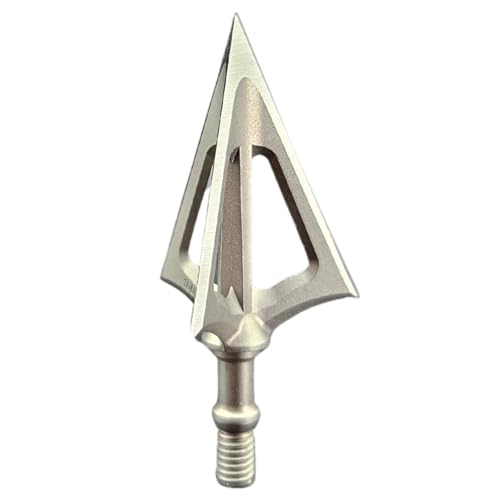
G5 Montec uses a tough all-steel construction with a one-piece MIM (Metal Injection Molding) design to eliminate weak points. The set includes three broadheads at 100 grains, with spin-tested precision to ensure straight flight and reliable performance. These come as fixed blades with no components to assemble, making them simple to use in the field. Best for: Hunters who want a durable, simple, field-ready option with a traditional fixed-blade design. Limitation: Limited to fixed-blade operation without expandable features; may not suit those seeking larger wound channels of mechanical designs.
Best for: Hunters who value proven durability and straightforward use. Choose this if you want a reliable, easy-to-use option that performs well with minimal maintenance.
Buying Guide: Key Purchase Considerations
Flight consistency and broadhead type are the two most important factors for deer hunting with crossbows. Below are practical questions and answers to help refine your choice.
Fixed blades vs. mechanical expandables — which is better for deer? Fixed-blade broadheads tend to offer strong flight stability and simpler maintenance. Mechanical expandables can deliver larger wound channels at impact but may require more maintenance and can be more sensitive to field conditions.
What grain should I choose? For deer hunting with crossbows, 100 grains is a common choice that balances flight stability and penetration. Heavier grains can improve penetration on larger deer or tougher hides but may alter trajectory in wind.
What is the importance of blade material? Stainless steel blades resist rust and maintain sharpness. Higher-grade blades (like 440 stainless) are designed for durability and reliable cutting performance through bone and tough tissue.
How important is wound-channel size? A larger cutting diameter typically yields a bigger wound channel and potentially faster harvest times. However, ensuring accurate shot placement and flight stability is equally critical to maximize ethical kills.
Are pivoting blades reliable in the field? Pivoting or expanding blades can increase cutting area but add moving parts. Proper maintenance and inspection before each season help reduce potential field failures.
FAQ
- What broadhead weight is best for deer with a crossbow? Most commonly, 100 grains balances accuracy and penetration for many crossbow setups.
- Should I use fixed blades or mechanical blades for deer hunting? Fixed blades offer consistent flight and reliability; mechanical blades offer larger wound channels but may require more maintenance and field care.
- Do broadheads affect arrow flight? Yes, blade design and weight distribution influence stability and wind drift; select designs tested for spin balance with your arrows.
- Is a hybrid broadhead advantageous for deer? Hybrids combine fixed blades with mechanical components for broader cuts while maintaining flight stability, suitable for hunters who want versatility.
- Do broadheads need different tuning than field points? Some broadheads require tuning, especially mechanical ones, to achieve field-point accuracy at your typical hunting ranges.
- What should I consider for field maintenance? Inspect blades for sharpness, verify blade deployment for mechanicals, and clean threads to ensure reliable screw-ins.