Best Disc Brake Kit for Bicycle: Top Picks for Smooth Stopping and Easy Installation
Looking for a reliable disc brake kit for your bicycle? This guide highlights five solid options that cover mechanical and hydraulic setups, along with different frame and rotor compatibilities. These kits are best for riders seeking strong stopping power, straightforward installation, and broad compatibility with MTB, road, folding, and urban bikes. Whether you want a budget-friendly mechanical kit or a higher-end hydraulic system, the selections below provide clear, comparison-friendly details to help you choose.
| Product | |||
|---|---|---|---|
| TOBWOLF 1 Pair MTB Front & Rear Cable Disc Brake | Mechanical | 160 mm | Budget MTB riders seeking simple cabling and easy servicing |
| RUJOI Bike Disc Brake Kit | Mechanical | 160 mm | Road and MTB riders who want a complete kit with levers |
| BUCKLOS Mountain Bike Disc Brake Kit | Mechanical | 160 mm | Versatile, 99% bike compatibility; good for refurbishing or upgrades |
| Fat-Cattie Bike Disc Brake Kit, Black BB7 | Mechanical | 160 mm | Quiet, strong stopping; reliable for everyday riding |
| TOBWOLF 1 Pair MTB Disc Brake Set (Hydraulic) | Hydraulic | 160 mm | Higher stopping power and smoother modulation on more demanding trails |
TOBWOLF 1 Pair MTB Front & Rear Cable Disc Brake
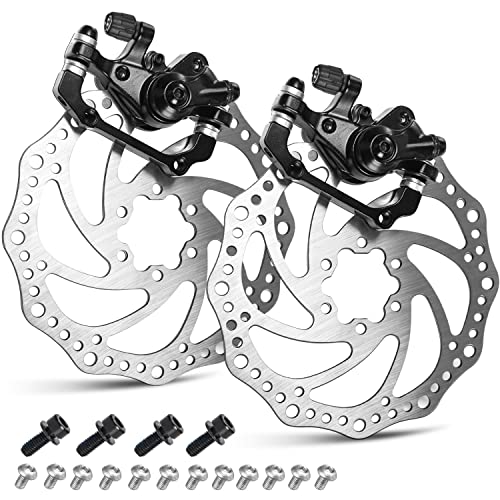
This mechanical disc brake set includes front and rear calipers, two 160 mm rotors, and mounting bolts. It offers dual caliper compatibility with 74 mm and 51 mm mounting spacing and a combined weight of about 360 g per caliper pair, making it a practical choice for budget builds. Best for riders who want a straightforward cable-driven system that is easy to service and replace parts on. Limitations include potential cable stretch over time and the need for precise alignment during installation.
RUJOI Bike Disc Brake Kit
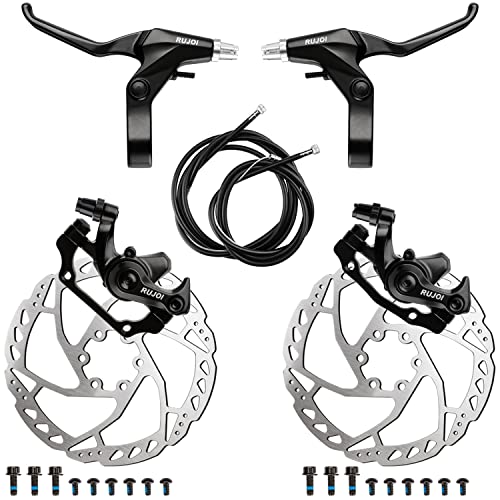
This complete mechanical kit includes front and rear aluminum calipers, dual rotors, and tool-free pad adjusters for quick setup. It supports 160 mm rotors and is designed for road and mountain bikes, with levers that fit standard 22 mm handlebars. Best for riders who want an all-in-one upgrade that’s easy to install without special tools. Caution: verify compatibility with your frame’s mounting standards and ensure correct lever reach for your hand size.
BUCKLOS Mountain Bike Disc Brake Kit

This kit provides two aluminum calipers, two rotors (160 mm), six bolts, and one regulator for brake gaps. It emphasizes quiet braking from semi-metal pads and single-piston design. It’s marketed as compatible with a wide range of bikes, including ebikes and folding bikes. Best for riders who want a complete, budget-conscious upgrade with broad compatibility. Limitation: check whether the kit’s standard 22 mm handlebar clamp suits your setup, and ensure proper pad alignment for optimal braking.
Fat-Cattie Bike Disc Brake Kit, Black BB7

This mechanical kit includes two 160 mm rotors, front and rear calipers, cables, and mounting hardware. It uses XTR-grade components and reinforced base design for strong, quiet braking. Best for riders seeking a proven, reliable BB7-style setup with straightforward maintenance. Caution: verify rotor compatibility with your frame and wheel hub spacing to avoid fit issues.
Bike Disc Brake Kit by Yinprwi

This kit includes mechanical 160 mm rotors, front and rear calipers, and installation hardware with clear mounting specifications. It emphasizes compatibility notes and rotor size specifics, making it easier to determine fit. Best for buyers who want a straightforward mechanical option with explicit sizing information. Limitation: ensure mounting spacing corresponds to your frame’s requirements to avoid alignment issues.
Buying Guide
- Brake system type: Mechanical vs hydraulic. Hydraulic offers smoother modulation and stronger stopping power but may require more careful installation and maintenance. Mechanical is budget-friendly and easier to service in the field.
- Rotor size: Common sizes are 160 mm; confirm your bike’s frame, fork, and caliper clearance before purchasing.
- Mounting compatibility: Check caliper spacing (74 mm and 51 mm are common) and handlebar compatibility (22 mm clamps are standard for many kits).
- Kit completeness: Look for included rotors, bolts, and pads. Some kits include pad adjusters or gap regulators for easier setup.
- Intended riding: Choose based on riding style—trail and enduro riders may prefer hydraulic systems, while casual riders can opt for mechanical kits for simplicity and cost.
FAQ
- What rotor size should I choose? Most bikes use 160 mm rotors; check frame clearance and caliper mounting to avoid rubbing.
- Are these kits compatible with all bikes? Most are designed for a wide range of MTB, road, folding, and urban bikes, but always verify caliper spacing and handlebar size.
- Do I need special tools? Mechanical kits require standard bike tools; hydraulic kits may need bleeding Equipment and more precise alignment.
- Can I install a hydraulic kit myself? Yes, with careful following of instructions, but consider professional help if you are unsure about bleeding and alignment.
- Will these kits fit my existing shifters or levers? Most mechanical kits include compatible levers; verify lever pull ratio and compatibility with your existing cockpit.
- Is noise normal with disc brakes? Some noise can occur if pads are improperly bedded or alignments are off. Proper rotor run-out and pad contact reduce noise.