Best Ear Protection for Guns: Top Gun Range Hearing Muffs and Earplugs
Answering the most common buyer question: what are the best ear protection options for shooting, hunting, or range practice? This guide focuses on high-NRR earmuffs and electronic protection designed to reduce gunfire noise while preserving speech clarity. It highlights products best suited for shooting enthusiasts, range instructors, and hunters who need reliable comfort and long-wear performance. The selections balance passive and electronic hearing protection, so you can choose based on how much amplification you want to retain for ambient sounds and conversations. For quick comparison, see the summary table of the chosen products below.
| Product | Type | Best For |
|---|---|---|
| PROHEAR 016 Shooting Ear Protection Earmuffs | Passive Muffs | Rifle and shotgun use; long wear |
| Walkers Razor Slim Shooter | Electronic Muffs | Hearing ambient sounds while protecting from gunfire |
| Walker’s Razor Slim Patriot Series | Electronic Muffs | Lightweight, all-day comfort with amplified safe sounds |
| PROHEAR Electronic Ear Protection (4X Amplification) | Electronic Muffs | Clear conversation and situational awareness |
| ProCase NRR 28dB | Passive Muffs | Budget-friendly daily hearing protection |
PROHEAR 016 Shooting Ear Protection Earmuffs
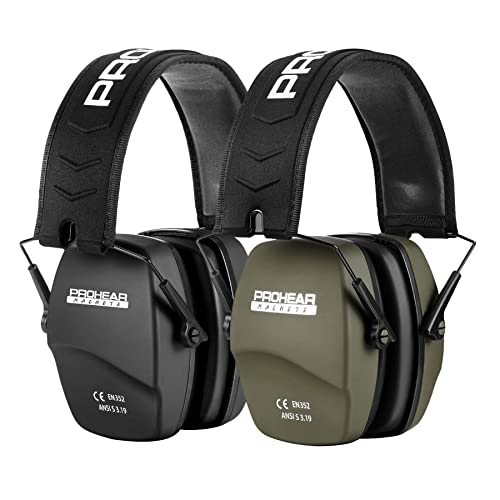
Type: Passive ear protection with NRR 26dB (SNR 31dB). These compact earmuffs offer a low-profile design that minimizes interference with rifles and shotguns. The full foam padding and dampening housing provide reliable protection for extended sessions. Best for shooters who want solid protection in a lightweight, low-profile package.
Best for: Range shooters and hunters who prioritize a safe, straightforward passive option without electronics. Also suitable for brief tactical practice where minimal weight matters.
Why selected: Combines strong noise reduction with a compact design that fits under many shooting gear setups. The adjustable headband accommodates different head shapes, and a carrying bag supports on-the-go use.
Limitation: No active sound amplification, so ambient conversation may be less audible in very loud environments.
Walkers Razor Slim Shooter Electronic Folding Earmuffs

Type: Electronic with sound amplification and ambient hearing. These earmuffs feature ultra low-profile cups and hi-gain microphones to amplify safe sounds. They maintain situational awareness while guarding against loud gunfire. Best for: shooters who want to hear conversations and ambient cues while maintaining protection.
Why selected: The slim design reduces bulk, and the two microphones deliver clearer environmental cues. The rugged exterior helps protect internal components on outdoor ranges.
Caution: Amplification may make certain distant noises louder in very quiet environments; consider if you need maximum quiet in silent ranges.
Walkers Razor Slim Patriot Series Muffs

Type: Electronic with amplification and a low-profile build. These muffs emphasize secure fit and natural sound through hi-gain microphones. Best for: Shooters who want enhanced hearing of conversations and ambient sounds during range work.
Why selected: Similar Razor Slim design with a Patriot colorway. The rugged coating and dampening housing provide durability on varied terrains.
Limitation: As with electronic models, battery life and electronics are a factor in extended field use.
PROHEAR 4X Sound Amplification Electronic Ear Protection
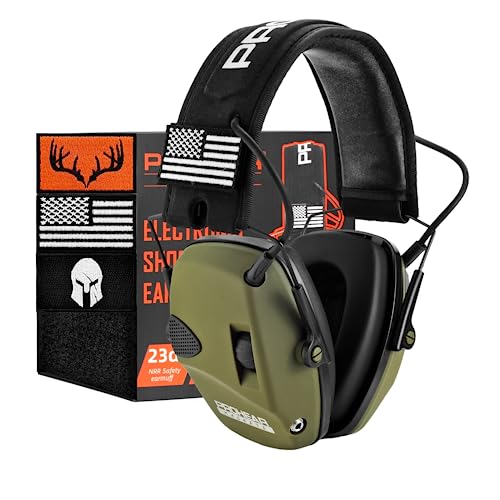
Type: Active electronic earmuffs with up to 4x amplification. They meet ANSI S3.19 with NRR 23dB and use a lightweight frame for comfortable all-day wear. Best for: Shooters who need improved conversation and situational awareness on busy ranges or hunts.
Why selected: The 0.6-pound weight and telescopic padded headband deliver comfort during long sessions. The 4x amplification helps balance awareness with protection.
Caution: Electronic units rely on batteries; check battery life before long sessions and carry spares if needed.
ProCase NRR 28dB Noise Reduction Ear Muffs

Type: Passive noise-canceling headgear with NRR 28dB (34dB SNR). Fully adjustable metal frame and padded headband, designed for extended wear and compatibility with eyeglasses. Best for: Budget-conscious buyers who still want strong passive protection for shooting ranges, mowing, or construction work.
Why selected: ANSI S3.19 certified, foldable and portable, making them ideal for travel, storage, and quick deployment in toolboxes or bags.
Limitation: Some users may find the passive design less effective in extremely loud environments without awareness features.
Floriogra 2 Pack 34dB Noise Canceling Headphones

Type: Passive earmuffs with SNR 34dB. They use a double-layer foam and a durable housing to reduce noise while maintaining comfort with breathable ear cups. Best for: Shooters who want robust passive protection and a roomy fit for all-day wear.
Why selected: The universal fit and rotatable pins offer a customizable seal that adapts to most head shapes, while the durable construction supports rugged use.
Limitation: Bulkier design can be less convenient for tight spaces or compact gear setups.
Peltor Sport Tri-Flange Corded Reusable Earplugs

Type: Corded reusable earplugs with NRR 26dB. Tri-flange design provides a snug, comfortable fit that’s easy to wash. Best for: Shooters who want compact, lightweight protection and don’t mind using a plug system instead of earmuffs.
Why selected: Corded and washable, making them a practical option for frequent range users who value hygiene and reuse. Attach to a lanyard or a bag for portability.
Caution: Earplugs may require proper insertion technique for optimal protection and may be less convenient for those who wear heavy headgear.
Buying Guide: Key Considerations For Choosing Gun Range Ear Protection
- Protection level vs. situational awareness: Passive muffs deliver steady attenuation; electronic muffs preserve ambient sound for situational awareness. Pick based on whether you value conversation and environmental cues or maximum quiet during firing.
- NRR rating: Higher NRR numbers indicate stronger attenuation. For ranges with frequent loud gunfire, prioritize models with NRR 26dB or higher, noting that real-world protection depends on fit and anatomy.
- Fit and comfort: Look for adjustable headbands, soft padding, and lightweight designs for extended wear. If you wear glasses, ensure the design minimizes sound leakage and pressure.
- Durability: Outdoor ranges, hunting trips, and construction sites demand rugged shells, foam, and coatings. A rubberized or coated exterior can shield electronics from moisture and dust.
- Battery life (for electronic models): Check battery type and estimated life. Some models run on AAA or rechargeable options, with features like auto-shutdown or power-saving modes.
- Portability: Foldable or compact designs ease packing in bags, toolboxes, or ammo cases. Carrying pouches or cases add convenience for frequent shooters.
- Compliance: Look for ANSI S3.19 certification for hearing protection in the US. This ensures the product meets recognized safety standards.
FAQ
- What is the best ear protection for beginners at the range? Answer: Passive earmuffs with a good NRR (around 25–28dB) offer reliable protection with minimal complexity, making them ideal for new shooters or casual range days.
- Are electronic earmuffs worth it for all shooting activities? Answer: They are beneficial for maintaining situational awareness and clear communication, especially in group settings or hunting, but in very loud environments, protection should not depend solely on amplification.
- Do earmuffs fit under hunting hats or helmets? Answer: Many models are low-profile or foldable and designed to fit under hats or lightweight helmets; check product dimensions and user reviews for fit with headgear.
- How do I maintain hearing protection for long-term use? Answer: Clean foam padding with a damp cloth if recommended, store in a protective case, and replace pads as needed to maintain sealing and comfort.
- Can I wear ear protection while wearing eyeglasses? Answer: Yes, many models are designed to accommodate glasses, but you may prefer models with softened padding and wider cups to reduce pressure and leakage.
- Should I choose one pair for all activities or separate pairs? Answer: If you shoot frequently in varied environments, consider a mix: passive muffs for quiet practice and electronic muffs for hunting or group ranges where you need amplification.