Best Ear Protection for Hunting and Shooting: Quiet Safety on the Range
Answering the question of how to protect hearing during hunting and shooting, these products provide reliable noise reduction, clear sound amplification, and all-day comfort. The top picks suit different buyer types: serious shooters who need precise sound cues, hunters prioritizing lightweight designs, and casual range users seeking easy-to-wear protection. Below, you’ll find five relevant options with practical strengths and limitations to help you choose confidently.
| Product | Best For | Key Benefit |
|---|---|---|
| Walker’s Razor Slim Patriot Series Muffs (Olive Drab) | All-day range use, tactical hunters | Ultra low-profile with hi-gain mics |
| PROHEAR 016 Shooting Ear Protection (Black/Green) | Compact, portable protection | NRR 26dB with foldable design |
| Walkers Razor Slim Shooter Electronic Folding (Tan Patriot) | Active hearing with folding convenience | Electronic amplification and slim profile |
| PROHEAR Electronic Ear Protection (Green) | All-weather, extended use | 4x amplification, long battery life |
| GLORYFIRE Shooting Ear Protection (Cool Black) | Versatile sounds and modes | Adaptive sound modes, ANSI-compliant |
Walker’s Razor Slim Patriot Series Muffs Olive Drab Green

Best for: shooters who want a low-profile fit without sacrificing hearing safety. These muffs use ultra slim ear cups for a secure, comfortable seal and offer sound amplification through hi-gain microphones, delivering natural, omni-directional hearing in the field. The rugged, rubberized housing protects internal electronics, making them a solid choice for rugged outdoor use. Caution: the slim design may feel tight for users with larger heads over extended sessions.
PROHEAR 016 Shooting Ear Protection Earmuffs 2 Pack (Black/Green)
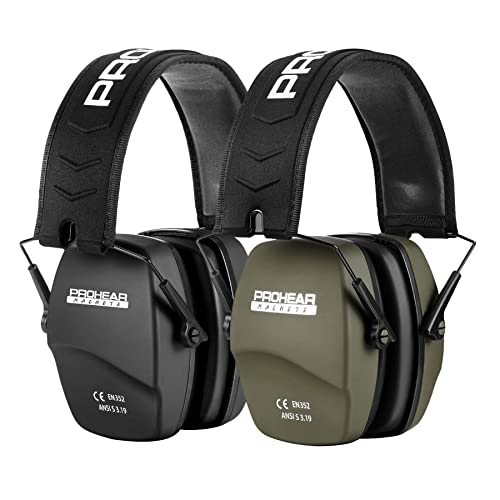
Best for: value-conscious buyers who need two reliable muff units for shooting ranges. Features include a sturdy sound-dampening composite housing, foam ear pads, and an adjustable, lightweight design. With NRR 26dB and SNR 31dB, they offer solid protection while remaining compact. Caution: the product uses a foldable design; ensure storage does not compress the headband over time.
Walkers Razor Slim Shooter Electronic Folding Earmuffs (Tan Patriot)

Best for: hunters and shooters who want audible sound amplification with a slim profile and folding convenience. The design mirrors other Razor Slim models with a focus on low-profile cups and durable construction. Caution: electronic components can be sensitive to moisture; avoid prolonged exposure to heavy rain without protective gear.
PROHEAR Electronic Ear Protection for Shooting (Green)
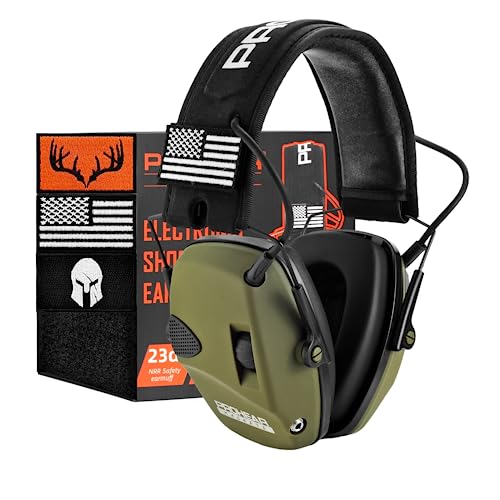
Best for: users needing active noise suppression with long battery life and strong amplification of desired sounds. Features include smart amplification up to 4x, a lightweight 0.6-pound build, and a sturdy headband for extended wear. Caution: uses 2 AAA batteries; check battery availability for long sessions on the range.
GLORYFIRE Shooting Ear Protection (Cool Black)

Best for: shooters who want flexible sound control with multiple modes. The 26dB NRR aligns with ANSI standards, and the device emphasizes clear voice tracking for better communication in noisy environments. Caution: ensure proper fit in the outer ear area to maximize protection and reduce leakage in high-noise situations.
Buying Guide: Key Considerations For Hunting And Shooting Ear Protection
Why choose ear protection designed for hunting and shooting? These devices combine noise reduction with sound awareness, helping you hear safe conversations and target cues while guarding your hearing from gunfire, engine noise, and wind. When selecting, consider:
- Noise Reduction Rating (NRR) and real-world effectiveness: Higher NRRs offer greater protection, but comfort and fit also influence performance in real scenarios.
- Hearing amplification: Some models provide mic-based amplification to preserve situational awareness. Decide if you need enhanced ambient sound or purely muffled protection.
- Fit and comfort: Lightweight, low-profile, and padded headbands reduce pressure during long sessions. Consider pocketable designs for travel and field use.
- Durability and weather resistance: Rugged housings and water resistance limit damage from rain, sweat, or rough terrain.
- Power source and battery life: Electronic models rely on batteries; verify expected life and ease of replacement in field conditions.
- Portability and storage: Foldable or compact designs are ideal for quick stowaway in gear bags or range boxes.
Common Buyer Scenarios
- New shooters: Prioritize models with balanced amplification and comfort to ease into range practice.
- Hunting enthusiasts: Favor slim, secure-fitting muffs with reliable noise attenuation for wooded or windy environments.
- Range masters: Look for durable, high-NRR options with good audio cue preservation for precise shot timing.
Frequently Asked Questions
- What is a good NRR for hunting? Answer: An NRR around 26 dB provides solid protection for most hunting scenarios, though amplification features may be prioritized by some users for situational awareness.
- Are electronic earmuffs worth it for beginners? Answer: Yes, they help beginners hear commands and ambient cues while protecting ears from loud noises.
- Can I wear ear protection under a helmet? Answer: Many slim-profile models are designed to fit under helmets or over-ear setups without interfering with fit.
- Do these devices require batteries? Answer: Several models are battery-powered, typically using AAA or rechargeable batteries; check each product’s battery life.
- How do I choose between passive and active protection? Answer: Passive muffs provide constant attenuation; active muffs add sound amplification and noise suppression features, which may improve awareness in some settings.
- Are all hearing protectors ANSI certified? Answer: Many models advertise ANSI or equivalent standards for NRR; verify the exact standard in the product description.