Best Ear Protection Headphones for Shooting: Safe Hearing on the Range
If you’re shopping for hearing protection for shooting, you want options that reduce loud gunfire while preserving essential situational awareness. This guide highlights five top models that balance comfort, protection, and clarity. It’s ideal for outdoor enthusiasts, range shooters, construction workers, and anyone needing all-day hearing protection without sacrificing conversation or safety. The products below are selected for reliability, fit, and clear sound reproduction when you need to hear commands at the range or on the job.
| Product | Best For | Overall Benefit |
|---|---|---|
| Floriogra 2 Pack 34dB Noise Canceling Headphones | Two-ear coverage, budget-friendly pairs | High protection with comfortable fit |
| Walker’s Razor Slim Shooter Electronic Folding Ear Protection Muffs | Active sound amplification with low-profile design | Hearing enhancement plus compact form |
| ProCase NRR 28dB Noise Reduction Ear Muffs | All-around protection for adults and kids | Adjustable fit, foldable portability |
| PROHEAR 016 Shooting Ear Protection Earmuffs | Low-profile, rifle-friendly design | Lightweight and comfortable for long sessions |
| Pro For Sho 34dB NRR Hearing Protection Ear Muffs | Compact, trusted option with high NRR | Break-in fit and versatile usage |
Floriogra 34dB Noise Canceling Headphones For Shooting

Best for: shooters who need strong noise attenuation on a budget. These earmuffs use a double-layer foam and a composite housing to reach SNR 34dB (ANSI S3.19 US), making gunfire and loud tools safer to endure. The design prioritizes breathability with spacious ear cups and imitation leather for a secure seal. The adjustable headband and rotatable pins allow a personalized fit for most head shapes. A caution: headband padding may loosen with heavy daily use and require occasional adjustment for comfort.
Walker’s Razor Slim Shooter Electronic Folding Ear Protection Muffs

Best for: shooters who want amplified hearing of ambient sounds while protecting against loud noises. These earmuffs are ultra-low-profile with slim ear cups for a secure fit. They use hi-gain microphones to deliver clear omnidirectional hearing and maintain sound accuracy, especially useful on the range. The rugged, rubber-coated housing adds durability, though electronics may require battery management attention during long sessions.
ProCase NRR 28dB Noise Reduction Ear Muffs

Best for: everyday shooting ranges, construction sites, and study spaces where consistent passive protection is needed. These muffs meet NRR 28 dB (SNR 34 dB) with ANSI S3.19 certification and offer an adjustable metal frame with a padded headband for comfort. They fold for portability and fit most eyeglass wearers with reduced leakage. A limitation: bulkier models may be less discreet in compact environments.
PROHEAR 016 Shooting Ear Protection Earmuffs
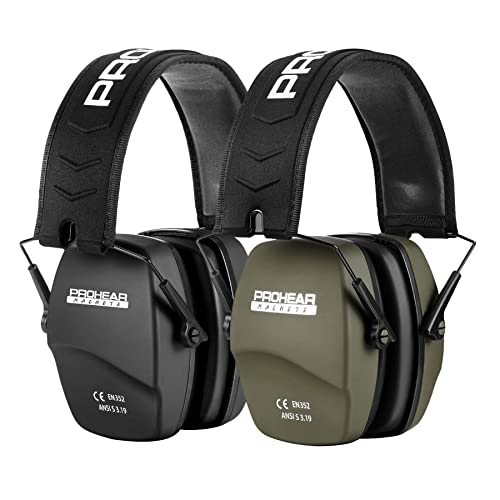
Best for: shooters seeking a compact, comfortable option with solid NRR performance. These muffs provide a maximum of 31 dB SNR/26 dB NRR and feature lightweight construction with a telescopic padded headband. The soft ear cushions help reduce fatigue during long practice sessions. A caveat: battery-powered amplification is not applicable here; this is a passive design, so there is no electronic amplification.
Pro For Sho 34dB NRR Hearing Protection Ear Muffs
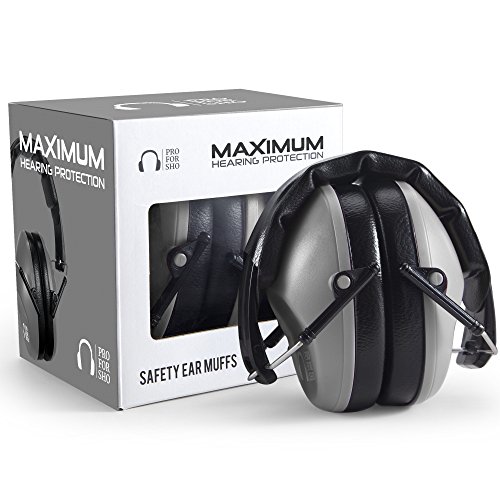
Best for: users who want a slim, portable model with strong protection. This model is among the higher end compact 34 dB NRR earmuffs, featuring a break-in period to improve comfort and a fully adjustable headband. It suits shooting ranges, hunting, and loud events where frequent transport is needed. A limitation: initial tightness is common; use the break-in technique to improve fit over time.
Buying Guide: Key Considerations For Selecting Shooting Earmuffs
- Noise reduction rating (NRR/SNR): Higher numbers mean more attenuation. Consider where you shoot most and pick a model with at least 26-34 dB NRR for gunfire.
- Fit and comfort: Look for adjustable headbands, wide cushioned cups, and materials that minimize heat buildup. If you wear glasses, ensure the design minimizes leakage.
- Weight and profile: Lighter, low-profile muffs are easier to wear for long sessions and allow better situational hearing when needed.
- Amplification vs. passive: If you need to hear commands and ambient sounds, models with built-in amplification are helpful. Passive models prioritize maximum attenuation.
- Durability: Look for rugged shells, reinforced hinges, and a design that can withstand field use and frequent folding.
- Battery life and maintenance: Electronic models require batteries; check expected life and replacement costs.
- Portability: Folding designs fit in gun boxes, backpacks, or tool kits. Consider whether you need a compact option for travel.
Frequently Asked Questions
- What does dB NR or SNR mean on hearing protection? – dB NR (Noise Reduction) or SNR (Single Number Rating) quantify how much noise a muff can block. Higher values indicate stronger protection.
- Are electronic earmuffs better for shooting ranges? – Electronic earmuffs enable sound amplification of ambient noises while reducing gunshot impact, which can improve safety and awareness on the range.
- Can I wear earmuffs with glasses? – Yes, but choose models with minimal sound leakage and ample space around the ears to prevent pressure on glasses arms.
- How should I break in new earmuffs? – If tight initially, gently wear them for short periods, or follow the product’s break-in instructions to loosen the headband.
- Do I need to replace earmuffs often? – Regular use may require occasional replacement due to padding wear, seal degradation, or damaged components.
- Which is better for hunting: passive or electronic earmuffs? – Passive earmuffs provide maximum attenuation, while electronic models offer hearing enhancement and situational awareness; choose based on your primary activity.