Best Electric Propellers for Kayaks and Trolling Motors
This guide helps buyers pick the right electric propeller or thruster for kayaks and small craft. The top picks below are best for anglers, recreational paddlers, or signaling rapid movement through calm to moderately choppy water. Each product section explains who it’s best for, why it’s chosen, and any notable limitations to consider before you buy. A quick buying table follows the introductions to compare key attributes at a glance.
| Product | Best For | Key Benefit | Limitations |
|---|---|---|---|
| Minn Kota Endura C2 | Freshwater anglers | Durable, easy tilt adjustment | Lower thrust for heavy currents |
| Newport Kayak Series | Saltwater and kayaks | Saltwater-rated build with depth-adjustable shaft | Higher price |
| DnyioVpl Electric Fin Thruster | Compact boards and kayaks | High RPM, strong thrust | Requires mounting on board |
| ZHLINUO 12v Fin | Inflatable craft, kayaks | Compact, strong 288W motor | Battery not included |
| ApisQueen U5 Underwater Thruster | Freshwater kayaks | High thrust in a compact unit | For specific 24V setup |
Minn Kota Endura C2 Transom-Mount Electric Trolling Motor
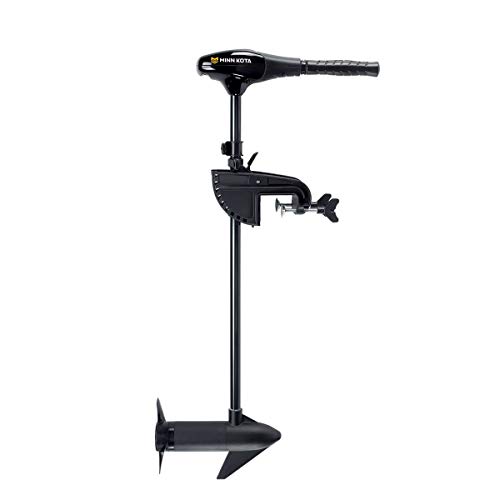
The Minn Kota Endura C2 is a freshwater trolling motor designed for reliability and simple handling. Best for anglers who fish calm to moderate waters from a small to mid-sized kayak or skiff. It features a 6-inch telescoping tiller for ergonomic control, a push-to-test battery meter, and a 10-position lever lock for easy angle adjustments. The reinforced composite construction helps resist UV damage and warping in marine environments. The Power Prop is optimized for heavy vegetation, offering extra thrust in tight cover. Best for: freshwater fishing where dependable control and durable build matter. Limitation: not designed for harsh saltwater use without proper corrosion protection.
Newport Kayak Series 36lb Thrust Transom Mounted Trolling Motor
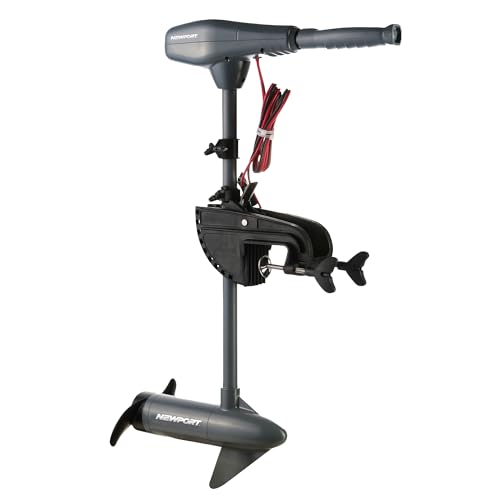
Best for kayaks in saltwater or mixed-water environments. This model offers 36 pounds of thrust and an all-aluminum motor head for corrosion resistance, with a 24-inch fiberglass shaft for flexible depth placement. It includes 8 speeds (5 forward, 3 reverse) and a 6-inch telescoping handle for precise maneuvering. The unit is saltwater rated, making it a strong choice for coastal paddlers. Caution: heavier motor systems require secure mounting and may impact portability.
DnyioVpl Electric Fin Thruster For Paddleboards And Kayaks

Best for compact paddle craft and stand-up paddleboards seeking quick propulsion. The 288W brushed motor delivers speeds up to about 2.5–3.1 mph and a high thrust capacity, up to 1102 lbs in theoretical load scenarios. It’s constructed from durable aluminum and nylon combo, designed for water resistance and long service life. Choose this if you want a high-thrust fin that enhances paddling efficiency without a full motor overhaul. Limitation: installation requires a mounting solution on your board or kayak to ensure stability.
ZHLINUO 12v Paddle Board Electric Motorized Fin

Best for inflatable kayaks and smaller boards that require a compact propulsion option. The 288W motor can deliver up to 440 lbs of thrust, enabling quicker passages and reduced paddling effort. It’s designed for fresh water and comes with a rechargeable concept (battery not included). The unit is lightweight and easy to transport. Limitation: battery solution must be compatible with the system’s voltage (24V recommended) for best performance.
ApisQueen 12-24V U5 Underwater Thruster

Best for freshwater craft with a scripted 24V setup and inflatable or compact kayaks requiring robust propulsion. The U5 underwater thruster can reach up to 7 kg (about 15.4 lbs) of thrust with corrosion-resistant build and a potted seal rated for up to 50 meters. It’s suitable for controlled, low-drag hulls and requires a compatible battery. Limitation: battery and mounting hardware are not included, so integration planning is essential.
Buying Guide
- Propulsion type: Trolling motors vs. underwater thrusters. Trolling motors are typically easier to install on transoms; thrusters are ideal for paddle boards and inflatable kayaks needing compact thrust.
- Power and thrust: Match the weight, hull type, and expected water conditions. Higher thrust provides quicker planing and better control in wind or current.
- Voltage and battery: Ensure battery voltage matches the motor’s requirements (12V vs 24V). Consider battery life, weight, and availability of spares.
- Material and corrosion resistance: Saltwater use demands corrosion-resistant components. Aluminum heads and magnesium/zinc hardware are common in marine-rated models.
- Mounting considerations: Transom mounts require sturdy mounting points; board-mounted fins require secure brackets and waterproof housings.
- Maintenance and durability: Look for UV-resistant housings, reinforced composites, and easily replaceable prop parts to extend life in marine use.
- Portability and weight: Heavier motors improve durability but may reduce transportability. Consider your typical paddling distance and vehicle storage.
- Safety and compatibility: Check for splash and debris clearance, prop guards if using in shallow waters, and compatibility with your kayak or board design.
FAQ
- What’s the difference between a trolling motor and an underwater fin thruster?
– A trolling motor mounts on the boat’s transom and provides forward thrust; an underwater fin thruster is mounted on or under a board or hull for propulsion without external propellers visible on the surface. - What voltage is best for kayaks and small boards?
– Many kayak motors use 12V, while some advanced systems use 24V. Match the motor with a compatible battery and weight considerations. - Do I need a special battery for saltwater use?
– Saltwater use emphasizes corrosion resistance; battery type (lead-acid vs. lithium) affects weight and duration but is not dictated by saltwater alone. - Can I install these myself?
– Most transom motors and fins are designed for DIY installation, but confirm mounting compatibility with your boat and follow safety guidelines. - Are maintenance parts easy to replace?
– Look for motors with readily available prop pins, washers, and replacement components to maximize uptime on the water. - What safety steps should I follow?
– Ensure secure mounting, test in calm water before use, wear a personal flotation device, and keep hands and clothing away from moving parts.