Best Exercise Equipment for Parkinson’s Patients: Safe, Low-Impact Tools for Home Practice
Seeking practical, low-impact gear to support Parkinson’s-friendly workouts at home? This guide highlights five hand, arm, and overall fitness products chosen for Parkinson’s rehab and daily mobility. Each option targets grip, dexterity, strength, or gentle cardio, helping daily tasks feel easier. Best for seniors, caregivers, and active adults looking to maintain function or slow symptom progression.
The following table summarizes the featured products, including who they’re best for and the primary benefit each offers.
| Product | Best For | Key Benefit |
|---|---|---|
| Jukestir Only Punching Bag with Dynamic Motion | Boxing/MMA enthusiasts, cardio-focused Parkinson’s routines | Dynamic motion for footwork, reaction time, and coordination |
| Vive Squeeze Balls (4 Pack) | Grip strength, arthritis support, hand therapy | Varying squishiness to progress grip and dexterity |
| FitBeast Forearm Strengthener | Forearm, grip, and rehabilitation work | Thicker handles and durable strap for elevated resistance |
| 5-Minute Parkinson’s Workout DVD | Structured, quick sessions for home practice | Ten short routines focusing on strength, posture, and function |
| Pedal Exerciser Bike (NISDOKR) | Total body, seated workout for seniors and rehab | Adjustable tension and easy seated operation |
These selections emphasize accessibility, simple setup, and practical benefits for Parkinson’s symptom management, balance, and daily activities. Each product includes clear usage goals and potential limitations to support informed decisions.
Jukestir Only Punching Bag With Dynamic Motion

What it is: A dynamic punching bag designed to simulate real sparring movements, promoting faster footwork, improved reaction time, and greater coordination. Best for boxing-minded cardio routines and combat-sport style workouts at home.
Why it’s selected: This option supports hand-eye coordination, timing, and agility, which can be helpful for Parkinson’s patients seeking engaging, fast-paced activity without high risk of impact. The dynamic motion provides progressive challenge for motor learning and rhythm training.
Who it’s best for: Individuals who enjoy cardio-based, fast-paced movement and want to work on footwork and reaction time in a controlled home setting.
Limitations: Not primarily a lower-body strengthening device; the effectiveness depends on consistent practice and safe space to avoid collisions or missteps.
Key takeaway: Use for short, focused intervals to improve coordination and cardiovascular endurance while prioritizing safe footing and respiratory pacing.
Vive Squeeze Balls For Hand Therapy (4 Pack)

What it is: A four-pack of egg-shaped squeeze balls offered for grip strength, stress relief, and hand therapy. Each ball has a distinct level of squishiness to accommodate progressive training.
Why it’s selected: Hand therapy and Parkinson’s-focused routines often benefit from progressive grip challenges. These squeeze balls provide adjustable resistance, supporting motor control, dexterity, and finger strength in short, repeatable sessions.
Who it’s best for: Anyone needing gentle-to-moderate grip training, particularly those managing arthritis, hand stiffness, or post-stroke hand recovery.
Limitations: They are tools for grip work rather than full upper-limb conditioning; pairing with other arm and core activities is recommended for balanced training.
Key takeaway: Use one or two sets per session to build steady grip strength and reduce hand fatigue during daily tasks.
FitBeast Forearm Strengthener & Wrist Roller

What it is: A forearm strength trainer featuring a thicker handle design and an adjustable strap, built for grip endurance and rehabilitation. It targets forearms, wrists, and hands for improved daily function and athletic performance.
Why it’s selected: Enhanced grip strength supports safe assistance with daily activities, assists in rehabilitation from repetitive strain injuries, and provides tangible improvements in overall hand performance for Parkinson’s patients.
Who it’s best for: Those needing stronger grip, forearm endurance, and rehab-friendly resistance options, including athletes, musicians, or office workers requiring steady hand performance.
Caution: The unit’s high tension may be challenging initially; start with lighter resistance and progress gradually to avoid overexertion or discomfort.
Key takeaway: Choose this if the goal is targeted grip and forearm conditioning with scalable resistance for progressive training.
5-Minute Parkinson’s Workout DVD

What it is: A DVD offering ten short, Parkinson’s-specific workouts aimed at improving strength, posture, and functional mobility in five-minute sessions. Includes chair-friendly and standing routines for varied ability levels.
Why it’s selected: Short, repeatable sessions enable consistent practice without long commitment, helping sustain engagement and progress in daily activities. The mixed chair and standing options accommodate fluctuating mobility days.
Who it’s best for: Individuals seeking a structured, low-barrier routine suitable for home use and gradually building stamina and coordination over time.
Caution: Video-based routines require adequate space and safe setup; ensure seating and standing areas are clear before starting.
Pedal Exerciser Bike (NISDOKR)
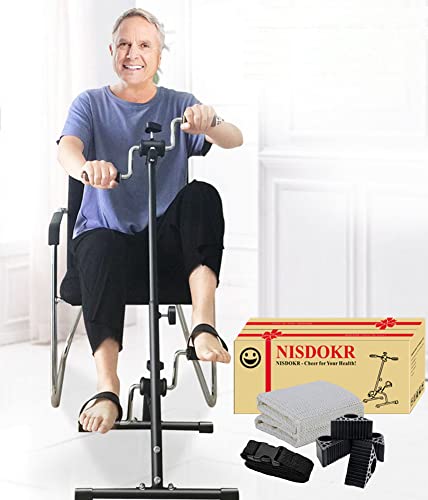
What it is: A compact pedal exerciser designed for upper and lower limbs, usable while seated. It supports adjustable resistance and is suitable for home rehabilitation and light cardio training.
Why it’s selected: The seated format is accessible for seniors or individuals in rehabilitation, enabling gentle leg, arm, and knee movements without standing. Its portability and adjustable tension make it adaptable to changing capability levels.
Who it’s best for: Seniors and rehab patients seeking a total-body cardio option that can be used from a chair, sofa, or bed with adjustable resistance.
Caution: Ensure stable placement on the floor and use anti-slip feet or a mat to prevent movement during use.
Buying Guide: Parkinson’s-Friendly Exercise Equipment
What to prioritize
- Low-impact design: Prioritize equipment that minimizes joint stress while promoting movement and coordination.
- Seated accessibility: Tools that can be used while seated help conserve energy and reduce fall risk.
- Progressive resistance: Choose gear with adjustable levels to match improving strength and dexterity over time.
- Clear safety considerations: Look for non-slip bases, padded handles, and space requirements to support safe use at home.
How to build a balanced routine
- Combine cardio, strength, and dexterity work: Use items like the punching bag for cardio, squeeze balls for grip, and forearm trainers for strength.
- Schedule short, frequent sessions: Parkinson’s-friendly plans often benefit from multiple brief workouts across the day.
- Incorporate rest and monitoring: Track how you feel after sessions and adjust intensity to avoid fatigue or discomfort.
Practical tips for beginners
- Start with a warm-up: Gentle range-of-motion moves to prepare joints and reduce stiffness.
- Focus on form: Proper technique reduces injury risk and improves training effectiveness.
- Set up a safe space: Clear surrounding area, non-slip mats, and stable seating support.
FAQ
- What equipment is best for tremor management? – Combined use of grip trainers, light cardio tools, and seated leg devices can help with rhythm and movement control while minimizing tremor impact.
- Can these tools replace therapy? – They are supportive home tools and should complement professional guidance and prescribed therapy programs.
- Are these products safe for all Parkinson’s stages? – They are designed for general use, but intensity should be tailored to individual abilities and medical advice.
- How often should I use these tools? – Short sessions several times per week are typically beneficial, with gradual increases as tolerated.
- Is seated exercise sufficient for cardio? – Seated options can provide low-impact cardio and cadence training that’s safer for balance concerns; stand-up work can supplement as appropriate.
- Do I need supervision? – Supervision or caregiver involvement is recommended, especially during new routines or higher-intensity activities.