Best Exercise Pulley for Shoulder Rehab: Top Over-Door Systems for Recovery
When searching for an exercise pulley for the shoulder, you want an over‑the‑door system that delivers gentle, controlled movement to restore range of motion and reduce pain. The top picks here suit different buyers: active rehabilitation readers, post‑surgery readers, and home therapy setups. Each product listed provides a reliable, gravity‑assisted approach to shoulder rehab, with clear setup and safety features. The summary table below compares core points to help you decide quickly.
| Product | Best For | Key Benefit | Notable Limitation |
|---|---|---|---|
| Phantawell Shoulder Pulley | General rehab and daily use | Quiet, smooth rope glide; sturdy metal brackets | Over‑the‑door setup may require door clearance |
| Vive Shoulder Pulley | Post‑surgery and arthritis recovery | Provides range‑of‑motion limits with stoppers | May require door width compatibility |
| Fanwer Shoulder Pulley | Rotator cuff and frozen shoulder therapy | Finger glove brace for hand weakness; stopper control | Plastic pulley housing may feel lightweight to some |
| BTKASN Shoulder Pulley | Home rehab with simple setup | Fixed metal bracket for stability | Door clearance needed for full extension |
| DMI Exercise Pulley Set | Economical home therapy | Metal frame and complete set for door use | Limited product details in basic listing |
Phantawell Shoulder Pulley Over The Door
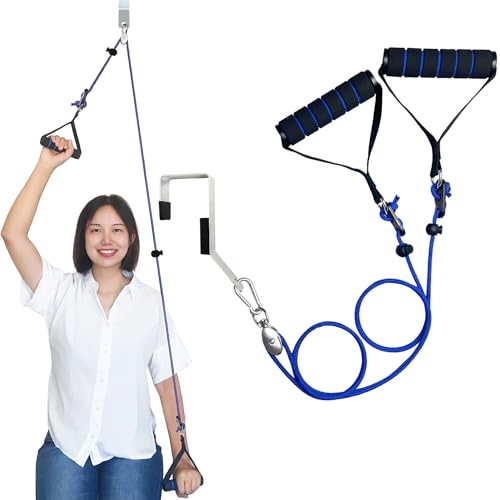
The Phantawell shoulder pulley over the door physical therapy exerciser uses gravity to provide passive shoulder rehabilitation. It helps speed healing, increases range of motion, and relieves pain. Best for users seeking a simple, gravity‑assisted routine to kickstart ROM improvements after injury or surgery. The zinc‑coated housing resists deformation, and the nylon wheel ensures quiet, smooth rope movement. A sturdy metal bracket attaches over most doors without scratching the surface.
Who it’s best for: individuals needing a reliable, no‑frills rehab tool for gradual ROM restoration at home. Why selected: strong build, quiet operation, and straightforward setup. Caution: ensure door clearance meets the device’s height and swing range to avoid contact with frames or molding.
Hshbxd Shoulder Pulley Over The Door System

Hshbxd offers an easy, no‑assembly shoulder pulley over the door. It includes a door anchor, pulley, rope, and handles, letting you perform gentle, passive ROM movements. Best for beginners or users who want a quick setup with minimal fuss. The design emphasizes safe, gradual extension; follow clinician guidance for frequency and repetitions. Limitations include door width compatibility and the need to monitor for any discomfort during use.
Vive Shoulder Pulley For Physical Therapy

The Vive system is designed for rehab after shoulder surgery or injury, with controlled movement aimed at gradually improving ROM. It includes durable metal components and padded handles for comfort, plus a simple door strap that fits most doors. Best for readers who want reliable, low‑friction operation and the option to limit ROM using built‑in stoppers. Caution: verify door dimensions and wall clearance before installation to avoid contact with door frames or walls during full extension.
Fanwer Shoulder Pulley System

Fanwer’s system fits rotator cuff recovery and frozen shoulder therapy, offering a stopper button to safely manage movement range. A finger glove brace can assist users with hand weakness or stroke-related limitations, enhancing control during rehab. Best for users who need finger support and adjustable ROM. Choose this if you value added grip assistance; avoid if you require a heavier‑duty pulley with a more rugged feel due to lightweight housing.
BTKASN Shoulder Pulley With Fixed Bracket

BTKASN’s over‑the‑door pulley uses a fixed metal bracket for stable workouts and gravity‑assisted shoulder rehab. It’s suitable for users who want a strong, stable setup and easier installation, with the door bracket designed to minimize door damage. Best for consistent, repeated therapy sessions at home. Caution: ensure the door can tolerate the bracket weight and clearance when fully extended.
DMI Exercise Pulley Set For Physical Therapy

DMI’s set provides a door pulley exercise kit intended for physical therapy with a metal frame included in the description. It’s a budget‑friendly option for basic shoulder ROM work and home rehab. Best for shoppers prioritizing affordability and a straightforward setup. Limitation: fewer product specifics may require verifying component compatibility before purchase.
Buying Guide
What to consider when choosing a shoulder pulley system:
- Purpose and ROM goals: Post‑surgery rehab may prefer systems with ROM stoppers; everyday mobility work may do fine with simpler setups.
- Door compatibility: Measure door width and clearance to ensure safe operation and full range of motion without hitting frames.
- Construction and durability: Metal brackets and high‑quality pulleys typically offer longer service; soft padding on handles reduces grip fatigue.
- Grip and pain considerations: Hand support or finger aids help if you have grip weakness or nerve issues.
- Ease of assembly: No‑assembly models are convenient for beginners; more complex setups offer adjustable features for advanced users.
- Safety features: Look for anti‑scratch brims, non‑slip straps, and movement stoppers to prevent overextension.
FAQ
- What is the main benefit of an overhead shoulder pulley? Answer: It enables gentle, gravity‑assisted ROM movements to improve mobility without heavy loading on the joint.
- Who should use a door‑mounted pulley? Answer: Most individuals recovering from shoulder injuries or surgery, or those needing daily ROM exercises at home.
- Do I need professional supervision to use one? Answer: It’s best to follow guidance from a physical or occupational therapist, especially after surgery or acute injury.
- Can these devices damage doors? Answer: Quality brackets and padding reduce risk; ensure proper installation and avoid doors with sensitive finishes.
- How do I choose between models? Answer: Compare ROM range, comfort of handles, ease of installation, and any added features like stoppers or grip aids.
- Is a heavier‑duty pulley better for rehabilitation? Answer: Not necessarily; the best choice depends on your stage of recovery, comfort, and desired ROM control.