Best Expandable Broadheads for Crossbows: Top 5 Picks for Precision
Expandable crossbow broadheads are designed to maximize penetration and wound channels at crossbow speeds. This guide highlights five well-suited options for American hunters, from high-velocity competition setups to practical field-ready deployments. The top picks cater to different styles: precision shooters prioritizing accuracy, rugged all-terrain hunters needing reliability, and practitioners seeking a balance of cut diameter and flight stability. The summary table below helps compare key traits at a glance.
| Product | Cutting Diameter | Blades | Best For |
|---|---|---|---|
| Swhacker #219 Crossbow Broadheads (3 Pack) | 1.75″ | 2 mechanical | Speedy crossbows, precision penetration |
| G5 Outdoors Deadmeat 100% Steel (3 Pack) | 1.5″ | 3 fixed | Rugged reliability, deep penetration |
| Rage Crossbow X (3 Pack) | 2″ | 2 mechanical | Large wound channels, flight stability |
| TenPoint Nemesis Broadhead (3 Pack) | 2″ | 4 mechanical | Maximum penetration, crossbow energy transfer |
| Swhacker Levi Morgan (4 Pack) | 2″ | 2 mechanical | Competitive shooting, repeatable accuracy |
Swhacker #219 Crossbow Broadheads

Best for high-speed crossbows that demand reliable blade deployment. This 1.75″ expandable 2-blade design uses patented Two-Slice Technology: wing blades engage first, then primary blades deploy on impact for controlled energy transfer and deep penetration. The 3-pack is suited for hunters who want quick lineups for multiple stands or practice sessions. Caution: blade deployment relies on impact; practice with shafts to confirm full deployment in varied temperatures and arrow weights.
G5 Outdoors Deadmeat 100% Steel Expandable Broadhead
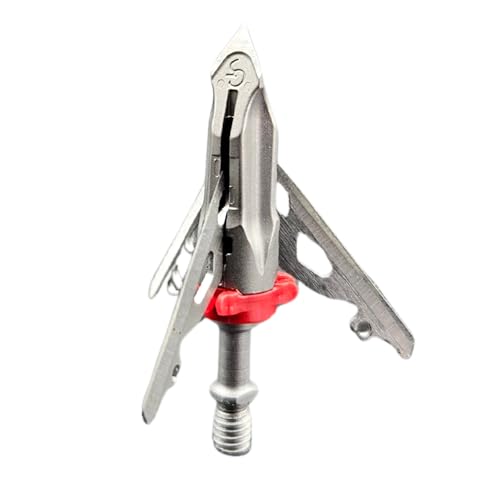
Best for rugged field hunting and deep penetration. The DeadMeat V2 broadhead uses a rearward sliding design with three steel blades and a 1.5″ cutting diameter, delivering strong energy transfer. The included practice tip aids honing accuracy. Limitations include a slightly smaller cut width compared to larger-profile designs, which may affect wound channels on larger game.
Muzzy Trocar HBX Hybrid 4 Blade Crossbow Broadhead

Best for hunters needing a blend of fixed and expandable blades. The HBX Hybrid combines 4 blades (2 fixed, 2 mechanical) with a 100-grain weight and a chisel tip. This design aims to deliver predictable flight and expanded wound channels on impact. A potential limitation is the hybrid mechanism, which may require careful maintenance to ensure reliable deployment in field conditions.
Rage Crossbow X 2-Blade Broadhead

Best for creating large wound channels with shock-collar technology to ensure blade deployment in flight and on impact. The 2″ cutting diameter with rear-deploying blades provides substantial entry and exit paths. Better for shooters prioritizing aggressive tissue disruption, though blade retention technology may demand careful handling in dusty or muddy conditions.
TenPoint Nemesis Broadhead

Best for maximum penetration and energy transfer. This 100-grain, 4-blade expandable broadhead is engineered to maintain accuracy at higher crossbow velocities, aiming to deliver a devastating wound channel. It excels for hunters who want high ballistic performance and a broad cutting footprint. A potential drawback is the higher blade count, which might affect anchor accuracy on very fast setups if the bolt isn’t perfectly tuned.
Buying Guide
What should I look for in expandable crossbow broadheads?
Consider cutting diameter, blade count, deployment mechanism, and weight. Larger cuts create bigger wound channels but can affect flight stability. Mechanical blades deploy on impact; fixed blades don’t. Match broadhead weight to your crossbow’s FPS and arrow setup for consistent flight.
How does deployment mechanism impact reliability?
Mechanical designs require impact activation, while some hybrids combine fixed and mechanical elements. Reliability improves with durable materials, rust resistance, and well-secured blade retention systems. Check for proven deployment in your typical hunting conditions (temperature, moisture, dust).
What are the trade-offs between speed and penetration?
Higher-speed crossbows often tolerate larger cutting diameters because velocity helps stabilize expansion. Conversely, extremely fast bolts can push blades into an aircraft-like flight path; select designs tested for performance at high FPS.
Are practice tips important for broadheads?
Yes. Use practice tips and field points to confirm flight and calibration. Ensure your hunting setup remains consistent across broadhead and field-point shots to avoid surprises at the moment of truth.
How should I care for mechanical broadheads?
Keep blades clean and dry, and inspect retention collars before hunts. Lubrication is not always necessary, but ensure blades deploy smoothly after exposure to varied weather conditions. Store separately from steel components to minimize rust risk.
Quick comparison by hunter needs
- Best for speed-focused crossbows: Swhacker #219, TenPoint Nemesis
- Best for rugged field hunting: G5 Outdoors Deadmeat
- Best for large wound channels: Rage Crossbow X
FAQ
- What is the typical cutting diameter of expandable crossbow broadheads?
Most range from 1.5″ to 2.0″ in the examples above. - Do mechanical broadheads fly like field points?
High-quality designs minimize drift, but some tuning may be needed for certain crossbows. - Is blade retention a concern on rough terrain?
Yes; check retention systems and practice in varied weather. - Should I choose a 2-blade or 4-blade design?
4 blades often deliver larger exit wounds; 2 blades can offer simpler flight and sharp penetration. - Are these broadheads compatible with all crossbows?
Most are designed for a range of modern high-speed crossbows; verify with your model’s specs.