Best Finger Strengtheners for Guitar Players: Build Dexterity, Strength, and Calluses
Answering the question for guitarists seeking to improve finger strength and dexterity, these hand and finger exercisers are designed to boost grip, coordination, and callus development. The top picks below are best for players aiming to condition fingers, hands, and forearms, with options ranging from adjustable per-finger tension to multi-pack sets for progressive training. The buyer’s guide following the product reviews highlights key considerations to help you choose.
| Product | Best For | Why It Stands Out |
|---|---|---|
| D’Addario Varigrip Hand Exerciser | Developers of finger dexterity and calluses | Custom per-finger tension and simulated strings for callus development |
| Fender GRIP Hand and Finger Exerciser (Hard) | Ergonomic, therapist-inspired training | Soft finger caps and therapist-designed ergonomics |
| FitBeast Finger Strengthener 3-Pack | Multi-resistance training | Three resistance levels for progressive training and rehab |
| Logest 3 Pack Finger Strengtheners | Portable, finger-specific workouts | Isolates each finger for targeted strength |
| D’Addario Varigrip Finger Strengthener with Fiddilink | Balanced strength and callus conditioning | Similar to Varigrip with simulated strings for callus work |
D’Addario Varigrip Hand Exerciser
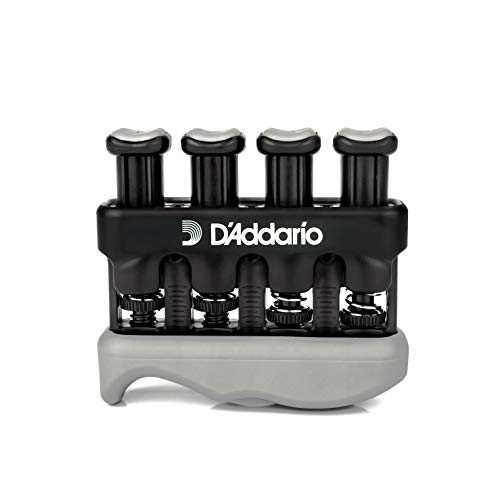
The Varigrip is designed to build strength and dexterity across fingers, hands, and forearms. Its ergonomic design and over-molded finger pads aim to keep workouts comfortable, with customizable per-finger tension to prevent over-emphasizing any one finger. A unique feature is the simulated strings that appear when the grip is adjusted, helping to develop finger calluses essential for string players.
Best for: beginners to intermediate players who want a targeted, finger-specific progression and callus-building practice. Use this if you prefer adjustable finger tension and a simulated-string cue to mimic playing feel. Caution: the need to remove a grip layer to access simulated strings may feel fiddly for some users.
Fender GRIP Hand and Finger Exerciser (Hard)
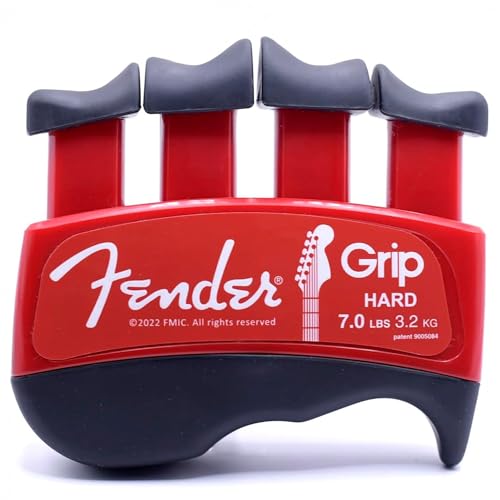
Fender’s GRIP is an ergonomic option co-developed with hand therapists to maximize comfort and effectiveness. It features soft, non-allergen rubber finger caps that stay in place during workouts, and the design emphasizes durability and stability for extended sessions. This model targets players who want a trusted, therapist-backed approach to finger strengthening and stamina building.
Best for: players seeking a well-supported, comfort-first exerciser with professional design guidance. Choose this if you value soft caps and a proven ergonomic framework. Limitation: labeled as a harder resistance (hard) model, which may be too intense for complete beginners without gradual progression.
FitBeast Finger Strengthener 3-Pack
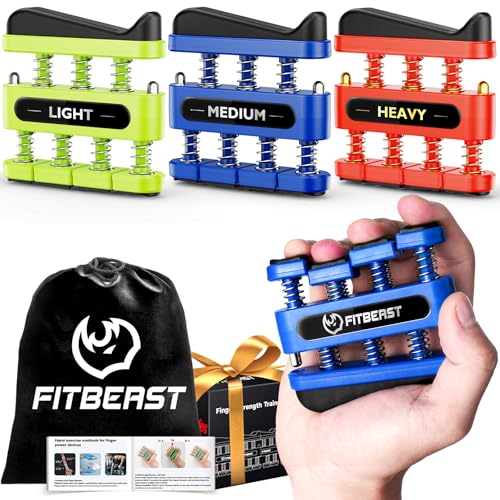
This three-piece set offers adjustable resistance to boost hand flexibility, strength, and recovery. It supports individual finger training as well as full-hand workouts, making it versatile for musicians, climbers, or anyone rehabilitating finger strength. The adjustable resistance helps tailor workouts across beginner to intermediate levels.
Best for: users who want a straightforward progression with multiple resistance options in one purchase. Better for: those who value isolating each finger or training the entire hand. Caution: ensure gradual resistance increases to avoid overexertion.
3 Pack Finger Strengthener (Logest)

Designed for portability, Logest finger trainers let users exercise each finger individually or in full-hand sequences. The device’s emphasis is on durability and convenient use away from home, suitable for warmups, practice sessions, or on-the-go training. This is a practical choice for players who travel or rehearse in various environments.
Best for: musicians and hobbyists who need a compact tool for quick finger checks or travel workouts. Choose this if you value portable, finger-specific options. Limitation: some users may prefer thicker resistance ranges for advanced training.
D’Addario Varigrip Finger Strengthener with Fiddilink
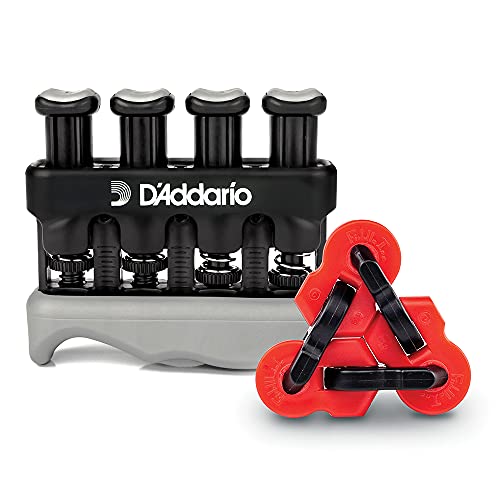
This Varigrip variant combines standard grip with Fiddilink enhancements for finger strength and coordination. It retains the adjustable tension per finger and includes a simulated-string feature for callus development, similar to the original Varigrip but with updated accessories for a potentially more comfortable conditioning routine for string players.
Best for: players who like the original Varigrip approach but want a variant that emphasizes consistent finger alignment and callus work. Caution: includes similar mechanism to the primary Varigrip, so expect overlap if you already own the base model.
FitBeast Finger Strengthener 4-Pack

The 4-pack expands the training spectrum with four resistance levels: 3, 7, 9, and 11 lbs. This setup supports long-term progression for musicians and athletes alike, focusing on improved hand flexibility, grip strength, and rehabilitation. The set is designed for both isolated finger work and full-hand routines, maintaining reliable operation for varied users.
Best for: serious trainees who want a broader resistance ladder and longer training horizons. Choose this if you anticipate needing higher resistance as you progress. Limitation: higher resistance may require more careful warmups to prevent strain.
Fender GRIP Hand and Finger Exerciser (Medium)
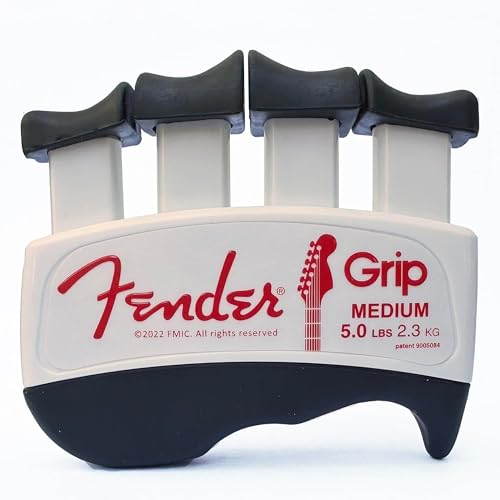
This medium-resistance Fender GRIP model focuses on balanced, mid-level training with the same soft caps and therapist-informed design. It’s suitable for ongoing strength maintenance and steady skill growth across stringed instruments.
Best for: players who want steady, mid-range training to complement practice sessions. Avoid this if you need extreme resistance or if you’re new and prefer starting with easier options.
Buying Guide: Finger Strengtheners For Guitar Players
What should you consider when selecting a finger strengthener?
- Training goals: Are you targeting general hand strength, finger independence, or callus development? Some models emphasize per-finger tension, others focus on overall grip.
- Resistance range: Beginners should start with lower tensions and gradually increase. Musicians may prefer multi-pack sets that offer a progression ladder.
- Ergonomics and comfort: Look for soft finger caps, comfortable grips, and therapist-informed designs if possible. Comfort reduces fatigue during longer practice sessions.
- Portability and convenience: Portable options help you train between sessions or while traveling. Isolating individual fingers can matter for on-the-go workouts.
- Durability and build quality: Solid materials and reliable operation reduce the risk of catching or slipping during use.
Practical Tips For Using Finger Strengtheners
- Warm up before intensive sessions with light squeezes or hand stretches to prevent strain.
- Balance training: alternate finger isolation with full-hand workouts to promote coordination.
- Progress gradually: increase tension or reps in small steps to avoid overuse injuries.
- Combine with actual playing: integrate training into practice routines to translate strength gains to fretboard control.
FAQ
Q: How often should I use a finger strengthener? A: Start with short sessions (5–10 minutes) several times per week and adjust based on comfort and progress.
Q: Can these devices help with callus formation? A: Some models include simulated strings or features that support callus development when used as part of a broader practice routine.
Q: Are all finger strengtheners suitable for beginners? A: Many are, but some high-resistance models are better after a basic foundation. Begin with lighter tension and grow gradually.
Q: Should I train all fingers equally? A: Aim for balanced development by training each finger individually and as a full hand, to prevent imbalances that affect playing.
Q: Do these replace regular guitar practice? A: No. They complement technique work, scales, and repertoire practice by improving finger strength and control.