Best Floaties for 4 Year Olds: Safe Swim Vests and Arm Floats for Young Swimmers
Find the right floaties for a 4-year-old with buoyant confidence and safety in mind. This guide showcases five top options designed for kids around 30–66 pounds, emphasizing secure fittings, comfortable movement, and reliable buoyancy. Perfect for parents teaching water skills, caregivers at pools or beaches, and families planning swim lessons.
The following table highlights the five selected products, their key strengths, and the typical user they suit best.
| Product | Best For | Why It Stands Out |
|---|---|---|
| Chriffer Kids Swim Vest | Active young swimmers 2–7 | Dual lock system and U-shaped front reduce neck chafing; balanced buoyancy for learning kicks |
| Body Glove Paddle Pals | First-time swimmers needing steady buoyancy | USCG approved, multi-panel design with shoulder harness for secure fit |
| AEOCOO Puddle Float Jumper | Kids ages 2–7 practicing in pools or shallow water | Triple buckle system, adjustable back, and U-shaped collar for comfortable movement |
| GOSEN Toddler Floaties | Kids who need strong back safety and neck support | Double safety buckles, reinforced back stitching, 22–66 lb range |
| DRQ Toddler Swim Vest | Young learners for pool and beach activities | Shoulder harness with arm wings; supports kicking and buoyant learning |
Chriffer Kids Swim Vest
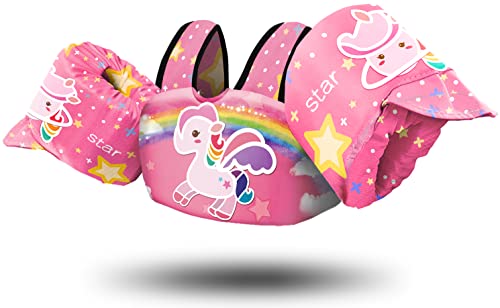
Best for: Young swimmers who need dependable buoyancy and a secure fit during pool or beach activities. This vest is designed for children 30–55 pounds (ages roughly 2–7). The two-buckle system requires adult assistance to open, helping prevent accidental removal and improving safety in busy water environments.
Why selected: The dual-lock design reduces the chance of accidental slips compared with single-buckle vests. Its U-shaped front minimizes neck rubbing and offers a comfortable range of chest sizes for longer wear during water play.
Limitation: While secure, the vest relies on proper sizing. Confirm weight range and adjust straps before each use to maintain buoyancy and balance.
Body Glove Paddle Pals

Best for: Families seeking a trusted legacy and USCG-approved protection for ages 2–6 (33–55 lbs). The Paddle Pals vest offers a secure fit with a shoulder harness to prevent riding up during movement.
Why selected: Body Glove brings a long-running water-safety pedigree, with a multi-panel design and durable material. The shoulder harness adds stability, supporting natural arm motion as kids practice kicking and floating.
Caution: As with all vests, ensure a proper fit around the chest and shoulders to avoid looseness that may reduce buoyancy or interfere with movement.
AEOCOO Puddle Float Jumper (30–70 lbs)

Best for: Versatile wear for kids 2–7 years, from 30 to 70 pounds, who need extra arm mobility while learning to swim in pools or calm water.
Why selected: This vest emphasizes an active comfort design with a U-shaped collar for chin support and a back-adjustable fit. The triple-buckle setup adds security, helping prevent slips during active swimming activities.
Limitation: An adjustable fit may require occasional readjustment as children move between sitting and standing positions in water.
AEOCOO Puddle Float Jumper (Dinosaur

Best for: Similar range of weights (30–70 lbs) with a playful dinosaur theme that can appeal to kids who enjoy fun print designs during pool time.
Why selected: Features mirror the athletic emphasis of the brand’s other models: triple buckle, shoulder harness, and easy-on-use design. It provides a secure fit while supporting arm movement for swimming practice.
Limitation: Themed prints may be appealing, but ensure sizing reflects current weight to maintain buoyancy and safety.
DRQ Toddler Swim Vest

Best for: Children in the weight range of 22–66 pounds (ages 2–6) needing a dependable vest for pool or beach water activities.
Why selected: The shoulder harness with arm wings helps keep the vest in place during swimming practice, enabling natural arm movement and buoyancy assistance as kids build confidence in water.
Caution: Ensure the vest is properly adjusted to prevent riding up and to maintain buoyant alignment during movement.
Buying Guide
What to look for in a kid’s float vest
Key factors include weight range, secure closures, shoulder support, and fit consistency. A vest with dual or triple buckles reduces the chance of self-removal by curious hands, while a shoulder harness or arm wings helps prevent ride-up during active swimming.
How to choose the right size
Check the manufacturer’s weight range and the child’s current weight. If between sizes, consider the higher end of the range for a longer usable period and safer buoyancy.
Material and comfort considerations
Look for skin-friendly fabrics and durable foam or buoyant material. Neoprene or soft polyester blends tend to offer comfortable wear for longer swim sessions, with minimal chafing around the neck and chest.
Safety certifications and practices
USCG or equivalent certifications provide a baseline for buoyancy and safety. Regardless of certification, always supervise children closely in and around water.
Usage scenarios
For learners, select vests that encourage kicking and arm movement without restricting natural motion. For casual pool days, prioritize ease of wear and quick removal by caregivers.
FAQ
- What age is best for a swim vest? Swim vests are typically used for children aged 2–6, depending on weight and development. Always follow the weight range on the product.
- Is USCG approval important? USCG approval indicates compliance with safety standards, but supervision remains essential and is the most important safety factor.
- How should I test buoyancy at home? In a shallow, supervised area, have your child stand with the vest on and gently move to sit and float to gauge balance and comfort before swimming.
- When should I avoid floaties? Do not rely on floaties as the only water-safety measure. Use them as learning aids alongside close supervision and swim lessons.
- What if the vest rides up? A vest that rides up can restrict breathing and movement. Recheck fit and adjust straps, or try a model with a shoulder harness designed to prevent riding up.
- Are inflatable armbands better than vests? Arm bands can be easier for beginners but may offer less buoyancy control than a well-fitting vest. Choose based on your child’s comfort and water goals.