Best Floor Mats for Working Out at Home: Cushioned, Non-Slip, and Easy to Install
When choosing floor mats for workouts, look for durable, non-slip surfaces that cushion joints, protect flooring, and suit your space. This guide highlights five top options suitable for home gyms, yoga studios, and multipurpose workout areas. Best for renters or small spaces are interlocking tiles and foldable mats; best for high-impact routines are extra-thick mats; best for pilates and yoga emphasize grip and stability. The following picks cover a range of needs from puzzle tiles to thick folding mats, with handy pros and limitations to aid quick decisions.
| Product | Type | Thickness | Best For |
|---|---|---|---|
| ProsourceFit Exercise Puzzle Mat ½-inch (24 sq ft) | Interlocking EVA tiles | ½ inch | General home gym, kids play areas |
| Haulcove 18 Tiles Puzzle Mat | Interlocking EVA tiles | 0.4 inches | Compact home gym, easy storage |
| bemaxx Gym Mats Set (18 pcs) | Interlocking EVA tiles | 0.4 inches | Thorough floor protection, budget-friendly |
| Retrospec Solana Yoga Mat | Yoga mat | 1 inch | Yoga, Pilates, floor exercises |
| CAP Barbell Folding Exercise Mat | Foldable exercise mat | 2 inches | High-impact workouts, tumbling |
ProsourceFit ½-Inch Puzzle Mat (24 Sq Ft)
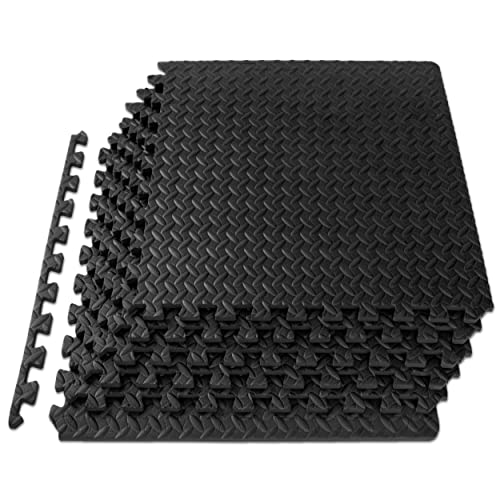
Best for: Home gyms with limited space or dual-use areas (play space for kids). The ½-inch EVA foam tiles interlock to create a cushioned, non-skid surface that protects floors and reduces noise. This set is a flexible option for shaping a workout zone on flat, hard surfaces. The tiles are water-resistant and easy to clean, making maintenance simple. A limitation is that color and texture may vary slightly by batch, which can affect uniform appearance in larger layouts.
CAP Barbell Folding Exercise Mat – 2″ Thick

Best for: High-impact workouts and joint protection during gymnastic, aerobics, or core training. The mat offers extra thick 2-inch high-density foam for superior cushioning and impact absorption. It folds for easy storage and includes built-in handles for transport. A caution is that potential users should confirm the mat’s weight and portability match their travel or home storage constraints, as folding mats can be bulky when expanded.
Amazon Basics 1/2 Inch Extra Thick Exercise Yoga Mat

Best for: Yoga, stretching, and light floor workouts. The mat provides cushioned support with a ½-inch thickness and textured surface for better traction. It’s durable and can rebound well after compressive loads. Limitations include potential flattening with intensive or repeated high-impact moves and less cushioning compared to thicker mats for knee or hip-heavy routines.
Retrospec Solana Yoga Mat – 1 Inch

Best for: Deeply cushioned floor work and stability for yoga and Pilates. The 1-inch thickness reduces joint stress and supports balance during longer sessions. It features a non-slip surface and a carrying strap for portability. A potential drawback is the mat’s larger size, which may be less space-efficient for small areas or travel-focused routines.
Haulcove 18 Tiles Puzzle Mat (18 Sq Ft)

Best for: People who want a flexible layout for a dedicated workout area with easy storage. The tiles interlock quickly without tools and utilize a textured top with anti-skid bottom to minimize shifting during movement. This mat is water-resistant and easy to wipe clean. A note: small tiles may require a careful installation to prevent gaps at edges in irregular room shapes.
Buying Guide: Key Considerations For Choosing Floor Mats For Working Out
- Intended use: For yoga or Pilates, prioritize grip and cushioning (e.g., 1 inch or thicker). For high-impact or cardio, choose thicker, denser mats or interlocking tiles with good shock absorption.
- Space and layout: Interlocking tiles are ideal for customizing a floor area; foldable mats help with storage in small rooms.
- Durability and material: Look for high-density EVA foam or similar, which resists compression, tearing, and water, while remaining easy to clean.
- Portability: If you move workouts between rooms or travel, mats with carrying straps or handles offer better convenience.
- Maintenance: Water-resistant surfaces simplify cleanup after workouts; ensure edges align well to prevent tripping.
- Safety features: Non-slip textures, anti-skid layers, and edge pieces that reduce movement can lower injury risk.
Frequently Asked Questions
- What is the best mat thickness for general workouts at home?
A: ½ inch to 1 inch provides a balance of cushioning and portability for most floor exercises; thicker mats suit high-impact routines. - Are interlocking tiles better than a traditional yoga mat?
A: Interlocking tiles offer customizable coverage and easier replacement of small sections, which is helpful in larger spaces or multi-use rooms. - Do floor mats protect flooring from gym equipment?
A: Yes, mats protect flooring from scratches, dents, and sweat, and help dampen noise from workouts. - Can mats be used outside the home gym?
A: Many mats are water-resistant and suitable for garages or covered outdoor areas, but check product care guidelines for outdoor exposure. - Is a carrying strap necessary for mats?
A: For transport, especially larger mats, a carrying strap or foldable design can significantly improve portability. - How do I clean EVA foam mats?
A: Wipe with a mild soap solution and water; avoid harsh chemicals that can degrade the surface over time.