Best Foam Pad for Balance: Top 5 Picks for Stability, Rehab, and Home Workouts
Looking for the best foam pad to improve balance, core strength, and stability at home or in a clinic? These foam balance pads are designed to create an unstable surface that challenges your muscles, joints, and proprioception. They’re suitable for athletes, beginners, and older adults alike. Below are five highly relevant options, with clear guidance on who benefits most from each.
Overview of top picks
| Product | Best For | Size | ||
|---|---|---|---|---|
| ProsourceFit Exercise Balance Pad (Blue) | Athletes and rehab patients | 15.5” x 12.75” | TPE foam | Non-slip, easy to clean |
| ProsourceFit Exercise Balance Pad (Black) | General stability training | 15.5” x 12.75” | TPE foam | Same features, color option |
| MBKHFLL Exercise Balance Pad (Purple) | Therapy and mobility work | Standard size | TPE foam | Versatile for various routines |
| StrongTek Balance Pad (Blue) | Coaching and progressive training | 15.8” x 13” x 2” | High-density TPE foam | Thicker, more knee-friendly |
| ProsourceFit Balance Pad (Purple) | Everyday stability work | 15.5” x 12.75” | TPE foam | Similar performance, color variant |
ProsourceFit Exercise Balance Pad – Blue
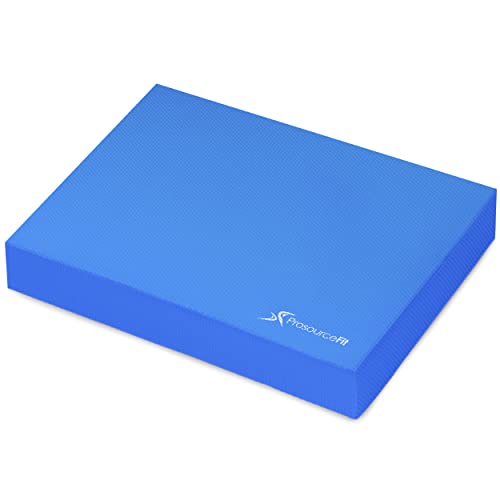
The blue ProsourceFit balance pad creates an unstable surface to challenge balance and core strength. It helps rehabilitate feet and ankles after injuries and is suitable for all fitness levels. The surface is non-toxic and non-slip, made from eco-friendly TPE that resists sweat and is easy to wipe clean. Best for dynamic balance drills, knee-friendly stability work, and yoga-based routines. A limitation is that the foam’s firmness may feel too soft for those requiring high-intensity load bearing, so consider a thicker pad if you need more resistance.
Who it’s best for: Athletes seeking progressive balance work, older adults building stability, and beginners desiring body awareness during workouts.
ProsourceFit Exercise Balance Pad – Black

This black variation mirrors the blue version’s balance-training benefits, offering a stable, non-slip surface with a non-toxic, sweat-proof design. It’s ideal for users who prefer a neutral color while performing core, leg, and balance exercises. Suitable for rehabilitation and fitness routines, but like the blue version, it may feel too soft for high-load exercises. Choose this if you want consistency with other color options from the same brand.
Who it’s best for: General stability training and rehab programs; users who want a visually understated option that matches other gym gear.
MBKHFLL Exercise Balance Pad (Purple)
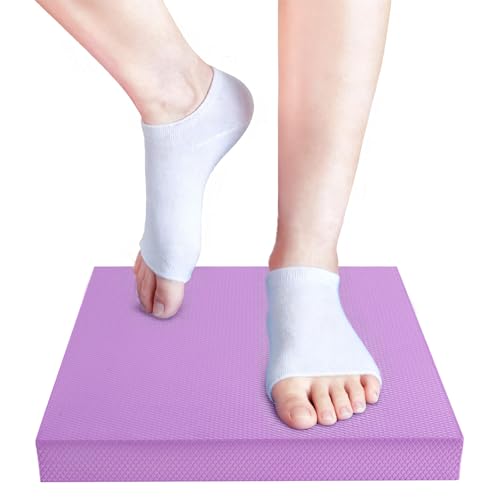
The MBKHFLL purple balance pad emphasizes balance and stability with non-toxic, slip-resistant TPE foam. It’s positioned for physical therapy work, mobility training, and yoga poses that benefit from a slightly different surface feel. The pad accommodates users of various sizes and is easy to sanitize after workouts. A potential limitation is that color or texture preferences may vary by user, so testing firmness first can help ensure comfort.
Who it’s best for: Physical therapy and mobility-focused routines; seniors and beginners needing dependable stability with easy cleaning.
StrongTek Professional Foam Exercise Balance Pad (Blue)

StrongTek’s balance pad uses premium high-density TPE foam for improved coordination, stability, and core strength across all skill levels. The textured surface provides a secure grip, while the foam cushions joints during knee, ankle, and elbow movements. This pad’s larger 15.8″ x 13″ footprint offers more room for dynamic drills and seated support. It is best for progressive training and therapy sessions, but users who prefer an ultra-soft surface may want to compare with thinner options.
Who it’s best for: Trainers and therapists needing a durable pad for progressive balance work; all-around users seeking extra surface area and joint-friendly comfort.
StrongTek Balance Pad – Black
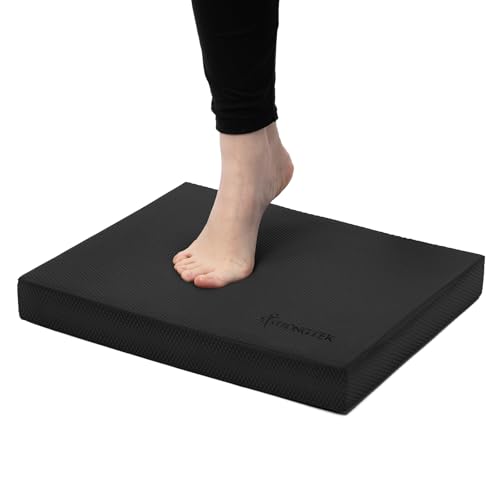
The black StrongTek pad mirrors the blue version’s features with robust high-density TPE foam and a non-slip, water-resistant surface. It’s well-suited for balance training, physical therapy, yoga, and rehabilitation movements. The thicker profile helps absorb impact, making it a solid choice for individuals needing added joint protection. A consideration is that a thicker pad may feel different to balance on for first-time users, so gradual exposure is advised.
Who it’s best for: Those needing a thicker, more cushioned balance surface for knee and joint comfort during rehab and yoga sequences.
Buying Guide: How To Choose The Right Foam Balance Pad
- Surface firmness and thickness: Thicker pads offer more cushion and are gentler on knees, while thinner pads demand greater ankle and core control. Consider your comfort level and typical exercise routines.
- Size and stability: A larger pad provides more room for dynamic moves, but a smaller pad can be easier to manage for beginners. Look for 15”–16” formats for versatility.
- Material and grip: Most pads use non-toxic TPE foam with a textured surface for grip. Ensure it’s sweat-resistant and easy to clean for hygiene during sweaty workouts.
- Intended use: If you’re focusing on rehabilitation or therapy, select pads marketed for physical therapy or mobility work. Athletes may prefer thicker or denser pads for advanced stability challenges.
- Durability and maintenance: High-density foam tends to be more durable and long-lasting under repeated use. Check cleaning instructions to maintain surface integrity.
- Price-to-performance: While free from expensive gear, the best value often lies in a pad that meets your training goals without unnecessary features.
FAQ
- What is a balance pad used for? It creates an unstable surface to challenge balance, core strength, and proprioception, aiding rehabilitation and athletic training.
- Who should use a foam balance pad? Beginners, older adults, and athletes seeking stability work or rehab-friendly exercises.
- Is a thicker pad better for knee comfort? Yes, thicker pads provide more cushioning, which can reduce joint impact during kneeling or lying drills.
- Can balance pads be used for yoga? Yes, they’re commonly used to intensify balance poses and add variety to routines.
- Do balance pads require maintenance? Yes; wipe with a clean cloth after use and allow to dry to prevent moisture buildup and odor.
- How do I choose among these products? Consider your fitness level, target exercises, pad thickness, and whether you prefer a larger surface area for dynamic moves.