Best Foam Rollers for Sore Muscles: Top Picks for Recovery and Mobility
Answering the search for relief, this guide highlights foam rollers that ease soreness, speed up recovery, and improve mobility. Ideal for athletes, office workers, and anyone dealing with chronic muscle stiffness. The top picks here target sore areas, fascia, and trigger points, with clear guidance on who benefits most from each option.
The following table summarizes the five featured products to help you compare at a glance:
| Product | Best For | Key Benefit |
|---|---|---|
| Amazon Basics High-Density 18″ | General Recovery, Beginners | Durable, maintains shape, affordable |
| TriggerPoint Grid 13″ | Targeted Deep Tissue | Multi-density surface for varied pressure |
| Amazon Basics High-Density 24″ | Longer Reach, Post-Workout | Extended length for full-body rolls |
| YANSYI 9-Roller Deep Tissue Massage Stick | Focused Knots & Fascia Release | Independent rollers for targeted release |
| Krightlink 5-in-1 Set | All-In-One Recovery | Multiple tools for comprehensive therapy |
Amazon Basics High-Density Foam Roller 18 Inches
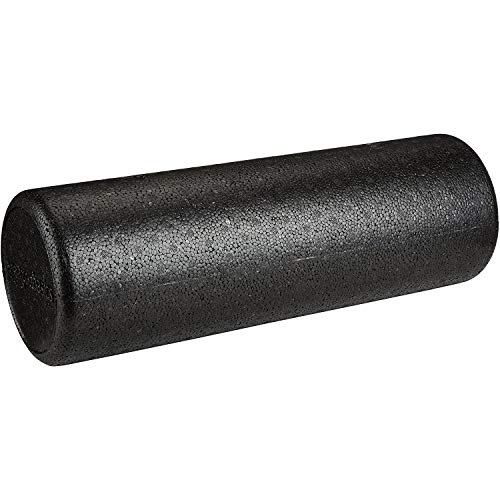
Best for beginners and everyday athletes, this high-density foam roller is firm and durable, maintaining its shape during balance, strengthening, and flexibility routines. It features molded edges for added comfort, helping you roll through larger muscle groups with consistent pressure. Ideal for those new to self-myofascial release or who want a reliable, budget-friendly option. Caution: firmer foam can be uncomfortable for very sensitive areas or beginners without a gradual introduction.
TriggerPoint Grid 1.0 Foam Roller (13″)

Best for deep-tissue relief with a focus on mobility, the GRID 1.0 uses a multi-density surface and a three-dimensional pattern to promote tissue aeration and blood flow. Choose this if you want a massage-like feel that targets knots and adhesions across key body parts. A potential limitation is that it may feel stiffer than softer rollers for new users, so progress gradually.
Amazon Basics High-Density 24 Inches

Best for longer, full-body rolls and athletes who want an extended surface, this 24-inch foam roller shares the same high-density build as the 18-inch version. It provides stable support for larger muscle groups like the back and legs, helping users cover more area in a single roll. Limitation: its longer size may be less practical for frequent travel or compact spaces.
YANSYI Professional 9-Roller Deep Tissue Massage Stick

Best for precise, spot-focused release, this nine-roller stick targets deep tissue and fascia with independent rollers that adapt to muscle contours. It’s a versatile tool for post-workout soreness in the calves, thighs, back, and shoulders. Best for users who want a portable, high-precision option. Limitation: smaller surface area means it won’t replace larger rollers on big muscle groups.
Krightlink 5-in-1 Foam Roller Set

Best for all-in-one recovery, this set includes a deep-density roller, a massage ball, a stretching strap, and a carry bag. The high-density construction supports up to 200 pounds and resists water and sweat for durable use. It’s a strong choice if you want a comprehensive toolkit for pre- and post-workout routines. Caution: total package weight and bulk may be more than needed for casual users.
Buying Guide: Key Purchase Considerations
What density should you choose? Higher density rollers provide firmer pressure suitable for experienced users, while medium or softer densities suit beginners. Consider length: longer rollers cover more area; shorter ones are more portable. Do you want a textured surface? Multi-density grids or independent rollers can deliver deeper tissue release or a massage-like feel. Are you shopping for a set or a single roller? Sets offer broader versatility for different body parts and recovery routines. Weight capacity matters if you’re heavier or plan to roll vigorously. Lastly, portability and storage may influence your choice if you travel often or have limited space.
Choosing by user type
- Athletes and active people: consider longer rollers or multi-density options for full-body coverage and effective knot relief.
- Beginners or sensitive users: start with medium density and smoother surfaces to avoid discomfort.
- Travel frequently or need portability: look for compact sticks or sets with carry bags.
Maintenance tips
- Clean after sweaty sessions with mild soap and water; allow to air dry completely.
- Avoid direct heat or sharp objects that could compromise foam integrity.
FAQ
What is the main difference between high-density and medium-density foam rollers?
High-density rollers are firmer and provide more intense pressure, suitable for deeper tissue work. Medium-density rollers offer a gentler feel and are better for beginners or sensitive areas.
Can foam rolling help with back pain?
Yes, targeted rolling can relieve muscle tension around the spine and shoulder blades. Use caution around the spine itself and focus on surrounding muscles.
How often should I roll in a week?
Most users benefit from 3–5 sessions per week, short durations (5–15 minutes) per session, depending on tolerance and recovery needs.
Is a set of tools better than a single roller?
Sets provide versatile options for different muscle groups and recovery goals, while a single roller may suffice for basic routines.
Can foam rolling replace a massage therapy session?
Foam rolling can supplement professional therapy but may not replace it for chronic conditions or severe knots. Use it as part of a broader recovery plan.