Best Foam Rollers for Exercise and Recovery
Foam rollers for exercise help with warmups, muscle release, and recovery. This guide compares top options to fit different needs, from beginners to advanced athletes. The best choices provide solid density, comfortable edges, and consistent shape under pressure. Below, you’ll find five rollers that balance stability, durability, and ease of use for a variety of workouts and recovery routines. The buyer intent is clear: find a reliable roller that meets your specific training goals and body areas.
Summary of chosen products at a glance:
| Product | Best For | Density / Feel |
|---|---|---|
| Amazon Basics 18-Inch High-Density Foam Roller | General fitness and mobility work | High-density, firm |
| Amazon Basics 24-Inch High-Density Foam Roller | Full-body rolling, taller users | High-density, firm |
| Amazon Basics 36-Inch Blue Speckled High-Density Roller | Full-back and long muscle groups | High-density, firm |
| TriggerPoint Grid 1.0 Foam Roller | Deep tissue release and targeted relief | Multi-density GRID with nodules |
| OPTP PRO-Roller Soft Density Foam Roller | Soft-tissue work, rehabilitation | Soft EVA closed-cell |
Amazon Basics 18-Inch High-Density Foam Roller
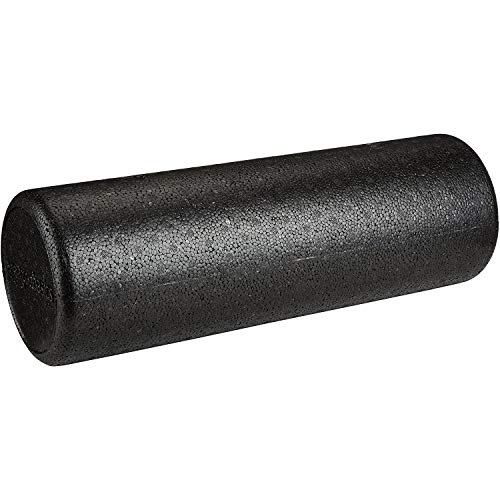
This compact roller is best for beginners and travelers who need a firm, durable option for balance and flexibility workouts. Its high-density polypropylene core keeps its shape during use while molded edges reduce friction on the skin. Suitable for calves, thighs, and shoulders, it supports steady progress in mobility routines.
Who it’s best for: entry-level users and people limited on space. Why selected: reliable, consistent density, and lightweight for easy transport. Caution: shorter length may require more positioning for larger muscle groups.
Amazon Basics 24-Inch High-Density Foam Roller

This mid-length option is better for taller users or those rolling larger muscle groups. The same high-density construction provides firm support and maintains shape, making it suitable for more intense mobility work, core stabilization, and back rolling. Edges are molded for comfort during longer sessions.
Who it’s best for: taller individuals or those seeking more surface area. Why selected: longer footprint supports smoother back and hip routines. Caution: may feel too rigid for sensitive or recently injured areas.
Amazon Basics 36-Inch Blue Speckled High-Density Roller

Designed for full-back work and long muscle groups, this 36-inch roller delivers broad coverage and stable rolling. Its high-density core keeps shape under pressure, and the blue speckled finish helps with quick visual alignment during routines. It’s a solid choice for spine-safe back rolling and leg releases.
Who it’s best for: users seeking full-back coverage or larger-area rolling. Why selected: extended length improves efficiency for rolling multiple muscle groups in a single pass. Caution: longer size can be awkward in tight spaces and may require more storage room.
Amazon Basics 36-Inch Black High-Density Roller (Stretching And Recovery)
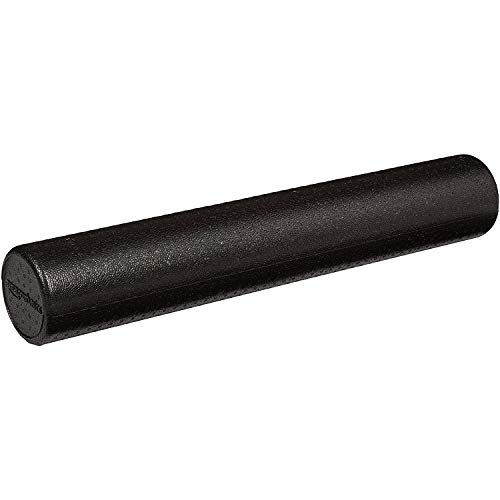
This variant is built for advanced mobility work and longer stretching sequences. The same firm, durable polypropylene construction holds shape for extensive sessions, making it suitable for warmups and post-workout recovery. It supports stable support across the back, hips, and legs.
Who it’s best for: athletes who perform long stretching routines or routine back conditioning. Why selected: consistent density and long surface area. Caution: larger size may be less portable for travel.
TriggerPoint Grid 1.0 Foam Roller

The Grid 1.0 uses multi-density GRID technology with nodules and channels to target key muscle groups. It promotes tissue aeration and blood flow for recovery while providing varying pressure across the surface. Its design mirrors a therapist’s hands for a personalized rolling experience.
Who it’s best for: users needing targeted deep-tissue relief and customizable pressure. Why selected: distinct multi-density surface supports precise therapy. Caution: may feel intense for beginners or sensitive areas.
OPTP PRO-Roller Soft Density Foam Roller

This soft-density roller is ideal for physical therapy, Pilates, yoga, and gentle rehab work. Made from EVA closed-cell foam, it’s easy to wipe clean and comfortable for beginners and those rolling sensitive areas. It supports full-body positioning and gradual tissue release.
Who it’s best for: beginners, rehabilitation, and light mobility work. Why selected: softer feel reduces discomfort during early recovery. Caution: soft density may not provide enough pressure for deeper myofascial release for advanced users.
Buying Guide: How to Choose The Right Foam Roller
- What will I use it for? Choose density and length based on warming up, mobility work, or deep tissue release.
- How much space do I have? Shorter rollers are easier to store and travel with; longer ones cover more muscle areas at once.
- What body areas are prioritized? For back and legs, longer rollers help; for targeted elbow, shoulder, or hip work, a GRID or soft roller can be better.
- Is soft tissue sensitivity a concern? Soft-density models are gentler but may not deliver deep relief for advanced athletes.
- Durability and maintenance: look for closed-cell surfaces that resist moisture and are easy to wipe down.
- Price and value: higher density and longer lengths often cost more, but offer longer-lasting stability.
FAQ
- Q: What is the difference between high-density and soft-density rollers? A: High-density rollers offer firmer support and deeper pressure; soft-density rollers are gentler for beginners or rehab.
- Q: Can a foam roller replace a massage? A: It complements massage by enabling self-myofascial release, but it may not substitute professional therapy for serious conditions.
- Q: How long should I roll per session? A: Start with 5–10 minutes and increase gradually as comfort allows, focusing on tight areas.
- Q: Are longer rollers better for the back? A: Yes, longer rollers cover more surface area, making back rolling more efficient.
- Q: How to store foam rollers properly? A: Keep them in a cool, dry place away from direct sunlight to maintain shape and material integrity.
- Q: Can I use a foam roller after every workout? A: Rolling after workouts can aid recovery, but listen to your body and avoid rolling on acute injuries.