Best Foam Surfboards for Kids: Safe, Easy, and Fun Beginner Boards
If you’re shopping for a kid’s first foam surfboard, you want a board that’s easy to balance, buoyant, and forgiving in small to medium waves. The following five foam boards are designed for young learners, with safety features and stable designs that help kids gain confidence quickly. The top picks are best for beginners, pre-teens, and families introducing children to surfing. A quick summary table below highlights who each board is best for and what to consider when choosing.
| Product | Best For | Why It Stands Out |
|---|---|---|
| 4’10” FUNBOARD Beginner Learning Softboard – Blue | Beginner kids under 100 lbs | Bright crocodile-top grip, stable buoyancy, included fins and leash |
| 4’10” FUNBOARD Beginner Learning Softboard – Orange | Beginner kids under 100 lbs | Same beginner-friendly design with bold color for visibility |
| Own the Wave by BPS Clawstrike 4’3ft Soft Top Surfboard | Young learners wanting a lightweight, versatile board | Hybrid soft top, versatile use, beginner-focused guidance from seller |
| THURSO SURF Lancer 5’10” Soft Top Foam Surfboard | Older kids and lighter teens | Forgiving foam core, stable wide outline, twin fins setup |
| Rock-It 4’10” CHUB Soft Top Surfboard | Kids new to surfing and small-framed riders | Twin-fin stability, easy paddling, durable soft top |
4’10” FUNBOARD Beginner Learning Softboard – Blue

Brand: EASYGO PRODUCTS
Key features include a beginner-friendly 4’10” soft-top design suitable for kids up to 100 lbs, a crocodile skin top surface for grip without wax, and a stable buoyant shape to help newcomers stay on the wave. Best for younger children learning their stance and balance in small-to-medium waves. Caution: limited weight capacity; may feel less responsive in bigger surf.
4’10” FUNBOARD Beginner Learning Softboard – Orange
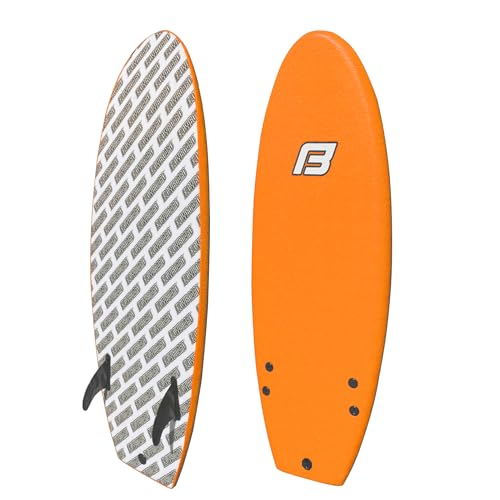
Brand: EASYGO PRODUCTS
Key features include identical beginner-friendly design and crocodile-top grip as the blue version, with a bright orange color for high visibility in the water. Best for families wanting color variety or a second board for a sibling. Caution: same weight limit; use under supervision in supervised waves.
Own the Wave by BPS ‘Clawstrike’ 4’3ft Soft Top Surfboard

Brand: BPS
Best for beginners who want a compact, stable board with a soft top and safety-first approach. The 51-inch length offers a stable platform with a wider midsection for easier balance. It also converts into bodyboard or kneeboard modes, offering versatility as confidence grows. Caution: description emphasizes learner-focused guidance rather than performance in powerful waves.
THURSO SURF Lancer 5’10” Soft Top Foam Surfboard
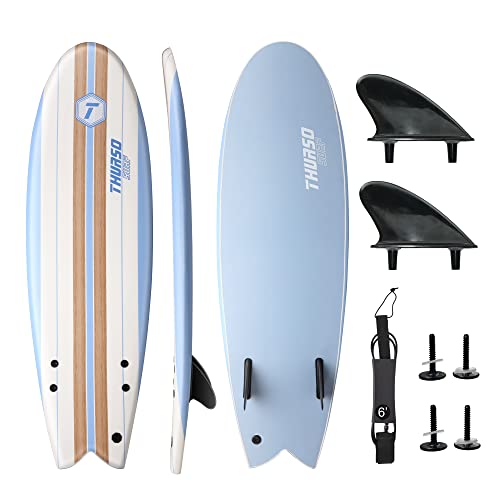
Brand: THURSO SURF
Best for slightly older kids or lighter teens who need a larger, more stable board with multiple safety features. The 5’10” model features a soft top EPS core, HDPE bottom, and a twin-fin setup for easy maneuverability in smaller waves. Caution: longer boards require more space for storage and handling, particularly in crowded environments.
Rock-It 4’10” CHUB Soft Top Surfboard

Brand: Rock It
Best for beginners seeking a forgiving twin-fin setup with easy paddling and stability. The board is buoyant and designed for kids who are new to surfing, with a wax-free soft top and good stability. Caution: weight capacity is listed for up to 150 lbs, so it’s best for lighter riders or younger children.
Buying Guide: Foam Surfboards For Kids
- What size should you choose? For most younger kids, a board in the 4’0″ to 5’0″ range provides a stable platform and easier balance. Taller or heavier kids may require slightly longer boards to ensure buoyancy.
- Soft top vs. hard deck: Foam boards with soft tops are safer for beginners due to lower risk of impact injuries. Look for non-slip textures or grip surfaces like crocodile-top designs when wax is not preferred.
- Fins and leashes: Removable fins give flexibility for growing surfers and reduce risk in shallow water. A leash helps prevent board loss in surf zones but ensure proper ankle-fit and length for your local conditions.
- Weight capacity and buoyancy: Check the recommended rider weight and overall buoyancy. Boards designed for kids usually support up to 100–150 lbs, but always verify with the product listing.
- Storage and handling: Consider the board’s length and width for your storage space at home and in your car. Shorter boards are easier to transport for family trips to the beach.
- Skill progression: A board with stable stance and forgiving paddling helps kids progress from lying to standing. Some boards offer conversion options (bodyboard or kneeboard modes) to extend usability as skills grow.
Frequently Asked Questions
- What is the safest foam board for a first-time child surfer? A board with a soft top, wide stable outline, and buoyant foam core is generally safest for beginners, reducing the risk of injuries and providing easier balance.
- How important is the weight limit on kid boards? Very important. Exceeding the weight limit can reduce buoyancy and stability, making it harder for a child to catch waves.
- Should I choose a two-fin or three-fin setup for beginners? A two-fin or twin-fin setup often provides stability and easier turning for beginners in small waves. Detachable fins can be advantageous for transport and storage.
- Can these boards be used in larger waves? These boards are designed for beginners and small-to-medium waves. Avoid using them in powerful beach breaks until the rider demonstrates consistent control and balance.
- Is there a recommended age range for these boards? Most boards target kids and early teens, but suitability depends on weight, height, and surfing experience. Always match the board to the rider’s size and ability.
- Do these boards come with safety accessories? Some listings include leashes and fins; others may offer optional add-ons. Check each product page for exact inclusions.