Best Hand Grips for Weights: Choose the Right Grip Aids for Your Training
Best hand grips for weights help you lock onto bars, reduce grip fatigue, and protect your palms during lifts and workouts. This guide highlights five top options, showing who each product best serves—whether you’re a powerlifter, casual gym goer, or rehab-focused trainee. Use this brief buying table to compare key attributes at a glance and then read detailed notes for each pick to decide which grip strategy fits your routine.
| Product | Best For | Material | Key Benefit |
|---|---|---|---|
| NiuMid Anti-Slip Workout Grips | Durable, all-around training | Ergonomic rubber | Enhanced stability and comfort |
| Epritliber Silicone Gym Grips | Sweaty hands, light workouts | Silicone | No-slip grip with compact case |
| Jopplim Anti-Slip Workout Grips | Versatile training | Silicone | Ergonomic fit and extended grip |
| DMoose Fitness Weight Lifting Hooks | Heavy lifts, max deadlifts | Nylon with wrist padding | Non-slip, extra wrist support |
| COFOF Weight Lifting Wrist Straps | Powerlifting and deadlifts | Leather and neoprene | Secure, cushioned support |
NiuMid Anti-Slip Workout Grips

NiuMid grips feature an ergonomic fingerless design that matches the natural curve of the hand. This setup aims to increase grip stability during weightlifting, pull-ups, and other gym movements. The non-slip rubber surface provides a firm hold on dumbbells and bars even when hands are sweaty. The compact, lightweight construction makes these grips easy to carry and suitable for both men and women. Best for athletes seeking comfort without sacrificing grip security across varied routines.
Best use case: standard gym days, short sessions, and endurance-focused sets where comfort reduces fatigue. Limitation: fingerless design may not protect the entire hand from calluses on very rough bars.
Epritliber Silicone Gym Grips

These silicone gel grip pads emphasize non-slip performance with suction-cup-style stability. The set includes two grip pads and a portable case, making it easy to transport between locations. The ergonomic curved support aims to reduce friction on hands and palms, helping to minimize calluses and blisters during training. Best for users who need reliable grip in sweaty conditions and prefer a compact, portable option. Caution: silicone can feel less breathable during long sessions in hot climates.
Jopplim Anti-Slip Workout Grips
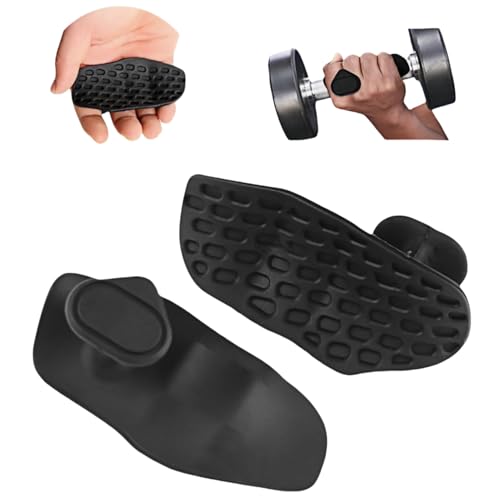
Jopplim grips are designed to fit the palm and fingers for improved friction during hard pulls and other strength moves. They’re versatile across weightlifting, rowing, shrugs, and barbell work, and include a carry bag for portability. Best for lifters who want a comfortable, all-purpose grip pad that adapts across many movements. Limitation: silicone wear may require replacement over heavy use, depending on workout frequency.
DMoose Fitness Weight Lifting Hooks

DMoose hooks provide a non-slip grip with eight millimeters of wrist padding to reduce forearm and wrist strain during heavy lifts. They lock the hands to the bar to preserve grip through sweaty, high-intensity sets. Best for lifters prioritizing grip security during deadlifts, heavy rows, and shrugs. Caution: these are wrist-focused and may not replace grip pads for lighter training or high-volume sets requiring finger protection.
COFOF Weight Lifting Wrist Straps (Leather)

COFOF straps combine double-layer leather with neoprene padding to cushion wrists during deadlifts and powerlifting. The leather provides durability, while the padded neoprene distributes support to reduce discomfort. Best for athletes who want sturdy straps with a classic grip feel and adjustable comfort. Limitation: leather and metal components may require more care to prevent wear over time, especially with aggressive training schedules.
Buying Guide
What should you consider when choosing hand grips for weights?
- Training focus: Choose grips that align with your main lifts—deadlifts and heavy pulling benefit from robust wrist support, while lighter, more versatile grips suit mixed routines.
- Material and grip stability: Rubber and silicone offer different textures and longevity. Silicone grips often excel in sweat, while rubber tends to last longer under daily use.
- Coverage and protection: Some options protect the palm and fingers (glove-like grips), while others prioritize wrist stabilization or simple grip pads.
- Portability: If you travel to the gym or switch between locations, a compact option with a carrying case may be advantageous.
- Fit and comfort: Ergonomic shapes that match hand curves reduce fatigue and improve control during repeated reps.
- Durability and maintenance: Leather and nylon constructions may require more care, while silicone and rubber are typically easier to clean.
How to match products to goals
- If you want maximum lift confidence on heavy deadlifts and pulls, consider DMoose or COFOF with strong wrist support.
- For sweat-prone sessions and travel-friendly options, Epritliber silicone grips offer compact, no-slip performance.
- For general grip training and rehab-friendly use, FitBeast grip strengtheners provide adjustable resistance that supports progression.
Materials and care quick tips
- Rubber and silicone grips are generally easy to wipe down after workouts; avoid harsh chemicals.
- Leather straps may require conditioning and should be dried away from heat sources to prevent cracking.
- Check fastenings and stitching regularly to prevent unexpected failure during lifts.
Usage scenarios by workout type
- Bodybuilding and strongman training: prefer straps with thick padding and secure locking to maximize grip stability.
- CrossFit or functional fitness: ergonomic grips that fit a variety of movements work best to minimize hand wear.
- Rehabilitation or rehab-friendly training: grips with gentle pressure and palm protection support safe progression.
FAQ
- Q: Are these grips suitable for all hand sizes? A: Most options are designed to fit a range of adult hand sizes, but check product measurements and size notes when available.
- Q: Can I use these grips for both heavy lifting and cardio sessions? A: Yes, many grips are versatile, but heavier straps perform best for lifting while lighter pads suit cardio-ready routines.
- Q: Do these grips replace lifting gloves? A: They offer grip support and protection but do not provide full glove coverage; choose based on your comfort preference.
- Q: How should I clean silicone versus leather grips? A: Silicone grips can be wiped with mild soap and water; leather requires conditioning and air drying away from heat.
- Q: Do grips affect grip fatigue during long workouts? A: Yes, properly chosen grips can reduce grip fatigue by distributing load and stabilizing the bar.
- Q: How often should I replace worn grips? A: Replace when grip integrity or padding shows significant wear to maintain safety and performance.