Best Handlebar Extension for Mountain Bike: Choose the Right Stem Riser for Comfort and Control
The best handlebar extensions for mountain bikes increase comfort, adjust riding posture, and reduce back or neck strain on long rides. This guide highlights five well-rounded options, explains who they’re best for, and helps you compare features like height, angle range, and compatibility. Ideal buyers include tall riders needing extra upright posture, riders with knee or back discomfort, and cyclists seeking improved control on technical trails. Below, you’ll find quick-fit product highlights, practical considerations, and a buying guide to help you decide.
LERWAY Bike Stem Riser Extender For 1-1/8″ Forks
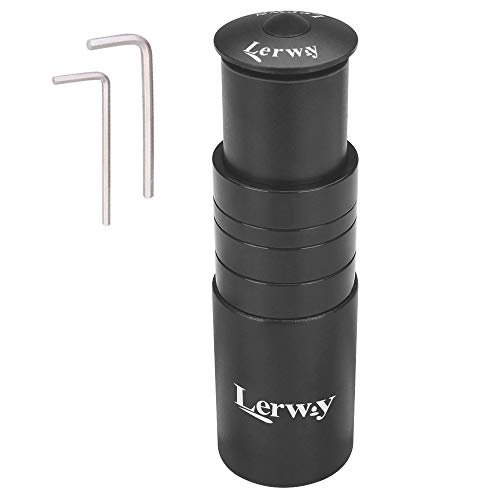
The LERWAY stem riser is designed for most 1-1/8″ (28.6 mm) threadless steerers, offering up to 85 mm of added height. It ships with four spacers (one 5 mm and three 10 mm) to tailor elevation. Best for riders seeking a simple, robust upgrade to improve upright posture on longer rides or when standing on climbs. This option is especially suitable for riders who want a straightforward install without complex geometry changes. A potential limitation: maximum height is fixed by spacer availability, so extreme adjustments may require additional components.
Sweetone Adjustable Handlebar Extender

This rider-friendly extender is built from refined aluminum alloy with double-screw locking to prevent loosening. It adds up to 10 cm of height and features a compact footprint that supports a more upright position. The design emphasizes stability and reduced back stress, making it better for riders who crave consistent control on longer days in the saddle. A limitation to note: the maximum height may not fit riders seeking very tall setups, and installation requires precise alignment to ensure safe handling.
FIFTY-FIFTY Bar Ends For MTB And Road Bikes

These 6061 T6 aluminum bar ends offer durability and an ergonomic bite, with a shape that reduces vibrations and fatigue on long rides. They fit 22.2 mm/7/8” MTB handlebar ends and also work on standard 22 mm road handlebars. Choose this option if you want extended hand positions and a more relaxed wrist stance during steep climbs or fast descents. Caution: bar ends alter grip zones; ensure your bars have compatible outer diameters for a secure fit.
Groword 3D Forged Stem Riser
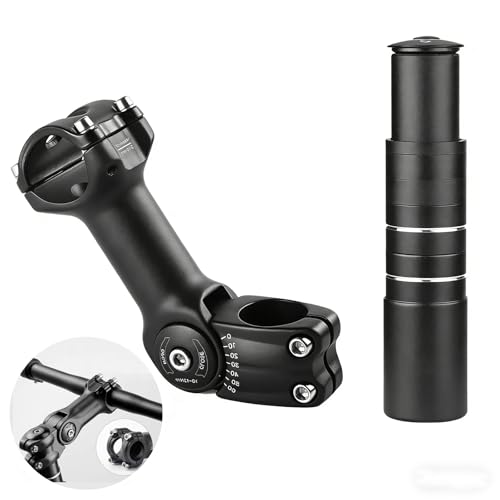
The Groword stem riser uses a three-dimension forged alloy with oxidation processing for strength. It supports a 28.6 mm fork and 31.8 mm handlebar diameter, with 150 mm height and 120-degree angle adjustments. This model suits riders needing a wider range of angle and height adjustments for personalized ergonomics on demanding trails or mixed-terrain rides. Best for riders seeking a stronger, more adaptable stem riser, though installation may require careful alignment to avoid pinching or misalignment.
TOBWOLF Universal Stem Riser

TOBWOLF offers a versatile stem riser with ±90-degree adjustability and compatibility for 31.8 mm handlebars and 28.6 mm forks. It includes spacers to fine-tune height and angle, enabling a more upright seating position for comfort on long tours or technical climbs. Choose this if you want wide adjustment and a balance between reach and upright posture. Limitation: some riders may prefer lighter weight options for aggressive riding or racing.
ONZILLO Upgraded Bar Ends

ONZILLO bar ends feature upgraded seamless aluminum construction with extended length for added leverage and comfort. The 20% longer design provides extended grip zones for climbing and varied terrain, plus a flexible 180° rotation and inner/outer mounting options. Best for riders who want more control and a secondary grip zone, especially on long mountain rides. Caution: inward mounting requires shifter position adjustments and may necessitate grip removal for installation.
Buying Guide
What should you consider when selecting a handlebar extension for mountain biking?
- Compatibility: Confirm fork diameter (common is 1-1/8″ or 28.6 mm) and handlebar diameter (usually 31.8 mm or 22.2 mm). Verify the available height range matches your target posture.
- Height versus comfort: Higher rises reduce back strain but may affect handling on technical sections. Choose a height that allows a comfortable upright position without compromising control.
- Locking and stability: Double-screw or secure locking mechanisms prevent slippage. Prioritize designs with robust fasteners to avoid loosening during rough terrain.
- Material and weight: Aluminum alloys offer a good balance of strength and weight; forged or machined components can provide greater rigidity. Consider how weight impacts handling on climbs.
- Installation complexity: Some models require precise alignment or specific mounting configurations. If you’re newer to bike upgrades, select options with straightforward installation and clear instructions.
- Angle range: A wide angle adjustment (including ±90 degrees) enables more postural options for varied riding styles and terrains. Ensure the range fits your riding goals.
- Durability and weather resistance: Look for rustproof and corrosion-resistant surfaces for longer life in various weather conditions.
Frequently Asked Questions
- What is a handlebar stem riser and what does it do?
- Who should consider a bar end extension?
- Are all extensions compatible with mountain bikes?
- Do these extensions affect steering stability?
- Is it better to choose a higher rise or a more adjustable model?
- Can I install these myself, or should I have a shop do it?
It adds height and sometimes angle to the handlebar stem, enabling a more upright riding position to improve comfort and reduce lower-back strain on longer rides.
Riders seeking additional hand positions, reduced fatigue on long climbs, or improved leverage for steering on rough trails may benefit from bar ends.
No. Check fork diameter, steer tube type, and handlebar diameter to ensure compatibility with the chosen extension.
When properly installed and tightened, they should not. Always follow torque recommendations and ensure no interference with brake or shifter cables.
For riders needing flexibility across different terrains or riders of varying heights, a more adjustable model offers longer-term benefits; for straightforward comfort, a fixed-but-robust rise may suffice.
Many options are suitable for DIY installation with basic tools. If you’re unsure about measurements or torque settings, a professional installation is advised.