Best Heavy Baseballs for Training: Improve Power, Throwing Velocity, and Mechanics
Answering the buyer’s search: these weighted baseballs and softballs are designed to boost power, accuracy, and throwing velocity for players at every level. The top picks below cover compact 16 oz training balls for baseball and softball, larger sets for volume practice, and plyometric options to target arm speed and mechanics. Ideal for beginners building fundamentals, intermediate players increasing bat speed, and pitchers refining release with resistance training.
Summary buying table
| Product | Best For | Weight / Size |
|---|---|---|
| GoSports 2.8 inch Weighted Training Baseballs | All skill levels; hitting and pitching basics | 16 oz; 2.8 in |
| GoSports 3.82 inch Weighted Training Softballs | Softball training; hitters and pitchers | 16 oz; 3.82 in |
| Libima 18 Pcs Weighted Baseballs | High-volume practice; group or family use | 16 oz; 2.8 in |
| VeloU Weighted Baseballs 6 Ball Set | Progressive strength and velocity training | 3.5 oz – 20 oz |
| GoSports Plyometric Weighted Balls | Plyometric training; power and mechanics | Varied weights |
GoSports 2.8 Inch Weighted Training Baseballs

Best for beginners and players seeking controlled resistance during batting and pitching drills. The set includes six 16 oz training balls at a 2.8 inch diameter, making them easier to grip for developing hitters and pitchers. Instant feedback helps refine form and technique, with coaching-friendly weight that supports progressive training goals.
Who it’s best for: new players learning swing timing and basic throwing mechanics, or coaches running introductory drills.
Caution: training balls are heavier than standard baseballs and may require padded practice areas to prevent wall damage during wall-rebound drills.
GoSports 3.82 Inch Weighted Training Softballs
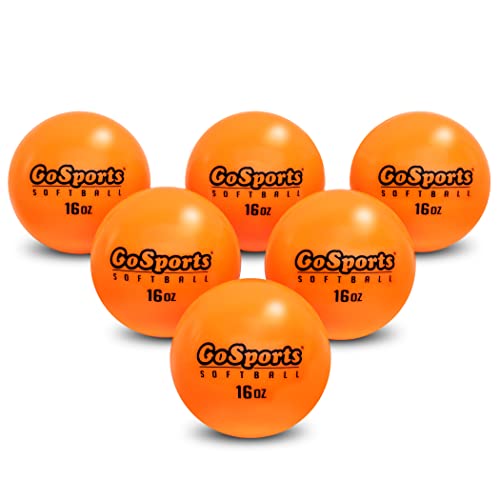
Best for softball players seeking to build power and improve throwing mechanics with a larger training ball. The set includes six 16 oz weighted softballs at official softball size (3.82 inches). Their weight helps hitters and pitchers develop strength and control, delivering more game-like feedback during drills.
Who it’s best for: softball players practicing bat-to-ball mechanics, and pitchers focusing on release control. Choose this if you want softball-specific resistance training.
Caution: larger diameter may be harder for younger players to grip comfortably without proper coaching cues.
Libima 18 Pcs Heavy Balls With 5 Gallon Bucket

Best for high-volume practice sessions and group training, this 18-ball package comes with a 5-gallon bucket for storage. Balls are made from PVC and iron sand, delivering sturdy, long-lasting weighted training options. Each ball is about 2.8 inches in diameter and 16 oz in weight, suited for repeated drills and fielding practice.
Who it’s best for: teams, academies, or families needing many balls for extended sessions. Choose this for affordable bulk training without purchasing replacements frequently.
Caution: bulk storage helps with organization but ensure the bucket is kept dry to prevent material degradation over time.
VeloU Weighted Baseballs 6 Ball Set
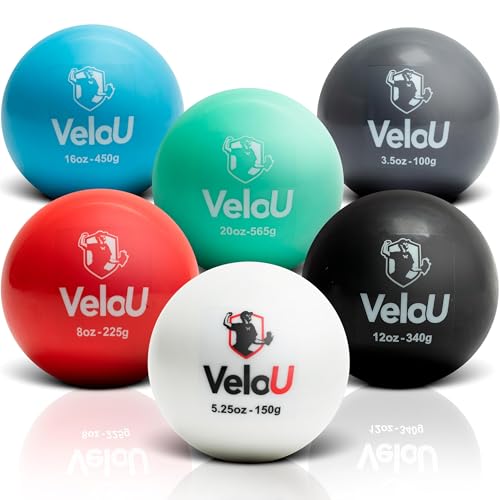
Best for progressive strength development and velocity training. The six-ball set spans a broad weight range from 3.5 oz to 20 oz, enabling athletes to progressively ramp up resistance as arm strength improves. The design aims to minimize injury risk while maximizing gains through targeted training and repeatable drills.
Who it’s best for: pitchers and throwers working toward higher velocity, or players following a structured progression plan. Choose this when you want a controlled, staged increase in resistance.
Caution: very light and very heavy weights require proper warm-up and guidance to avoid overexertion.
GoSports Plyometric Weighted Balls

Best for dynamic power and pitching mechanics training. The Pro Set includes six weighted balls with weights ranging across common resistance points. Plyometrics drills with these balls help promote efficient throwing mechanics and improve throwing velocity, supporting a more explosive delivery.
Who it’s best for: players integrating plyometric routines into baseball or softball training, particularly those focusing on arm speed and range of motion. Choose this for variety in resistance within a compact set.
Caution: plyometric drills require proper form to avoid overloading the arm during explosive moves.
Buying Guide
What to consider when choosing weighted balls for baseball and softball training:
- Weight range: Look for sets offering a progression from light to heavy to build strength gradually without risking injury.
- Ball size and type: Baseballs and softballs come in different diameters; match the ball to your sport for realistic feel and grip.
- Durability: Durable materials and robust seams help balls withstand high-velocity drills and frequent use.
- Storage and organization: Bulk sets with a bucket or bag simplify transport and keep practice space tidy.
- Intended use: Hitting, pitching, throwing, or plyometrics each benefit from specific weight configurations; pick sets tailored to your goals.
- Skill level alignment: Beginners benefit from lighter, more forgiving weights; advanced players should choose heavier weights or plyometric options for speed training.
FAQ
- What weight should a beginner start with? Start with lighter weights around 3.5–7 oz to learn proper mechanics before increasing load.
- How many weighted balls should I use in a session? A common approach is 6–12 hits or throws per drill, followed by rest; adapt to fitness and form.
- Are weighted balls safe for all ages? Use appropriate weights for the player’s age, experience, and supervision; consult a coach if unsure.
- Can weighted balls replace normal practice? They complement standard practice by building strength and mechanics; they don’t replace technique-focused drills.
- Do heavier balls damage pitching mounds or walls? Practice in a suitable space and use protective surfaces when practicing off walls.
- When should I stop using heavy balls? If you experience sharp pain, joint swelling, or loss of control, pause and reassess with a coach.