Best L Screen for Batting Cage: Top Pitcher-Protecting Nets for Practice
When selecting an L screen for a batting cage, the key goals are strong pitcher protection, durability, and easy setup. The following five options are among the most relevant for American buyers seeking reliable L screens for batting practice and pitching protection. They suit individual backyard practice, team drills, and coaching sessions. The table below summarizes core details to help you compare at a glance.
| Product | Brand | Size | Key Benefit | Best For |
|---|---|---|---|---|
| ZivPlay L Screen | ZivPlay | 7×7 ft | Double-layer 2.5mm HDPE net; left/right pitching flip | Balanced protection, versatile left/right use |
| VEVOR L Screen 7×7 | VEVOR | 7×7 ft | 1.75-inch mesh; double-sided design | Heavy-duty safety for both hands |
| Skywalker Sports L Screen | Skywalker Sports | 6 ft | UV-treated net; powder-coated frame | Lightweight portability with rugged build |
| PodiuMax Pitching Screen | PodiuMax | 7×7 ft | Upgraded frame; 125 MPH fabric; wider base | High-intensity practice; wind stability |
| CHAMPRO Brute Z Screen | CHAMPRO | 7×5 ft | Reversible design for left/right pitchers | Versatile batting practice with machine or live pitching |
ZivPlay L Screen Baseball Screen for Batting Cage Pitcher Protection

The ZivPlay L Screen is designed to protect pitchers with a thick two-layer HDPE net (2.5mm) and a large 7×7 ft frame with a 3.5×3.5 ft pitching cutout. The net is described as resistant to strong hits and features a flip for left- or right-handed pitchers. This makes it a solid all-around choice for batting cages that host varied pitching styles. Best for households or clubs needing reliable protection without frequent net replacement.
Who this is for: players who want durable protection and flexibility across pitching styles. Why selected: the reinforced net and flip capability help ensure longevity in busy practice spaces. Limitation: exact assembly steps aren’t detailed here, so expect a standard setup process with the included parts.
VEVOR L Screen Baseball for Batting Cage, 7×7 ft
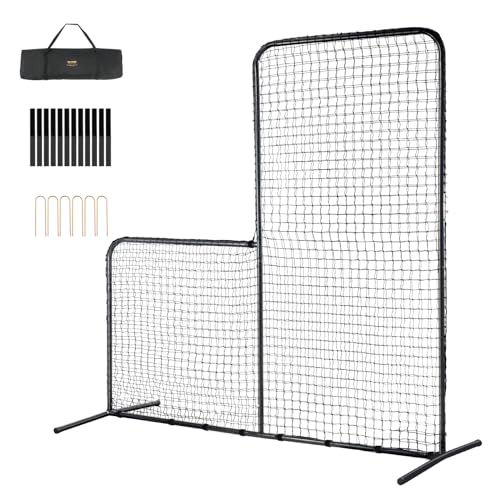
This VEVOR L Screen features a 7×7 ft frame with a 1.75-inch mesh and a double-sided design, enabling use by both left and right-handed players. Its steel pipe frame and sturdy base are highlighted as essential for stability during intense practice sessions. It is well-suited for baseball and softball training environments where reliable protection is needed for pitchers. Best for teams or individuals seeking a robust, two-sided net with stable construction. Caution: ensure you have adequate storage space when disassembling for transport.
Skywalker Sports L Screen for Baseball and Softball

The Skywalker Sports L Screen uses a powder-coated steel frame with UV-treated netting, designed for durability and weather resistance. It emphasizes portability and quick assembly, making it convenient for practice sites that require frequent relocation. This option is best for players who want a sturdy but movable unit without sacrificing setup speed. Caution: 6-foot height may be less protective for taller players at full release angles.
PodiuMax Baseball Softball Pitching Screen
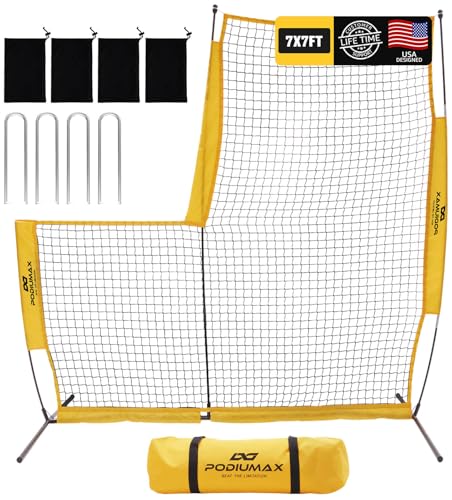
The PodiuMax 7×7 ft L-screen uses a 7-ply tear-resistant mesh fabric and a robust frame with patented thickened fiberglass poles and galvanized steel pipes. It offers a wide base (3.7 ft) for greater stability and includes four sandbags plus four ground anchors, making it well-suited for high-intensity practice and windy conditions. Best for coaches needing a stable, wide-base setup. Limitation: the description notes high-strength materials, which may require careful handling during transport.
CHAMPRO Brute Z Screen
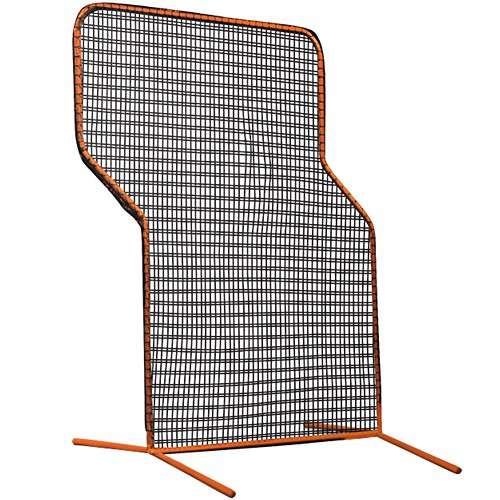
CHAMPRO’s Brute Z Screen provides a protective Z-shaped screen with a reversible design to accommodate both left- and right-handed pitchers. It’s marketed as multipurpose for feeding balls, pitching machines, or live pitching. This makes it a flexible option for training sessions that mix different pitching methods. Best for programs needing quick reconfiguration between hitters and pitchers. Caution: 7’x5′ dimensions mean a smaller catcher area compared to 7×7 screens, so consider space and usage needs.
Buying Guide: Choosing the Right L Screen for Your Batting Cage
- Protection coverage: For serious pitcher protection, prioritize larger frames (7×7 ft) and thicker netting (2.5 mm or thicker) to withstand fast line drives.
- Left/right-handed use: Look for a two-sided, reversible design or a flip feature if your training involves both left- and right-handed pitchers.
- Frame material and stability: Steel frames with a sturdy base and optional ground anchors or sandbags reduce wobble during impact. Consider a wider base for high-intensity sessions.
- Portability and storage: If you move practice spaces, choose nets with a carry bag and lightweight components. Wheels or easy disassembly help with transport.
- Net durability: UV-treated nets extend life in sun-exposed environments. Higher ply nets (e.g., 60- or 45-ply) resist tearing during baseball and softball practice.
- Setup and maintenance: Seek options with straightforward assembly, clear instructions, and rust-resistant hardware for long-term use.
- Space fit: Match the L screen size to your practice area. A 7×7 ft model requires enough space for safe pitching and batting lanes without crowding.
Frequently Asked Questions
- What is an L screen, and why is it important for batting cages?
– An L screen is a protective barrier placed between the pitcher and hitter to reduce injury risk from errant balls during practice. - Which size is best for a backyard batting cage?
– A 7×7 ft L screen balances coverage with space, suitable for most backyard setups. - Are two-sided nets better for beginners?
– Yes, a double-sided design accommodates both left- and right-handed pitchers, increasing versatility for practice partners. - What maintenance helps extend an L screen’s life?
– Regularly inspect frame joints, tighten hardware, and store nets in a dry bag to prevent rust and tearing. - Can L screens be used with pitching machines?
– Many models are suitable; check each product’s compatibility notes to ensure safe usage with pitching machines. - Should I buy a model with wheels?
– Wheels improve mobility for frequent space changes, but ensure the wheels lock securely during use.