Best Leg Weights for Walking: Top Ankle Weights for Stability, Tone, and Mobility
Answering the common buyer question: the best leg weights for walking are adjustable pairs that fit securely, feel comfortable, and stay in place during movement. The right option depends on your activity level, whether you’re walking for cardio, rehabilitation, or toning. Below you’ll find five strong choices across different brands, each best for a specific use case—beginner walkers, those needing secure fit, or users pursuing progressive resistance. A quick comparison table follows to help you decide at a glance.
| Product | Best For | Weight Range | Why It Stands Out |
|---|---|---|---|
| Sportneer Adjustable Ankle Weights Set (2-10 lbs) | Versatile walkers | 2-10 lbs per pair | Removable sandbags, adjustable in 1 lb increments |
| BAGAIL Ankle Wrist Weights | Comfort-first workouts | 2-10 lbs per pair | Three-layer fabric, secure fit, durable |
| Sportneer Adjustable Ankle Weights (7 lbs/pair) | Progressive strength training | 1-3.5 lbs per ankle (2-7 lbs pair) | Extended straps, secure D-ring |
| APEXUP 10 lbs/Pair Adjustable | Higher resistance routines | 1-5 lbs per ankle | Modular 5×1 lb weights, versatile |
| ZELUS Adjustable Ankle Weights | Customizable resistance | 2-10 lbs per pair | 5 removable 1 lb sandbags per ankle |
Sportneer Adjustable Ankle Weights Set (2-10 lbs)

Best for: Everyday walkers who want a wide weight range. These neoprene weights offer comfort during walking, running, and light gym work. The set includes removable sandbags to tailor total weight from 2 to 10 lbs per pair, making it suitable for both beginners and progressively stronger routines. The design emphasizes snug fit and soft contact against the skin, reducing chafing during longer sessions.
Why selected: The removable sandbags provide granular progression and the neoprene exterior adds comfort and durability. The flexible weight range accommodates gradually increasing resistance as fitness improves.
Caution: Confirm ankle circumference fits the product’s stated range (7.5 to 12.5 inches) before purchase to ensure secure wear.
BAGAIL Ankle Wrist Weights (2-10 LBS)
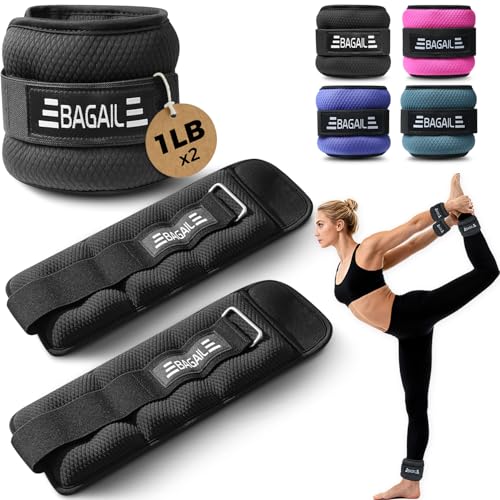
Best for: Users seeking a non-bulky, secure, all-purpose weight for walking, running, Pilates, or rehab. BAGAIL emphasizes a sleek profile with a three-layer Lycra-SBR fabric and a secure Velcro strap system to minimize movement during exercise.
Why selected: The combination of soft, sweat-resistant fabric and reinforced stitching supports longer sessions and more consistent workouts. The design minimizes shifting, which helps maintain form during movement.
Caution: Heavier users may find the bulkier design less comfortable for certain stretches or high-step movements; consider the 2- or 4-lb options first to test fit.
Sportneer Adjustable Ankle Weights (7 lbs per pair)

Best for: Those ready to increase resistance in daily walks, light jogging, or home workouts. Each weight uses five removable sandbags to reach 7 lbs per pair, with extended Velcro straps and a metal D-ring for stability during movement.
Why selected: Progressive resistance supports gradual strength gains, aiding leg and core engagement. The longer straps help keep weights from slipping during dynamic movements.
Caution: Start at the lower end (1-3.5 lbs per ankle) if you are new to ankle weights to avoid overloading joints early in training.
APEXUP 10 lbs/Pair Adjustable

Best for: Intermediate to advanced walkers and fitness enthusiasts seeking higher resistance in walking, yoga, or pool exercises. The modular design provides up to 5 lbs per ankle, totaling 10 lbs per pair when fully weighted.
Why selected: The modular weight system gives precise control over intensity, allowing targeted progression. The soft, breathable sleeve reduces heat and skin irritation during longer sessions.
Caution: The modular weights require careful setup to ensure even distribution; misadjustment can cause uneven tension on one leg.
ZELUS 1 Pair Adjustable Ankle Weights

Best for: Walkers and athletes who want highly customizable resistance without bulk. Each ankle supports five removable 1 lb sandbags, enabling up to 5 lb per ankle and up to 10 lb per pair.
Why selected: The 7.5″ to 12.5″ ankle fit accommodates a range of users, and the sturdy metal rings with hook-and-loop fasteners deliver a secure, comfortable fit during varied activities.
Caution: Weight increments are fixed at 1 lb; if you need finer tuning, you may prefer other models offering smaller steps.
Buying Guide: Key Considerations For Choosing Leg Weights
- Weight Range And Adjustability: Choose a set with incremental weights that match your current fitness level and allow gradual progression. Modular and removable sandbags offer the most flexibility.
- Fit And Comfort: Look for soft, breathable materials and secure closures (Velcro, D-rings) to minimize slipping and chafing during walking or cardio sessions.
- Durability: Reinforced stitching and sturdy fasteners extend product life, especially for frequent use in home workouts or physical therapy.
- Intended Use: For light walking and rehab, start with lighter pairs (2-5 lbs per ankle). For ongoing strength work or higher-impact routines, higher weights (7-10 lbs per pair) are suitable.
- Size Range: Confirm the product fits your ankle or wrist circumference to ensure a secure fit, particularly if you are at the upper or lower ends of the size range.
- Maintenance: Easy-to-clean surfaces help maintain comfort during sweaty sessions; consider models with moisture-wicking interiors.
Frequently Asked Questions
- Are ankle weights good for walking? Yes, when used correctly. They can increase lower-body strength and calorie burn, but start light and progress gradually to protect joints.
- How heavy should ankle weights be for beginners? Start with 1-2 lbs per ankle and increase as comfort and form allow.
- Can ankle weights cause injuries? Improper fit or overly heavy weights can strain knees or ankles. Ensure secure fit and avoid sudden, high-impact movements.
- Should I wear ankle weights every day? It’s best to rotate usage with rest days and alternate activities to prevent overuse injuries.
- Is there a difference between ankle and wrist weights? The function is similar, but fit and strap design may differ. Choose according to the dominant workout area targeted.
- How do I choose the right weight? Assess your current activity level, the type of movement you’ll perform, and your comfort with incremental increases in resistance.