Best Life Jackets for Children: Safe Picks for Summer Water Fun
When choosing a child life jacket, safety, fit, and comfort matter most. This guide highlights five top options that fit a range of ages and weights, making it easier for parents to pick confidently. The best picks are ideal for family boating, swimming lessons, and casual pool days. Each product section explains who it suits best, plus practical pros and limitations to help you compare at a glance.
Buyer snapshot: the table below summarizes key details to compare quickly.
| Product | Best For | Weight Range | Open Sides | Notes |
|---|---|---|---|---|
| Stearns Kids Life Vest (Red) | Young swimmers, beginners | 50–90 lbs | No | Classic Type III with durable shell |
| Sportstuff Child Type III Life Jacket | Active kids, water sports | 50–90 lbs | Yes | Open sides for ventilation |
| Stearns Kids Life Vest (Blue) | Same age group as red version | 50–90 lbs | No | Durable and well-fitting |
| Sportstuff Stars & Stripes Youth Vest | Boating, tubing | 50–90 lbs | Yes | Lightweight, flexible |
| Oceans7 Pink Kids Life Jacket | Smaller framed youth | 33–55 lbs | Yes | Open-side design, flexible fit |
Stearns Kids Life Vest Red — USCG Type III, 50–90 lbs

The Stearns red children’s life vest is USCG-approved and designed for kids weighing 50 to 90 pounds. It uses a durable nylon shell with PE flotation foam, offering reliable buoyancy and a secure fit for most youth swimmers. This vest is best for families seeking a dependable, straightforward Type III PFD for boating, pool days, or beach trips. A potential limitation is that it lacks open sides, which may reduce airflow on hot days.
Who it’s best for: parents wanting a proven, compact life vest with straightforward sizing for mid-range weights. Why selected: broad compatibility with common children’s weights and a familiar Stearns design trusted by many families.
Sportstuff Child Type III Life Jacket — Open Sides

This Sportstuff vest is USCG approved and features open sides with three body belts and quick-dry fabric. The open sides enhance ventilation, helping kids stay cooler during long days on the water. The three belts provide a secure fit, and a crotch strap adds extra safety for active kids. Best for: children who participate in water sports and require greater mobility. Caution: bulk may be slightly higher than ultra-compact designs, which could affect packing space.
Stearns Kids Life Vest Blue — USCG Type III

The blue Stearns version mirrors the red model with the same USCG Type III approval and weight range. It uses a durable nylon shell with PE flotation foam for buoyancy and safety. Best for: families who prefer color variety or multiple kids using similar gear. Choose this if you want a reliable option from a trusted brand without changing fit expectations. Limitation: color preference may affect visibility in certain water conditions.
Sportstuff Stars & Stripes Youth Vest

This stars-and-stripes vest is designed for both adults and kids within the 50–90 lb range. It emphasizes open sides for airflow and features three body-belt quick-release buckles for tailored fit. Best for: families who want a versatile vest suitable for multiple family members during boating or tubing. Better for: those who value mobility and ventilation on hot days. Limitation: may require extra attention to ensure correct sizing across a wide age range.
Oceans7 US Coast Guard-Approved Pink Kids Life Jacket
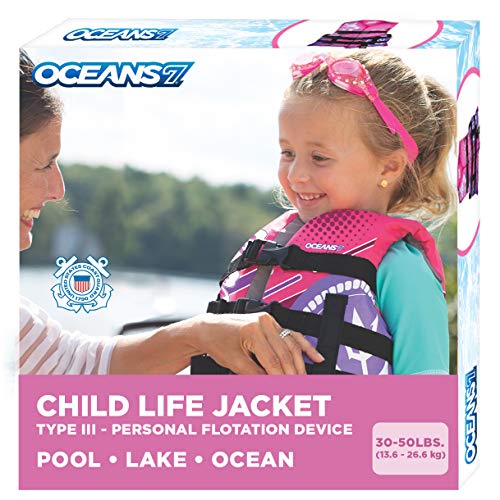
Oceans7 offers a pink/berry model intended for a lighter weight range of 33–55 pounds. This vest is USCG-approved and uses an open-side design with three adjustable straps to create a flexible fit. Best for: younger or lighter children who need a snug, adaptable PFD for calm waters or pool training. Avoid this if your child weighs more than 55 pounds, as the fit may be too small.
SwimWays Marvel Swim Trainer Life Jacket

This SwimWays trainer integrates a life vest with arm floaties, creating a 2-in-1 solution for younger swimmers. It is USCG-approved for 33–55 pounds and features a Spider-Man theme to engage children while maintaining safety. Best for: kids who are new to swimming and benefit from additional buoyancy in a familiar, character-themed design. Limitation: the combination design may be bulkier and less suitable for fast-moving water activities compared with streamlined vests.
Buying Guide: Key Purchase Considerations
What age and weight range should you target? Choose a vest that matches the child’s current weight. If weight varies, prefer adjustable or open-side designs for a longer fitting window.
What fit matters most? Look for three-point or four-point closures, plus gusseted armholes or open sides to maximize mobility. A crotch strap adds security for active children and during rough water.
Is USCG approval important? For most families, yes. US Coast Guard approvals indicate compliance with essential buoyancy and safety standards for recreational use.
How does design affect comfort? Open sides improve airflow and cooling; closed designs are typically lighter and simpler to fit. Consider the climate where you’ll use the vest most—hot days benefit from breathable options.
What activities will the vest support? For boating and tubing, a snug, secure fit with quick-release buckles helps. For swimming lessons, a lighter, more flexible design can aid mobility without compromising buoyancy.
How should you check the fit at home? Fasten the vest and pull up on the shoulders; it should barely rise above the child’s chin or ears. If uncomfortable or too tight, try a larger size or a different cut (open sides vs. closed).
Frequently Asked Questions
- What weight should my child be to use a Type III vest? Most Type III vests are sized for children within a specific weight range, commonly 33–55 pounds for youth models and 50–90 pounds for many kids’ versions. Always check the product’s stated range.
- Is USCG approval necessary for kids’ vests? While not mandatory in all situations, USCG approval indicates compliance with safety standards and is strongly recommended for water activities.
- What is the benefit of open-side vests? Open sides improve ventilation and reduce heat buildup, which helps comfort during extended wear and summer conditions.
- How do I ensure a proper fit? Fasten all buckles and straps, then test by lifting the vest at the shoulders. The vest should stay in place without riding up toward the chin and should not loosen easily.
- Can a vest be used on both saltwater and freshwater? Yes. Most USCG-approved vests are designed to perform in both environments, but always rinse and dry the vest after use to extend life and prevent odor.
- When should I replace a child’s life vest? Replace if the vest shows signs of wear, stretched straps, cracked seams, or if it no longer fits securely as the child grows.