Best Lightweight Binoculars for Safari and Outdoor Adventures
If you’re planning a safari or wildlife-spotting trip, you need lightweight binoculars that deliver bright, sharp images without weighing you down. This guide highlights five compact, easy-to-carry options that balance magnification, optical clarity, and portability. Best for wildlife enthusiasts, bird watchers, and hikers who prioritize travel-friendly gear, these picks help you scan horizons, identify distant animals, and capture crisp views on the go. The selections emphasize durable builds, comfortable eye relief, and reliable low-light performance for dawn or dusk safaris.
| Product | Magnification / Objective | Weight | Best For |
|---|---|---|---|
| Occer 12×25 Compact Binoculars | 12×25 | Lightweight | Best for quick scanning and travel light |
| VULNESS Compact 8×21 Binoculars | 8×21 | Ultra-compact | Best for ultra-light carry on hikes |
| FLYANT 20×50 High Powered Binoculars | 20×50 | Moderate | Best for distant wildlife detail |
| Adasion 12×42 HD Binoculars | 12×42 | Balanced | Best all-around with phone adapter option |
| URBANCOAST 12×32 Compact Binoculars | 12×32 | Very light | Best for cruise and travel observers |
Occer 12×25 Compact Binoculars
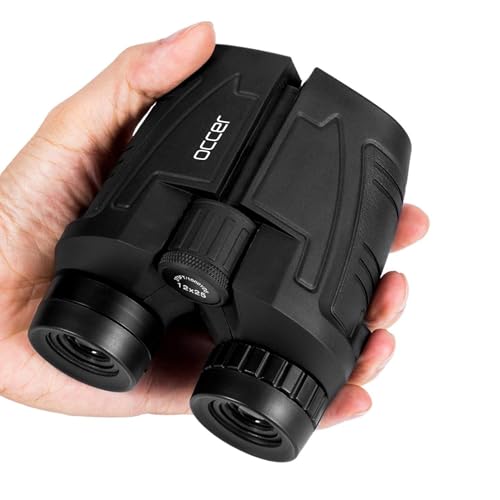
Best for travelers who want solid magnification in a pocket-size form. These 12×25 binoculars feature FMC broadband coating and BAK4 prisms for brighter images, with a focus on a wide field of view (273 ft/1000 yds). The adjustable eyecups accommodate eyeglass wearers, and their grip-friendly design helps you quickly lock onto moving animals. A practical choice for safari-goers who prioritize a bright view in varied light.
Best for: wildlife spotting on short to mid-range distances, bird watching during light-to-moderate conditions. Avoid this if you need ultra-wide daylight field performance in larger binoculars or very dark environments. Limitation: 12x magnification can exaggerate hand-shake on windy days without a tripod or stable rest.
VULNESS Compact 8×21 Binoculars

Lightweight and readily portable, these 8×21 binoculars are designed for travelers who want minimal bulk. The 21mm objective with basic center focus and right-eye diopter adjustment provides straightforward operation for casual wildlife viewing and sightseeing. They’re a practical match for hikers and day-trippers who value ease of carry over high magnification.
Best for: short-range wildlife watching and travel light. Choose this if pocketability matters more than heavy distant detail. Limitation: lower magnification may be less suited for far-distant safari subjects.
FLYANT 20×50 High Powered Binoculars

These high-powered binoculars deliver exceptional long-range detail with a 20x magnification and 50mm objective. The setup emphasizes image brightness through multilayer coatings and BAK4 prisms, making them suitable for distant safari subjects, birding along open plains, and stargazing during downtime. A solid choice when you need to identify animals far from your vehicle or camp.
Best for: safari and birding scenarios where distant subjects require closer inspection. Better for: observers who can stabilize the view with a tripod or steady support. Limitation: higher magnification can magnify shake and reduce field of view if used without support.
Adasion 12×42 HD Binoculars
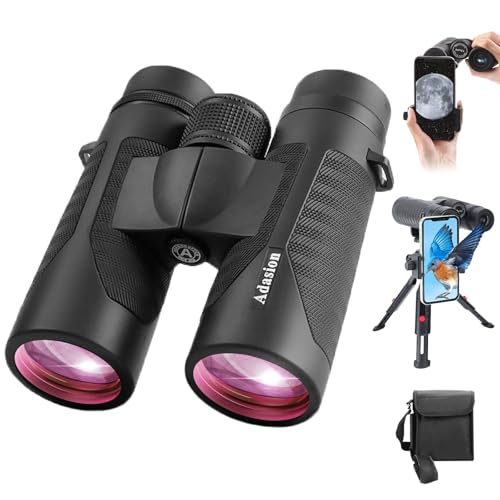
A balanced option with 12×42 magnification and robust optics. The BAK4 prisms and fully multi-coated lenses optimize light transmission for crisp color and contrast, while a lightweight build supports long viewing sessions. The included phone adapter and tripod capability add versatile capture options for safari journaling and wildlife photography.
Best for: detailed wildlife observation where color accuracy and brightness matter. Choose this if you want a versatile pair that can also support mobile photography. Limitation: not the lightest among the 12x models, so carry weight matters if you’re hiking all day.
URBANCOAST 12×32 Compact Binoculars

A step up in objective size without adding too much weight, these 12×32 binoculars offer a brighter view and better low-light performance compared to smaller compact models. The 32mm objective lens allows more light transmission, and the 12x magnification keeps the image stable during safari treks and coastal wildlife watching. A practical pick for travelers who want more image richness without bulk.
Best for: scenic safaris and wildlife observations where you still need portability. Better for: users who want improved brightness and color fidelity over the smallest pocket models. Limitation: may feel slightly heavier than the smallest compact options, especially over long walks.
Buying Guide
What to consider when choosing lightweight safari binoculars:
- Magnification vs. field of view: Higher magnification reveals distant details but narrows the field of view and can amplify hand shake. For safari use, 8x to 12x is a good balance with a wide field of view.
- Objective lens size: Larger lenses gather more light, improving bright views at dawn or dusk. However, bigger lenses add weight; choose a model that fits your comfort level.
- Optical coatings and prisms: FMC coatings and BAK4 prisms enhance light transmission and color accuracy. These features improve performance in varied lighting typical of safari mornings and late afternoons.
- Eye relief and eyeglass compatibility: Long eye relief and adjustable eyecups help eyeglass wearers see the full field of view without strain.
- Weight and balance: Even a few extra ounces matter on long treks. Look for models advertised as lightweight with a balanced feel.
- Stability options: For higher magnifications, consider a tripod, stabilizing strap, or a steady rest to reduce image shake.
- Durability: Safari gear should resist dust, humidity, and occasional bumps. A water-resistant build adds reliability in unpredictable conditions.
Frequently Asked Questions
- What magnification is best for safari binoculars? – For safari use, 8x to 12x offers a good balance of detail and field of view, with manageable weight and shake.
- Do I need a tripod for safari binoculars? – Tripods help with higher magnification models (like 20×50), reducing shake during long observation sessions.
- Are coated lenses worth it? – Yes. Coatings improve light transmission, color accuracy, and overall brightness, especially in low light.
- What is eye relief and why does it matter? – Eye relief is the distance from the eyepiece to your eye where you can see the full field. Longer eye relief benefits eyeglass wearers and comfort.
- Which model is best for travel and quick looks? – Models in the 8×21 to 12×32 range offer portability and quick viewing without excessive bulk.
- Can I use these for night viewing? – Most daylight-focused binoculars perform modestly in low light but are not suitable for complete darkness.