Best Pilates Magic Circle Picks for Home Workouts and Core Toning
Looking for a reliable magic circle for Pilates at home? This guide highlights five solid options that balance resistance, comfort, and versatility. Each pick is best for different routines—great for beginners, core builders, or folks adding inner-thigh work to routines. Use the table below to compare core specs and ideal use cases at a glance.
| Product | Diameter | Best For | Note |
|---|---|---|---|
| ProBody Pilates Ring — 14 Inch Black | 14 in | Inner thighs, core, post-workout toning | Real fiberglass core, latex-free grips |
| Gaiam Pilates Ring 15″ | 15 in | Arms, legs, core toning | Padded handles, lightweight |
| Balanced Body Ultra-Fit Circle | 15 in | Upper and lower body alignment | Soft shell, balanced design |
| JKSHMYT Pilates Ring Fitness Circle | 14.5 in | Beginners to intermediate toning | Soft rubber shell, good grip |
| RitFit Pilates Ring Circle | 14 in | Travel-friendly workouts | Durable fiberglass, cushioned handles |
ProBody Pilates Ring — 14 Inch Black
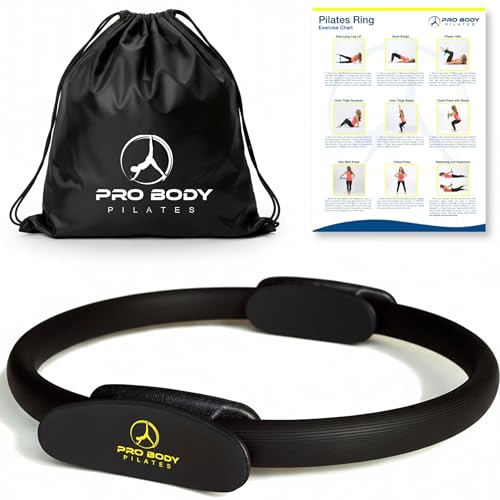
The 14-inch ProBody Pilates Ring offers a medium resistance level with a continuous fiberglass core and latex-free foam grips. It’s designed to engage the transverse abdominis, glute medius, inner thighs, and lumbar stabilizers, making it suitable for targeted inner-thigh work and core activation. This ring is well-suited for serious Pilates enthusiasts who want a trusted, portable option for home workouts. Best for: individuals seeking stable, mid-resistance toning that mirrors some reformer-focused movements without equipment. Limitation: may feel too light for advanced users seeking higher resistance.
Gaiam Pilates Ring 15″

The Gaiam ring is a 15-inch circle designed to tone arms, thighs, and core with padded handles for comfort. It is lightweight and flexible, offering reliable resistance that contracts under pressure. This option suits users who value easy portability and straightforward resistance during combined arm-and-core routines. Best for: beginners and travelers seeking a comfortable, easy-to-use ring. Limitation: slightly larger diameter may require more space for certain floor exercises.
Balanced Body Ultra-Fit Circle

The Ultra-Fit Circle features a soft rubberized shell over a flexible plastic circle with padded handles inside and outside. It is designed to help users maintain leg alignment and target both the upper and lower body. This choice supports more controlled movements on reformer-style setups or floor work, making it ideal for form-focused routines. Best for: those prioritizing better leg alignment and a balanced feel. Limitation: quality focus may come with a higher price point for some shoppers.
JKSHMYT Pilates Ring Fitness Circle

The JKSHMYT ring is 14.5 inches and features high-resilience fiberglass encased in a soft rubber shell with non-slip foam handles. It’s designed for a broad range of users—from beginners to seasoned practitioners—providing steady resistance for toning and strengthening without excessive strain. Best for: beginners seeking a forgiving, durable ring and experienced users needing a reliable mid-range option. Limitation: the slightly larger diameter may require adjusting stance for compact space workouts.
RitFit Pilates Ring Circle

The RitFit circle uses a durable fiberglass core with an EVA outer shell and cushioned handles on both sides for comfort. It is lightweight and portable, with a 15-inch overall diameter making it travel-friendly. This option is well-suited for home studios and those who need a balance of durability and ease of transport. Best for: people who want a sturdy ring that travels easily between spaces. Limitation: some users may prefer a thicker grip for certain grip-intensive exercises.
Buying Guide: Key Considerations For Choosing A Pilates Ring
What diameter is right for you? Smaller rings (around 14 inches) are better for leg-focused moves and tighter spaces, while larger rings (15 inches) can provide broader engagement for arms and chest work. Consider your height and typical workout space when selecting a size.
What resistance level do you need? Rings with a fiberglass core offer solid resistance without adding bulk. If you’re a beginner, look for rings described as entry-level or with comfortable handles to ease into routines. For more experienced users, mid-range resistance can drive progression without overstraining.
How important are handles and comfort? Cushioned, non-slip handles improve control and reduce grip fatigue during longer sessions. If you perform many abdominal or plank-based routines, comfortable grips matter more than raw stiffness.
Is portability a factor? If you travel or have limited space, choose a lighter ring with a compact carry option. Lightweight rings travel well and store easily in a gym bag or drawer.
What about compatibility with other equipment? Some kits include balls, bands, and pumps, offering a broader range of exercises. A full kit can expand a home routine beyond the ring alone, especially for rehab or low-impact training.
Frequently Asked Questions
- What is a Pilates ring best used for? It mainly targets inner thighs, glutes, core, and arms, offering resistance that complements reformer-style work without a machine.
- Can beginners use a Pilates ring safely? Yes. Start with lighter resistance and simple moves; focus on form to prevent strain and gradually increase difficulty.
- Is a larger ring better for beginners? Not necessarily. Size affects comfort and reach; choose a diameter that fits your height and space, prioritizing control over range of motion.
- Do all rings provide the same resistance? No. Rings vary in core material and grip design. Fiberglass cores tend to offer consistent resistance suitable for most routines.
- Can I use a Pilates ring for non-Pilates workouts? Yes. The ring can add resistance to general core, leg, and arm exercises, enhancing standard fitness routines.
- Should I get a full kit with extra accessories? A kit is convenient if you want variety (balls, bands, pump). It supports progressive training and rehab-friendly routines.