Best Mats for Working Out: Cushioned, Non-Slip Yoga and Exercise Mats for Home Fitness
Looking for the ideal mat to support your workouts at home or in the studio? This guide highlights top mats that balance cushioning, stability, and portability. Each pick is suited to specific buyers: beginners seeking comfort, yogis needing non-slip surfaces, travelers who want lightweight options, and multi-purpose users who pair yoga with floor workouts. Read on to compare features, ideal use cases, and practical trade-offs.
Product Comparisons
| Product | Best For | Key Benefit | Thickness | Size |
|---|---|---|---|---|
| CAP Barbell Yoga Mat 1/2″ Thick (Black) | General yoga and floor workouts | High-density cushioning for joints | 1/2 inch (12 mm) | 68″ x 24″ |
| Amazon Basics 1/2 Inch Extra Thick Mat | Daily home workouts | Comfortable and durable foam with traction | 1/2 inch | 74″ x 24″ |
| CAP Barbell Folding Exercise Mat (2″ Thick) | Home gym and kids or therapy use | Extra thick padding and foldable for storage | 2 inches | 72″ x 24″ |
| Retrospec Solana Yoga Mat 1″ Thick | Yoga and balance work | Extra thick for comfort and balance | 1 inch | 72″ x 24″ |
| Gaiam Essentials 10mm Thick Yoga Mat | Low-impact routines and beginners | Extra cushioning and anti-slip surface | 10 mm (approx. 3/8″) | 72″ x 24″ |
CAP Barbell Yoga Mat 68″ X 24″ X 1/2″ Black

Best for: general yoga, Pilates, and floor workouts with solid cushioning. This mat offers high-density padding to support the spine, hips, knees, and elbows during poses and stretches. The extra thickness helps reduce fatigue during longer routines. The included carrying strap makes transporting the mat simple for gym-to-home use and travel.
- Pros: Cushioned support, large 68″ length, easy transport with strap.
- Limitations: Heavier than thinner mats; care needed to prevent bottom slippage on slick floors.
Amazon Basics 1/2 Inch Extra Thick Exercise Mat 74″ x 24″ (Black)

Best for: everyday home workouts and beginners who want reliable cushioning. The mat’s textured surface provides extra traction, and its durable foam helps it recover between sessions. Its extra length suits taller users who need more room for stretches.
- Pros: Thick padding, good traction, durable.
- Limitations: Slightly heavier; some might prefer a lighter mat for travel.
CAP Barbell Folding Exercise Mat – 2″ Thick

Best for: gymnastics, tumbling, or kids’ workouts where a thicker, foldable mat is advantageous. This mat uses premium high-density foam for enhanced cushioning and impact absorption. It folds for compact storage and features handles for easy transport.
- Pros: Very thick for joint protection; foldable with handles; multi-purpose.
- Limitations: Heavier and bulkier to store than standard mats; may be overkill for simple yoga.
Retrospec Solana Yoga Mat 1″ Thick

Best for: yoga practitioners and balance-focused workouts requiring extra cushion without sacrificing stability. The 1-inch thickness helps reduce pressure on joints while maintaining a steady grip with its non-slip surface. The included nylon strap aids transport between home and studio.
- Pros: Excellent balance of comfort and grip; portable with strap.
- Limitations: Higher thickness may feel less stable on very slick floors for some poses.
Gaiam Essentials 10mm Yoga Mat
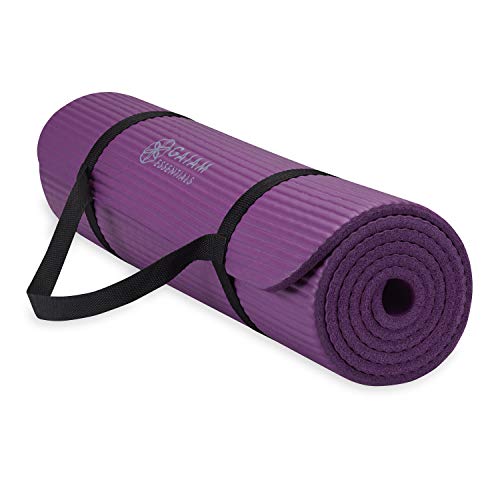
Best for: beginners and low-impact routines on hard floors. The 10 mm cushioning provides joint comfort and a softer feel. The textured surface helps reduce slippage, and the mat is designed for easy cleaning and maintenance.
- Pros: Strong cushioning; good grip; easy to care for.
- Limitations: On very hot or sweaty days, grip can lessen; may be too thick for some standing balance poses.
Buying Guide: Key Considerations For Choosing A Workout Mat
- Thickness needs: Light mats (2–4 mm) suit balance work; medium thickness (6–8 mm) balances comfort and stability; thick mats (10–12 mm or more) maximize joint protection for floor-based workouts.
- Material and grip: Look for non-slip surfaces on both sides or textured surfaces. Materials like high-density foam or NBR offer cushion and resilience, while eco-friendly options reduce odor and chemical exposure.
- Size and portability: Longer mats suit taller users. If you travel, prioritize mats with a carrying strap or foldable design for easier transport.
- Durability and care: Consider mats that resist tearing, provide return-to-shape, and are easy to wipe down after workouts.
- Intended use: Yoga-focused mats emphasize grip and balance; general fitness mats balance cushion with stability for mixed routines; kids or therapy mats prioritize extra padding and safety features.
Frequently Asked Questions
- What thickness is best for yoga beginners? A mat around 6–8 mm provides a comfortable yet stable base for most beginners.
- Are foldable mats worth it for home workouts? Yes, foldable mats save space and are convenient for storage and transport, especially in smaller homes or shared gyms.
- How important is a non-slip surface? Very important for safety; look for mats with textured surfaces or dual-sided grip.
- Should I choose a mat with a carrying strap? If you travel to a studio or gym, a strap improves portability and keeps the mat clean during transport.
- Are thicker mats harder to balance on? Some users find very thick mats less stable for standing poses; consider your practice style and test balance on similar mats if possible.
- Do eco-friendly mats perform as well as traditional mats? Many eco-friendly mats use high-density foam that offers comparable cushioning and grip with added safety benefits.