Best Medicine Balls for Kids and Family Fitness
Find the right medicine ball to support kids’ development, teens’ workouts, and family-friendly routines. This guide highlights user-friendly options that emphasize safe handling, grip, and suitability for different ages and abilities. Ideal buyers include parents introducing kids to core training, coaches seeking classroom-friendly equipment, and individuals building beginner-friendly home gyms. Below is a quick at-a-glance summary of five well-suited picks.
| Product | Weight / Type | Best For |
|---|---|---|
| Amazon Basics Weighted Medicine Ball (4 lb) | 4 lb, rubber | Light starter workouts, kids’ core work |
| RitFit Weighted Medicine Ball | Multiple weights | Progressive training, versatile routines |
| Amazon Basics Weighted Medicine Ball (6 lb) | 6 lb, rubber | Stronger core and full-body moves |
| Champion Sports Gel Filled Medicine Ball (2 lb) | 2 lb, gel-filled | Gentle grip, rehab-friendly use |
| Gaiam Kids Balance Ball (45 cm) | Kid-sized stability ball | Active seating, balance, coordination |
Amazon Basics 4-Pound Weighted Medicine Ball

This 4-pound ball is crafted for upper, lower, and full-body workouts. The rubber exterior is durable yet lightly textured to improve grip, making it suitable for kids’ introductory routines and light family-friendly drills. It’s best for beginners or younger exercisers who are building core strength and coordination without heavy load. A potential limitation is that the lighter weight may be less challenging for older teens seeking more resistance.
RitFit Weighted Medicine Ball
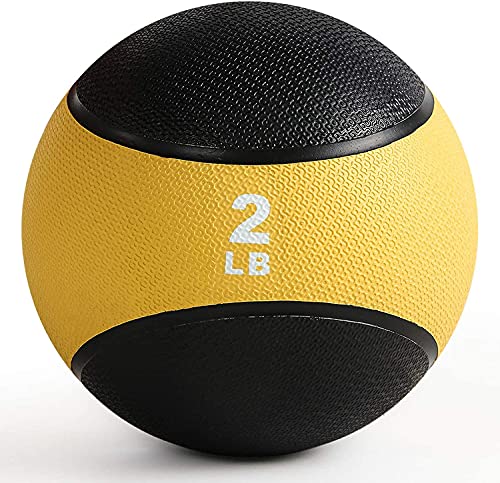
RitFit offers a set of versatile weights, with options from 2 lb up to 20 lb. The textured rubber surface aims to improve grip during dynamic moves, which is helpful for kids learning balance and coordination. This ball is especially suitable for families who want to scale difficulty across users—from beginners to more experienced young athletes. A caution: higher weights should be introduced gradually to preserve form and safety.
Amazon Basics 6-Pound Weighted Medicine Ball

This 6-pound version is a step up for core strengthening and full-body workouts. It features a sturdy rubber shell with weight labeling on both sides and a lightly textured surface for improved grip. The ball is suitable for teens or younger athletes who have built basic stability and are ready to progress. A potential limitation is that some users may find it harder to control at higher speeds or during rapid tiresome movements.
Champion Sports Gel Filled Medicine Ball (Red, 2 lbs)

Designed with a soft, pliable gel-filled core for gentle handling and a forgiving grip, this 2-pound ball is ideal for younger kids or rehabilitation-oriented activities. The inflation design supports easy air adjustments if needed. It’s a good choice for introducing basic medicine ball movements in a low-impact manner. Avoid using this ball for high-intensity throws or heavy lifts where a stronger grip and heavier resistance are desired.
ProsourceFit Weighted Toning Ball (2 lb)

This 2-pound toning ball uses a sand-filled interior to reduce wrist strain and promote smooth movements. Its pliable shell allows for varied uses across Pilates, yoga, and light strength training. Best for younger children or beginners easing into resistance work, it provides a controlled challenge without overloading small joints. A limitation is the lighter weight may not satisfy teens seeking more resistance as they progress.
ProsourceFit Slam Medicine Ball (5 lb)

Designed for dynamic training, this 5-pound slam ball supports throws, slams, squats, presses, and core work. The textured surface promotes grip during fast-paced movements, and the durable PVC shell handles repeated impact. Ideal for older kids and teens who can safely manage higher intensity. For younger or lighter users, start with lighter options to master technique before increasing load.
Buying Guide
What weight should I choose for a child or beginner?
Begin with lighter weights (2–4 lb) for younger children and beginners. Gradually increase as core strength and stability improve. Consider a multi-weight set if multiple users with varying abilities will train together.
What grip features matter?
Look for a ball with a textured surface or non-slip grip to prevent slipping during dynamic moves. A slightly soft feel can be more comfortable for kids learning new motions and reduces impact stress on hands and wrists.
Are material and durability important?
Rubber shells are common and durable for family use, while gel-filled or soft variants can be gentler on joints. For high-impact workouts, ensure the ball is designed to endure repeated throws and quick movements.
Should I prioritize weight range over special features?
Weight range is the primary consideration for progression. Special features like grip texture, bounce capability, or inflation valves are secondary and should align with the user’s comfort and exercise goals.
How do I safely incorporate medicine balls into kids’ routines?
Supervise to ensure proper form, avoid fast or uncontrolled throws, and keep sessions age-appropriate. Use slow, controlled movements and emphasize core engagement over speed or distance to reduce risk of misthrows or injuries.
Which option is best for home or classroom use?
For home use, start with lighter weights and a ball with easy grip. For classrooms or group sessions, consider multi-weight sets and balls with durable shells to withstand frequent handling and cleaning between uses.
Quick comparison snapshot
- Best for beginners: Amazon Basics 4 lb and ProsourceFit 2 lb toning ball.
- Best for progression: RitFit multi-weight set with up to 20 lb options.
- Best for kids’ seating and balance: Gaiam Kids Balance Ball.
- Best for gentle handling and rehab: Champion Sports Gel Filled 2 lb.
FAQ
- Can a medicine ball be used by preschoolers? Yes, with supervision and low weights, focusing on safe, simple movements.
- Is a heavier ball better for kids? Not necessarily. Start light to develop form and gradually increase weight as strength grows.
- Are there risks with medicine ball training for kids? Improper form or overly aggressive movements can cause injury; supervise and tailor routines to ability.
- Should I use a ball for classroom seating or play? A kid-sized or stable balance ball can support active seating and focus, but ensure it’s age-appropriate and used safely.
- How often should kids train with medicine balls? Begin with short, regular sessions (2–3 times per week) and adjust volume based on age and comfort.