Best Motorcycle Helmet Options for E-Bike Riders in 2026
The top picks below are selected for e-bike riders seeking dependable protection, comfort, and practical features. These helmets align with DOT/FMVSS-218 safety standards and offer a range of styles from full-face to open-face for different riding needs. Best for daily commuters, off-road enthusiasts, and casual weekend riders, these options emphasize safety, fit, and ease of maintenance.
| Product | Best For | Key Benefit |
|---|---|---|
| CARTMAN DOT Approved Adult Full Face Helmet | Daily commuters and long rides | Full-face protection with removable liner |
| OUMURS Dirt Bike Helmet With Goggles | Athletic riders and off-road trails | Includes goggles, gloves, and mask |
| ILM Open Face 3/4 Helmet | Urban riders seeking ventilation | Detachable lens and multiple vents |
| HAX Force Aerodynamic Full Face Helmet | High-speed street and e-bikes | Dual DOT/ECE certification, enhanced aerodynamics |
| VEVOR Full Face Helmet | Versatile daily use | Tinted/clear dual visor and detachable liner |
CARTMAN DOT Approved Adult Full Face Helmet

Best for riders who prioritize maximum facial protection and easy maintenance. The CARTMAN helmet features FMVSS-218 & DOT certification, a reinforced ABS shell, and a removable liner for simple cleaning. It fits head circumferences from 21.3″ to 24″ (54-61 cm) across sizes S to XL, offering a secure, comfortable fit for most adult riders. A downside is that the full-face design can feel warmer in hot climates, making ventilation and moisture management important to monitor during summer rides.
OUMURS Dirt Bike Helmet With Goggles, Gloves & Mask
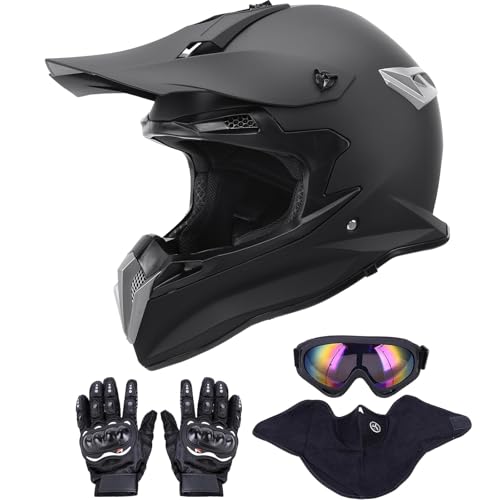
Best for riders who want a complete off-road kit in one purchase. The OUMURS helmet line is DOT FMVSS-218 compliant and comes in multiple sizes (Adult S to XXL). It includes goggles, gloves, and a mask, which supports wind protection and UV resistance for off-road or windy commutes. A caution: bulky accessory gear can add weight and height to the overall helmet footprint, which may affect head movement in tight spaces.
ILM Open Face Motorcycle 3/4 Helmet
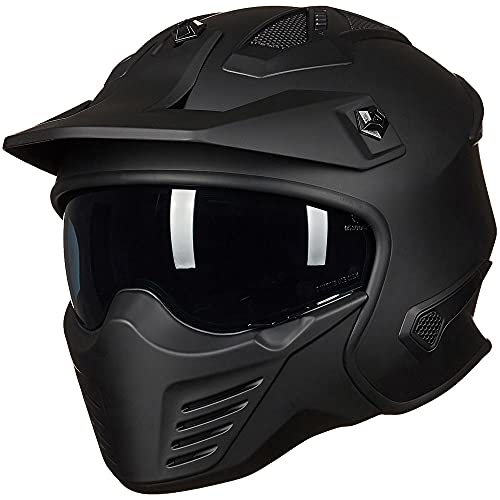
Best for riders who want good ventilation and an affordable option. The ILM helmet meets FMVSS-218 and DOT standards with a detachable sun shield and chin guard, making it easier to adapt to changing lighting. Ventilation is robust with multiple vents, which helps keep cool on longer rides. It may be less protective than a full-face design in high-risk environments, so consider use cases carefully for city riding vs. off-road paths.
HAX Force Aerodynamic Full Face Helmet

Best for riders who value aerodynamic performance and dual safety certifications. The HAX helmet is DOT and ECE 22.06 certified and uses an ABS+PC composite shell with a secure, adjustable chin strap and a removable breathable liner. It reduces wind resistance and lowers wind noise, which can improve comfort on longer e-bike commutes. Limitation: some users may find the fit runs snug in certain head shapes, so verify sizing before purchase.
VEVOR Motorcycle Helmet, Full Face
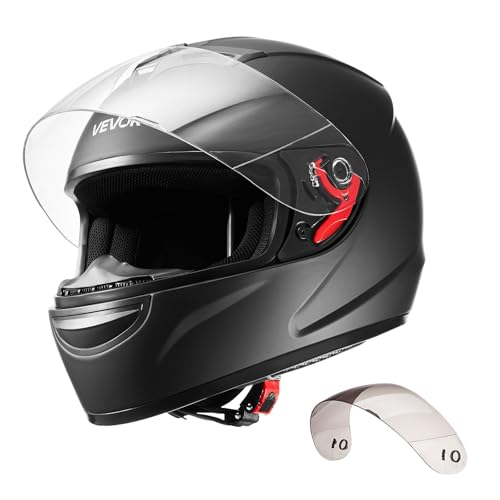
Best for riders seeking a budget-friendly full-face option with dual visor design. The VEVOR helmet is DOT-certified and includes a tinted and a clear visor, along with a detachable liner for easy cleaning. It’s a solid choice for daily city riders who want versatile eye protection. A potential drawback is that lower-cost components may wear more quickly with frequent sun exposure and sweat, so plan for periodic liner replacement and maintenance.
Buying Guide
What should you consider when choosing a helmet for an e-bike?
- Safety certification: Prioritize DOT FMVSS-218, and consider models with additional ECE or local standards for extra assurance.
- Helmet type: Full-face helmets offer the best overall protection; open-face or 3/4 models provide more ventilation and situational awareness.
- Fit and sizing: Check head circumference ranges and consider adjustable straps, removable liners, and padding for a secure, comfortable fit.
- Ventilation and comfort: Look for multiple vents and breathable liners, especially for hot climates or longer rides.
- Visors and shields: Dual visors or detatchable sun shields reduce glare and can improve visibility in varying light conditions.
- Maintenance: Removable liners and washable interiors extend helmet life and hygiene between rides.
- Accessory compatibility: If you ride with goggles or face masks, consider helmets that accommodate or include them.
Frequently Asked Questions
- Q: Do e-bike riders need DOT-certified helmets? A: DOT certification is a standard safety reference in the U.S.; many riders prefer DOT-certified helmets for added protection.
- Q: Are dual-visor helmets worth it for urban rides? A: Yes, dual visors help with glare control and changing light conditions without swapping shields.
- Q: Is a full-face helmet necessary for commuting? A: It depends on risk tolerance; full-face provides maximum facial protection, while open-face offers airflow and comfort.
- Q: How should I choose helmet size? A: Measure the head circumference and compare to the manufacturer’s size chart; try on with headgear to confirm fit.
- Q: How often should I replace a helmet? A: Replace after a significant impact or every 5–7 years if less impacted; liners and shells can degrade over time.
- Q: Can I use off-road helmets for street riding? A: Off-road styles often lack optimal aerodynamics and eye protection for street use; choose purpose-built street helmets for daily commuting.