Best Mountain Bikes for Heavy Riders: Top Picks for Strong, Sturdy Support
Looking for mountain bikes that accommodate heavier riders with confidence? This guide highlights five strong, reliable options designed to handle extra weight while delivering solid ride quality on trails and rough terrains. Each model below is chosen for durability, braking performance, and practical weight capacity, helping riders choose with clarity. The buyer is best suited for: enthusiasts who value stability on rough trails, riders needing robust frames, and those seeking better traction on mixed surfaces.
Quick comparison at a glance:
| Product | Best For | Weight Capacity Notes |
|---|---|---|
| MarKnig 26 Inch Fat Tire Mountain Bike | Riders up to 440 lb | 4-inch fat tires for traction |
| Incbruce 26 Inch Fat Tire Mountain Bike | All-terrain versatility | High carbon steel frame |
| WEIZE Mountain Bike | Budget-friendly dual suspension | 18-speed, steel frame |
| Schwinn Traxion Mountain Bike | Trail versatility | Full aluminum frame, 24 speeds |
| Huffy Stone Mountain (Matte Black) | Comfort on longer rides | 21-speed, dual suspension |
MarKnig 26 Inch Fat Tire Mountain Bike

The MarKnig fat tire mountain bike features a high carbon steel frame rated for riders up to 440 pounds, making it a strong candidate for heavier riders who want stability on uneven terrains. It uses 21 speeds, offering versatility for hills and flats. The wider tires improve traction on gravel, mud, or sand. This model is best for riders who prioritize traction and a robust frame over ultra-lightweight design. Caution: heavier bikes can feel less agile on tight switchbacks compared to lighter counterparts.
Incbruce 26 Inch Fat Tire Mountain Bike

The Incbruce fat tire model comes with a sturdy high carbon steel frame and a 21-speed drivetrain to adapt to varying terrains. Its dual disc brakes emphasize reliable stopping power in different weather conditions. Best for riders who want dependable braking and versatility across snow, sand, mud, and urban streets. Limitation: some users may find weight and setup heavier than non-fat-tire designs.
WEIZE Mountain Bike, Dual Suspension

The WEIZE mountain bike uses a steel dual-suspension frame with a front suspension fork and rear coil shock, designed to smooth out bumps on rough trails. It features 18-speed twist shifters for easy gear changes and front/rear linear pull brakes for strong stopping power. Best for riders who want a balanced ride with improved shock absorption. Caution: steel frames can be heavier than aluminum, affecting overall weight and portability.
Schwinn Traxion Mountain Bike
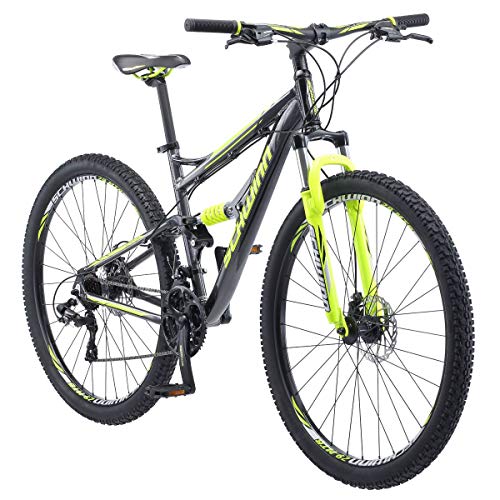
The Schwinn Traxion features a full aluminum frame with 24 speeds and a reliable front suspension fork. This setup provides good efficiency on climbs and absorbs some trail impact, delivering a balanced performance for general trail riding. Best for riders who want a lighter frame without sacrificing multiple gearing options. Limitation: some heavier riders may prefer more robust suspension tuning on aggressive trails.
Huffy Stone Mountain (Matte Black)

The Huffy Stone Mountain model combines a sleek matte black frame with a 21-speed drivetrain and front suspension for a comfortable ride on varied terrain. It emphasizes an approachable option for riders seeking reliability and a capable dual suspension feel at a reasonable price. Best for riders who want a practical all-around mountain bike with improved comfort on rough paths. Caution: some models may have heavier weight due to steel frame construction.
Buying Guide
- Weight capacity matters: Look for stated rider weight limits, especially if you weigh more than average. Fat-tire bikes often offer higher load tolerance.
- Frame material: Steel frames provide strength and durability but add weight. Aluminum frames are lighter but may be less forgiving on very rough terrains.
- Suspension type: Dual suspension smooths tougher trails; hardtails are lighter and simpler. Choose based on terrain and comfort preference.
- Wheels and tires: Fat tires give better traction on loose surfaces; standard tires are more efficient on hard-packed trails.
- Gearing: More speeds help on hills and varied terrain. Ensure gear range aligns with typical riding routes.
- Braking: Disc brakes (mechanical or hydraulic) offer reliable stopping power in wet conditions; v-brakes are common on older models but can be less consistent.
Frequently Asked Questions
- What should I look for in a mountain bike for heavy riders? Look for a high weight rating, sturdy frame material, reliable braking, and adequate suspension for comfort on rough trails.
- Are fat-tire bikes better for heavy riders? Fat tires provide superior grip on loose surfaces and can improve stability, which can benefit heavier riders on challenging terrain.
- Is aluminum or steel better for heavy riders? Steel is typically stronger and more forgiving under heavy use, but it adds weight. Aluminum saves weight but may feel less stable under extreme loads.
- How many speeds are ideal? A broad gearing range (at least 18–21 speeds) helps handle steep climbs and varied terrains.
- Can a weaker suspension affect safety? Yes. Adequate suspension plus solid brakes help maintain control on uneven trails, especially for heavier riders.
- Should I consider professional fitting? For best comfort and performance, a professional bike fit can optimize saddle height, reach, and suspension setup.