Best Neoprene Gloves for Fishing: Warm, Durable Options for Anglers
Looking for neoprene gloves that excel in fishing, photography, and other outdoor activities? This guide highlights five reliable choices, focusing on warmth, grip, and dexterity. Each product is evaluated for who it suits best, with practical notes on limits to help you pick confidently. Whether you fish in cold rivers, cast from a boat, or photograph wildlife in chilly weather, these gloves balance warmth and tactile control to keep your hands protected and functional.
Buyer’s quick summary table
| Product | Best For | Key Benefit |
|---|---|---|
| Drasry Neoprene Ice Fishing Gloves | Ice fishermen and outdoor photographers | Touchscreen fingertips and secure grip in cold, wet conditions |
| SUJAYU 3mm Neoprene Gloves | General water sports and diving | Flexible, warm, good palm grip |
| Palmyth Neoprene Fishing Gloves | Photography and fishing with dexterity | 3-cut finger design for touchscreen use |
| XUKER Water Gloves | Water sports on cool days | Anti-slip palms for reliable grip |
| Riverruns 3-Cut Fishing Gloves | Ice fishing and fly fishing | Warmth with dexterity in a 3-cut design |
Drasry Neoprene Ice Fishing Gloves With Touchscreen

Best for anglers who need reliable grip in wet, chilly conditions and occasional touchscreen use. Palm material combines abrasion-resistant neoprene with synthetic leather and a silicone non-slip coating to secure a firm hold on rods, cameras, or phones. The plush fleece interior adds warmth, making these gloves a solid option for temps around 35°F and above.
Best for: ice fishermen and photographers who require a balanced mix of warmth and tactile control. The touchscreen fingertips reduce the need to expose skin to cold when operating devices. Caution: not ideal for extreme snow or ice temperatures; warmth is best in cool-to-mild cold conditions.
SUJAYU 3mm Neoprene Diving Gloves

Better for: water sports that require flexibility and a snug fit. These 3mm neoprene gloves provide warmth and a flexible palm grip with a Velcro wrist strap to minimize water ingress and prevent slipping during activities like snorkeling, diving, or general wet-weather use.
Why selected: The combination of neoprene warmth, nylon lining, and an adjustable wrist strap makes them practical for longer sessions in cooler water. Caution: 3mm thickness may feel less warm in very cold air or extended exposure in freezing temperatures.
Palmyth Neoprene Fishing Gloves 3 Cut Fingers

Best for: anglers who want a flexible, touchscreen-ready design without sacrificing grip. The 3-cut finger format flips back the thumb, index, and middle finger caps, enabling easy manipulation of rods, phones, and cameras while maintaining warmth and dexterity.
Why selected: The fleece lining and synthetic leather-reinforced palm map to steady control in mixed-weather scenarios. Caution: the 3-cut design may expose more finger surfaces than full-finger gloves in icy winds, reducing warmth slightly in extreme cold.
XUKER 3mm & 5mm Neoprene Five Finger Gloves
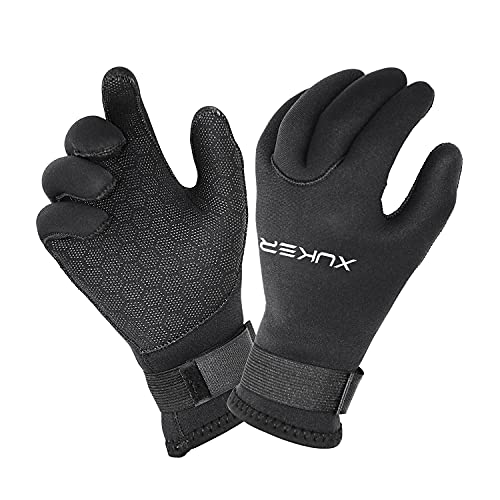
Best for: mixed-water activities where warmth and maneuverability are both important, such as kayaking, snorkeling, or casual diving. The gloves come in 3mm and 5mm variants, offering versatility across different water temperatures.
Why selected: The anti-slip palm and flexible neoprene provide secure handling of gear in wet conditions. Caution: Thickness choice matters; 5mm offers more warmth but can reduce finger dexterity for intricate tasks.
Riverruns Neoprene Fishing Gloves, 3-Cut Fingers

Best for: anglers seeking a balance of warmth and dexterity for cold-weather fishing, photography, or hunting. The 2.2mm neoprene provides flexibility and warmth, with a textured palm for better grip in wet conditions.
Why selected: The glove design emphasizes comfort and grip in wet environments where precision is key. Caution: colder days may require layering or warmer substitutes for prolonged exposure.
Buying Guide: How To Choose The Right Neoprene Fishing Gloves
- Temperature range: 3mm to 5mm thickness generally balances warmth and dexterity. Choose thinner gloves for higher flexibility in mild cold; thicker ones for deeper cold or extended time in water.
- Dexterity vs warmth: 3-cut fingers offer better finger maneuverability for phones, reels, and cameras; full-finger designs maximize warmth but may hinder precise manipulation.
- Grip and material: Look for textured palms or silicone coatings for wet grip. Neoprene with reinforced palms (synthetic leather accents) adds durability in abrasion-prone areas.
- Fit and closure: Velcro or adjustable straps help seal out cold water and ensure a secure fit that won’t slip during activity.
- Touchscreen usability: If you frequently use devices outdoors, prioritize gloves with touchscreen-capable fingertips or leather patches on index/thumb.
- Waterproofing and windproof: A plush fleece interior improves insulation, while a neoprene shell protects against wind and water exposure.
- Durability caveats: Some gloves are optimized for warm-to-cool conditions; in extreme cold, consider layering or a dedicated winter glove solution.
Frequently Asked Questions
- What thickness should I choose for winter fishing? Choose 3mm to 5mm based on how cold the environment is and how much dexterity you need for gear handling.
- Are touchscreen gloves really effective in cold weather? Yes, gloves with touchscreen-capable fingertips or patches allow device use without exposing bare skin, though performance can vary with glove thickness.
- Do neoprene gloves keep hands dry? They are designed to reduce water ingress but may not be 100% waterproof; a snug fit and tight wrist closure help minimize water entry.
- Is 3-cut finger design better than full finger for fishing? The 3-cut design enhances finger access for casting, tying knots, and phone use while maintaining warmth, but full-finger gloves offer more warmth overall.
- What is the best glove for photography in cold conditions? Gloves with dexterous finger access and a warm lining are ideal; consider models with convertible finger caps to swap between warmth and control.
- How should I care for neoprene gloves? Rinse after use to remove salt and debris, air-dry away from direct heat, and store flat to prevent creasing and material breakdown.