Best Offset Mounts for Red Dot Sights: Quick Guide for 45° Setup
Looking to add a 45-degree offset mount for a red dot? This guide highlights five solid options that fit common footprints and Picatinny rails. Ideal buyers: competitive shooters needing rapid access to secondary optics, hunters seeking compact, low-profile setups, and tactical users integrating lasers or lights alongside a red dot. Below you’ll find clear comparisons, who each product is best for, and practical caveats to help you choose quickly.
Buying snapshot: the featured products are chosen for compatibility with standard 45° offset installations, ease of installation, and practical applicability across common rifle and shotgun platforms. Use the quick reference table to compare footprint compatibility, rail type, and main strength at a glance.
Product Snapshot Table
| Product | Best For | Footprint/Compatibility | Notes |
|---|---|---|---|
| Monstrum Canted Micro Red Dot Mount | Docter/RMR/T1 style dots | RMR/407K/507K/T1/Weaver/Picatinny | Strong for off-axis use; check compatibility guide |
| TRUGLO 45 Degree Offset Mount | Versatile, all-around use | PIC/1913/Weaver rails | Low profile; CNC aluminum |
| Vortex Pro 45° Offset Accessory | Backup optic access, light layout | DeltaPoint Pro/Micro T-2 footprints | Good for fast-switching contexts |
| UTG Super Slim 45° Offset Mount | Low weight, secure zero | Picatinny rails | Lightweight with recoil stops |
| LONSEL 45° Offset Rail Mount | Multi-slot configurations | 21 mm Picatinny standard | Pack options available; lightweight |
Monstrum Canted Micro Red Dot Mount

Best for shooters using Docter, RMR, 407K/507K/RMS or similar footprints. The mount attaches directly to your red dot base and offers a 45-degree offset to a Picatinny rail. It’s designed for a clean, low-profile setup with all necessary mounting hardware included. The offset allows rapid access to a secondary optic or accessory without obstructing the primary sight.
Who it’s best for: individuals with a micro red dot on a Picatinny platform who need a dedicated 45° offset, especially if their dot footprint matches the listed options. Why selected: robust footprint compatibility and direct-mount design simplify installation and reduce added bulk. Caution: verify your dot’s footprint against the compatibility guide to avoid fit issues with non-listed patterns.
TRUGLO 45 Degree Offset Mount

Best for shooters seeking a universal and robust offset solution. This CNC-machined 6061-T6 aluminum mount is slim yet durable, designed to fit standard Picatinny/Weaver rails. It can be configured on either side of the rail and supports various setups where a 45-degree offset is advantageous for rapid target reacquisition.
Who it’s best for: users who want a straightforward, rugged offset option for multiple configurations. Why selected: strong construction and genuine universal compatibility. Caution: ensure your rail system is standard Picatinny or Weaver; atypical rails may require adapters.
Vortex Pro 45° Offset Accessory

The Vortex offset mount is designed for rapid red dot access without adding bulk. It’s compatible with DeltaPoint Pro and Micro T-2 footprints, making it a smart pick for dynamic environments where quick dot access is critical. The 45° angle keeps space for lights or other gear on the same rail.
Who it’s best for: users who need fast secondary optics access while preserving rail real estate for other equipment. Why selected: dedicated compatibility with popular Vortex footprints and a compact profile. Caution: verify that your primary red dot footprint is supported by the mount to avoid fit issues.
UTG Super Slim RMR Mount
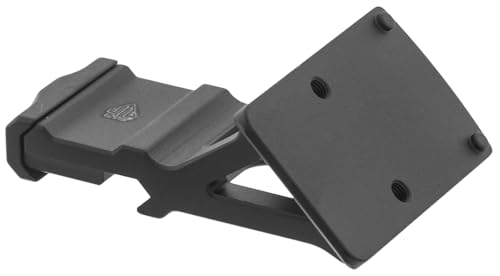
Best for a lightweight, low-profile offset option with a secure zero hold. The UTG mount is precision CNC machined from 6061-T6 aluminum and finished in matte black. It features a low-profile base, squared recoil stops, and lightening cuts that reduce weight while maintaining rigidity.
Who it’s best for: shooters prioritizing minimal weight and a stable zero over extreme modularity. Why selected: sturdy construction and a slim footprint. Caution: UTG mounts vary in fit by rail model; confirm your receiver’s rail spec and the mount’s compatibility ahead of purchase.
LONSEL 45° Picatinny Offset Rail Mount

Best for versatile configurations with a 21 mm Picatinny rail standard. LONSEL offers offset mounts in multiple slot options (3/4/5 slots) to accommodate different optics and accessories. The design emphasizes ease of installation and secure tightening to prevent looseness during recoil.
Who it’s best for: users who want flexible slot options for a customized setup and value a low-profile offset mount. Why selected: variety in slot count and included hardware. Caution: ensure your chosen slot count aligns with your optic and accessory geometry to avoid interference.
Buying Guide: Offset Mounts For Red Dots
What footprint does your red dot use?
Offset mounts come in footprints tailored to popular red dots (RMR, DeltaPoint, T1/T2, Docter, etc.). Verify compatibility with your optic’s base pattern before ordering. If in doubt, match the footprint to the mount’s listed options and consult the compatibility guide when available.
Which rail type is on your firearm?
Most offset mounts fit Picatinny/Weaver rails. Some products advertise 21 mm or other standards. Check that your rail platform matches the mount’s intended rail type to avoid fit issues or instability under recoil.
How important is weight and profile?
For competition or hunting, a low-profile mount minimizes obstruction and snag risk. If you plan to attach other accessories (lights, lasers, or backup optics), consider a slightly heavier or larger offset that accommodates additional gear without crowding the primary sight.
Left vs right offset—does orientation matter?
Many offset mounts can be mounted on either side, but some designs are optimized for a specific orientation. Evaluate whether you prefer quick access from your dominant hand and confirm whether the orientation is configurable on the mount you choose.
What about installation and maintenance?
Choose mounts with straightforward installation, secure zero-hold features, and clear hardware inclusion. Look for mounts with recoil stops or locking features that reduce the risk of loosening after shooting sessions. Regularly inspect mounting screws and ensure a proper torque specification is followed.
Price and practical considerations
Balance cost against durability and footprint. Higher-quality mounts often offer better materials, fit, and zero retention, but may cost more. For users who need a quick, reliable setup, prioritize compatibility and a proven footprint with a favorable weight-to-strength ratio.
FAQ
- Q: Will an offset mount affect zero stability? A: A well-made offset mount with proper tightening and recoil considerations can maintain acceptable zero with standard usage. Regular checks are recommended.
- Q: Can I mount two optics on the same rail using offset mounts? A: Yes, offset mounts are designed to position secondary optics without obstructing the primary sight, but ensure rail space and interference are considered.
- Q: Are 45° offsets suitable for all shooting disciplines? A: They’re particularly useful for quick dot access in dynamic environments, but suitability depends on your training and setup needs.
- Q: How do I choose between 3-slot, 4-slot, or 5-slot options? A: More slots can offer greater attachment flexibility for multiple accessories, but check compatibility with your optic and rail space to avoid crowding.
- Q: Do offset mounts require special tools? A: Most mounts ship with the needed hardware; common tools like hex keys are usually sufficient for installation.